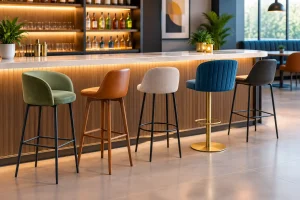
A restaurant chair that looks right in a showroom can fail quickly under a busy dinner service. A café table may fit the floor plan but become unstable on uneven flooring. That is why learning how to source horeca furniture is not simply a matter of selecting attractive pieces from a catalog. It is a commercial procurement decision that affects guest comfort, operating costs, opening schedules, and the character of the space.
For restaurant operators, architects, interior designers, and distributors, the strongest sourcing process begins before product selection. It starts with a clear project brief, then moves through technical evaluation, customization, sampling, production control, and logistics planning. The goal is furniture that performs as well as it presents.
Start with the Commercial Use Case
HoReCa furniture should be specified for the way a venue will actually operate, not for an idealized visual concept. A fine-dining restaurant, hotel breakfast area, high-turnover café, rooftop bar, and casual food hall all place different demands on seating and tables.
Begin by defining the room’s service pattern. Consider the expected number of covers per day, the length of guest stays, cleaning frequency, indoor or outdoor exposure, and whether staff will move chairs often. A compact café may need lightweight chairs that stack efficiently at closing time. A premium restaurant may prioritize upholstered comfort and a more substantial visual presence. A hotel lobby requires pieces that remain comfortable for longer periods and retain their appearance under continuous use.
Seat height, table height, circulation space, and accessibility should be confirmed early. Small dimensional mistakes create expensive problems once furniture arrives on site. A visually impressive armchair can reduce table capacity if it is too wide, while an oversized table base can interfere with guest legroom.
Build a Specification Before You Request Pricing
Price comparisons only become meaningful when every supplier is quoting the same standard. A broad request for “restaurant chairs” will produce broad, inconsistent offers. A proper specification gives manufacturers and project suppliers a precise basis for production.
Your document should cover the design reference, dimensions, materials, finish, upholstery, quantity, and intended application. Include the required delivery date and destination from the beginning, especially for export projects. If the furniture will be used outdoors, state that clearly. Indoor finishes, fabrics, foams, and metal treatments are not automatically suitable for sun, rain, salt air, or temperature changes.
For seating, ask about frame material and construction, joint methods, foam density where relevant, upholstery performance, glides, and weight capacity. For tables, review the tabletop material, edge detail, base stability, leveling options, and how the product will be packed for transport. These details influence durability as much as the visible design.
A good specification also identifies what is flexible. You may be able to change fabric color, stain tone, powder-coat finish, or tabletop size without changing the core product. Structural changes, new molds, or one-off engineering requirements may affect minimum order quantities, production time, and cost. Knowing the difference protects both the budget and the opening date.
How to Source HoReCa Furniture from the Right Supplier
The right supplier is not always the one with the lowest initial quote. For a commercial project, reliability comes from manufacturing capability, communication discipline, material consistency, and the ability to resolve details before they become site issues.
Look for a partner that understands contract furniture rather than only residential retail. Commercial furniture needs to withstand repeated use, cleaning, movement, and occasional misuse. Ask whether the supplier manufactures in-house or trades products from multiple sources. A factory-direct manufacturer generally has greater control over production details, finish matching, lead times, and custom development.
When reviewing a potential supplier, discuss these practical points:
- Production capacity and current lead time for your required quantity
- Available materials, finishes, and upholstery options
- Custom manufacturing limits, minimum quantities, and development costs
- Quality-control process before packing and shipment
- Export packing method, shipping documentation, and logistics coordination
- Sample policy and approval process
Factory imagery and polished product photos are useful, but they are not enough. Request clear product dimensions, material information, detail photos, and finish samples. For larger projects, a video call or factory visit can provide valuable confidence. You want to see evidence of organized production, not only a compelling presentation.
Balance Design Ambition with Long-Term Performance
Hospitality interiors are remembered through atmosphere, and furniture is central to that impression. Still, a concept should be tested against daily operating reality. Bouclé or light-colored upholstery may look exceptional in a boutique setting, but it needs the right cleaning plan and fabric performance for a high-traffic restaurant. Natural wood adds warmth, yet it requires suitable finishing and maintenance depending on the environment.
There is no universal best material. Powder-coated metal can be an excellent choice for busy cafés and outdoor settings, while solid wood or veneer may be more appropriate for an elevated indoor dining room. Upholstered seating improves comfort and perceived value, but it adds cleaning requirements and can extend production planning. The best decision depends on the venue’s price point, guest profile, service intensity, and maintenance team.
Design consistency matters, too. A project does not need identical chairs in every area, but each furniture category should belong to the same visual language. Coordinate the relationship between dining chairs, bar stools, lounge seating, table bases, tabletops, lighting, and finishes. A manufacturer with a cohesive hospitality range can help maintain that balance while reducing the number of suppliers involved.
Treat Samples as a Project Checkpoint
A sample is not a formality. It is the most effective way to confirm that the product matches the specification before full production begins. Review the sample in the intended environment whenever possible. Daylight, artificial lighting, flooring color, and wall finishes can all change how a fabric, wood stain, or metal color appears.
Check comfort as carefully as appearance. Sit in the chair for more than a few seconds. Test whether the back support suits the intended table height, whether arms fit under the table, and whether the piece is easy for staff to move. Place table samples on the actual or representative floor surface to assess stability.
For custom products, approve every visible component: upholstery, stitching, piping, wood tone, metal finish, glides, and logo placement if applicable. Put approvals in writing. This creates a clear reference point for production and avoids subjective disagreements later.
Plan Production and Shipping Together
Furniture sourcing can fail even after good product selection if production and logistics are handled separately. Lead time should include sample approval, material procurement, manufacturing, quality checks, packing, freight booking, transit, customs clearance, and site delivery. For opening-sensitive projects, build contingency time into the plan.
Ask how products are packed and how many pieces fit in each carton or pallet. Packing affects freight cost, damage risk, warehouse handling, and installation speed. Knock-down tables may reduce shipping volume, but they require assembly labor on site. Fully assembled chairs save installation time but occupy more container space. Neither approach is automatically better.
For US buyers sourcing internationally, clarify the shipping terms, port or final delivery point, required import documentation, and who is responsible for each stage. A supplier with export experience should be able to provide organized packing lists, commercial invoices, product details, and regular production updates. Clear coordination is especially important when furniture must arrive alongside lighting, tile, kitchen equipment, or other fit-out materials.
Use One Partner Where It Adds Value
A multi-supplier strategy can work well for highly specialized projects, but it also increases coordination risk. Different lead times, finish variations, freight arrangements, and communication channels can put pressure on the project team.
Where appropriate, work with a manufacturer that can support multiple furniture categories and coordinate complementary interior requirements. Rezze Design supports hospitality projects with factory-produced seating and tables, custom development, and broader sourcing support for items such as lighting, tiles, tableware, and kitchen-related products. This approach can simplify communication while preserving the design control required by architects and operators.
The value is not simply fewer purchase orders. It is having a production-focused partner who understands how the chair finish relates to the table base, how packaging affects export cost, and how a custom detail can influence the production schedule.
Before placing the full order, confirm the final specification, approved sample, quantity breakdown, production schedule, packing method, payment milestones, and shipping responsibilities. A well-documented order prevents assumptions from becoming delays.
The strongest hospitality spaces are built through decisions that remain sound after the opening night. Source furniture with the same discipline you bring to menu planning, kitchen flow, and guest service: specify clearly, test carefully, and choose partners prepared to stand behind the work.