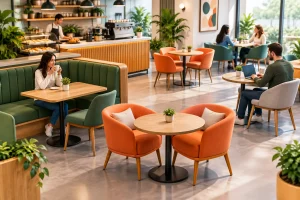
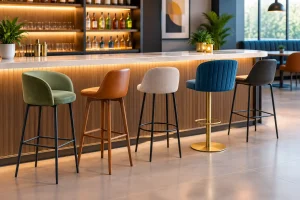
A restaurant can refresh its menu, lighting, and wall finishes over time. Replacing every chair, banquette, and table is a far more disruptive decision. That is why modern timeless restaurant furniture is not about choosing pieces that are merely on trend. It is about specifying furniture that gives a concept a clear identity now while remaining commercially useful through years of daily service.
For restaurant operators, architects, and purchasing teams, the right furniture has to satisfy several demands at once: visual character, guest comfort, traffic resistance, cleaning practicality, and reliable production. A chair may look excellent in a presentation, but if it feels unstable, stains easily, or arrives with inconsistent finishing, it becomes a project problem rather than an asset.
What Makes Restaurant Furniture Modern and Timeless?
Modern design is often misunderstood as a short-lived look. In hospitality interiors, modern furniture is better defined by clarity: clean proportions, purposeful details, honest material choices, and forms that support the overall space rather than compete with it.
Timelessness comes from restraint and construction quality. A well-proportioned upholstered dining chair, a warm wood table with a durable top, or a powder-coated metal frame can work across many concepts when the silhouette is balanced and the finish is selected with care. These pieces leave room for the restaurant’s food, service, branding, and atmosphere to evolve.
The strongest projects avoid copying a single trend too literally. Bouclé upholstery, oversized curves, or highly saturated colors can add personality, but they should be used where replacement or reupholstery is manageable. Core seating and table systems usually benefit from more lasting foundations: neutral textiles, refined timber tones, durable leathers or performance fabrics, and metal finishes that fit the architecture.
A timeless choice does not mean a safe or generic one. It means the furniture has enough design integrity to remain credible after the first wave of visual trends has passed.
Start With the Guest Experience, Not the Product Category
Furniture selection should begin with how guests will use the room. A fine-dining venue may prioritize longer seating comfort, acoustic softness, and generous personal space. A high-volume café may need lighter chairs that staff can move quickly and surfaces that reset between guests in seconds. A hotel restaurant may need several seating types that transition naturally from breakfast service to evening dining.
This is where a single chair model rarely solves every requirement. Dining chairs establish the primary rhythm of the floor plan, while armchairs and sofas can define slower, more intimate zones. Bar chairs need footrest comfort and frame stability. Outdoor seating requires a different approach to materials, drainage, UV exposure, and storage.
Seat height, table height, and spacing must work together. A visually attractive chair can still create a poor experience if its arms cannot slide under the table, its back angle is too relaxed for dining, or the upholstery catches on nearby tables in a tight layout. These details are especially significant in commercial environments, where a small mistake is repeated across dozens or hundreds of seats.
Build a Material Strategy for Real Service Conditions
Restaurant furniture faces stress that residential furniture rarely encounters. It is moved repeatedly, wiped with chemicals, exposed to spills, loaded with bags and coats, and used by guests with very different expectations and body types. Materials should be selected according to their location and workload, not only their appearance.
Wood brings warmth and depth, but it needs a finish suitable for frequent cleaning and changing humidity. Metal frames offer excellent strength and can deliver a more architectural expression, particularly in busy dining rooms and cafés. Upholstered seating increases comfort and can improve acoustics, yet fabric performance, stain resistance, seam quality, and replacement planning should be addressed before ordering.
Tabletops deserve the same scrutiny as seating. A top may look refined at installation but show scratches, heat marks, or edge damage quickly if the surface is not specified for restaurant use. Consider how table bases perform as well. Proper base weight, leveling capability, and leg placement directly affect guest comfort and staff efficiency.
There are trade-offs. Lighter chairs can make a room more flexible, but an extremely light frame may feel less substantial. Natural finishes create character, but they can show variation and wear more visibly than uniform industrial surfaces. The right answer depends on the concept, service style, maintenance plan, and expected operating volume.
Use Contrast Without Losing Cohesion
A memorable restaurant rarely uses one furniture type everywhere. The goal is not uniformity. It is cohesion.
A practical way to create depth is to combine one consistent material language with varied seating forms. For example, a project might use a shared metal finish across dining chairs, bar chairs, and table bases, then introduce upholstered banquettes in a complementary texture. Another concept may repeat a timber tone in tables and chair details while using different silhouettes for the main dining room and lounge area.
Color should support wayfinding and atmosphere. Darker tones can give a bar or private dining zone a more intimate character. Lighter finishes may help compact cafés feel more open. Strong colors work best when they are controlled and connected to another feature in the interior, such as tile, artwork, signage, or lighting.
For larger projects, furniture zoning also helps operations. A host can guide guests more easily through clearly defined areas, and teams can maintain or replace components without disturbing the visual identity of the entire venue.
Specify Modern Timeless Restaurant Furniture for Longevity
The best specifications are detailed enough to protect the project but flexible enough to accommodate production realities. Finish samples, upholstery selections, frame colors, dimensions, packaging expectations, and quantity breakdowns should be confirmed before full production begins. For export projects, this level of clarity is essential because changes made after shipment are expensive and slow.
Custom manufacturing becomes valuable when standard products do not fully fit the plan. A table may need a particular diameter for a narrow floor layout. A chair may require a revised upholstery, stain color, or seat height. A banquette may need to follow a curved wall or integrate with the architecture. These adjustments should be managed by a manufacturer that understands both design intent and production limits.
At Rezze Design, in-house manufacturing allows project teams to coordinate furniture details from prototype and sample review through production, packing, and export preparation. This matters for architects and distributors who need direct answers on finishes, lead times, and repeat orders rather than a disconnected supply chain.
Still, custom does not always mean better. If a ready collection meets the design brief, commercial standards, and delivery schedule, it may be the more efficient choice. Bespoke work is most effective where it solves a measurable spatial, operational, or brand-specific need.
Plan for Maintenance Before Opening Day
Longevity is not achieved at purchase alone. It depends on how the furniture will be cleaned, moved, stored, and repaired after opening. Operators should receive practical guidance on approved cleaning methods, replacement glides, touch-up options, and upholstery care. Keeping a small quantity of spare chairs, fabric, or hardware can prevent a minor incident from becoming a visible inconsistency on the floor.
For multi-location groups and distributors, repeatability is equally important. A furniture program should make it possible to add seats, open another location, or replace damaged items while preserving the original design language. This requires documented specifications and a supplier able to maintain quality across future production runs.
Furniture should also be reviewed after installation, not only before it. Watch how guests choose seats, where staff experience bottlenecks, and which surfaces receive the most wear. Those observations provide better guidance for future phases than trend reports ever can.
The right restaurant furniture gives a space its first impression, but its greater value appears later: when the room still feels current, the seating still feels comfortable, and the operation continues without unnecessary replacement costs. Choose pieces with a clear point of view, specify them for the real conditions of service, and work with a production partner prepared to support the project beyond delivery.