
A restaurant can have the right menu, the right address, and the right concept, then lose momentum because the furniture misses the mark. Seats feel uncomfortable after twenty minutes. Table sizes disrupt service flow. Finishes look good on opening day but wear too quickly under commercial use. That is exactly why working with a custom horeca furniture manufacturer matters. In hospitality, furniture is not decoration alone. It affects guest comfort, staff efficiency, brand perception, and long-term operating cost.
For café owners, restaurant groups, architects, and distributors, the decision is rarely about buying chairs and tables in isolation. It is about building a space that performs. That requires a manufacturer that understands more than style. It requires control over production, an ability to customize, and the commercial discipline to deliver consistently at project scale.
What a custom horeca furniture manufacturer actually provides
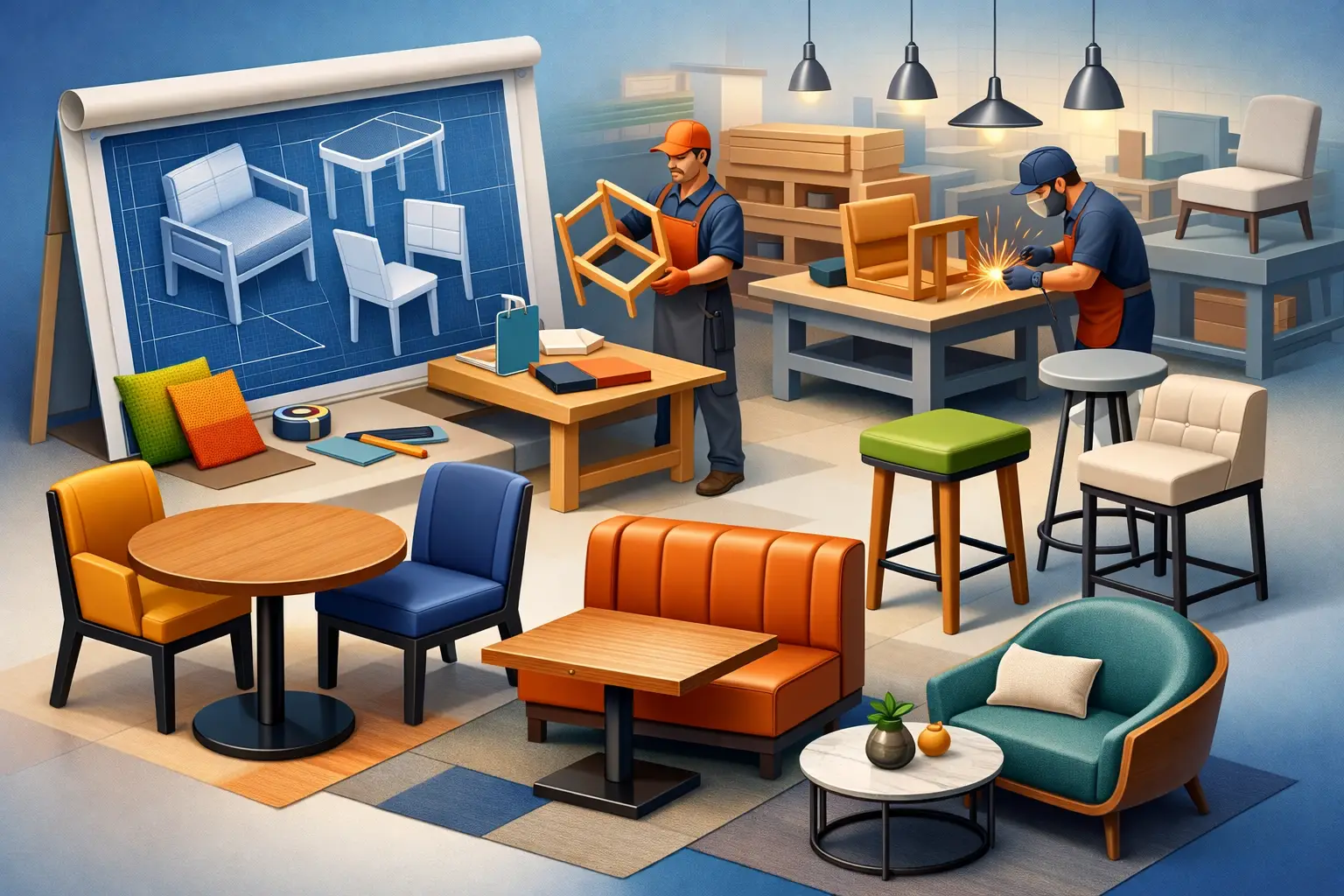
A strong manufacturer does more than offer a catalog. It combines design capability, factory production, and project coordination in one structure. That difference becomes clear as soon as a project moves beyond standard dimensions or stock finishes.
In HoReCa environments, every detail is tied to use. Seat height must work with table proportions and guest turnover expectations. Upholstery needs to balance comfort with cleaning practicality. Metal frames must support repeated use in busy service conditions. Outdoor pieces need materials suited to climate exposure, not just visual appeal. A custom manufacturing partner can adapt these variables around the needs of the venue instead of forcing the venue to adapt to fixed products.
That does not mean every project should be fully bespoke. In many cases, the best commercial result comes from modifying proven collection pieces rather than developing everything from zero. A capable manufacturer should be honest about that trade-off. Customization is valuable when it improves fit, identity, or function. It becomes inefficient when it adds cost and lead time without solving a real project need.
Why factory control matters in hospitality projects
The biggest advantage of working with a manufacturer instead of a trading intermediary is operational control. When production happens in-house, communication is clearer, changes are easier to manage, and quality standards are more consistent from sample to shipment.
For project buyers, this has practical consequences. If an architect needs a chair frame adjusted, a banquette depth refined, or a table finish matched to a wider material palette, an in-house team can assess feasibility directly. That shortens the feedback loop. It also reduces the risk of promises being made by a sales layer that production cannot realistically deliver.
Factory control also affects scheduling. Hospitality openings move fast, and delays can become expensive. A manufacturer with its own production infrastructure has more visibility over capacity, materials, and timelines. That does not remove every risk. Supply changes, volume shifts, and freight issues can still affect delivery. But it gives the buyer a more reliable foundation for planning.
How custom horeca furniture supports brand positioning
Hospitality furniture carries more brand weight than many operators expect. Guests may not remember the technical specification of a chair, but they remember whether a place felt refined, relaxed, contemporary, warm, or forgettable.
Custom furniture helps shape that experience with precision. A café targeting a modern urban audience may need lighter visual lines, compact layouts, and materials that feel current without looking temporary. A premium restaurant may need richer textures, deeper seating comfort, and tables designed around presentation as much as dining. A hotel lounge may prioritize flexibility, layered comfort, and a stronger visual signature across multiple seating types.
The value of customization is not only visual. It also protects concept integrity across locations. For operators scaling a brand or distributors serving a defined market segment, consistency matters. A manufacturer that can reproduce the same design language across chairs, armchairs, sofas, bar seating, and tables creates a more unified commercial offer.
What B2B buyers should look for in a manufacturing partner
The first test is whether the supplier understands commercial furniture as a category of its own. Residential styling alone is not enough. Hospitality furniture needs to withstand higher traffic, more frequent cleaning, stricter dimensional demands, and greater scrutiny around repeatability.
The second test is product range depth. A manufacturer serving cafés, restaurants, and broader hospitality projects should be able to offer coordinated seating and tables across different use cases. This matters because projects rarely require one hero item. They require a full environment, often with indoor and outdoor applications, dining and lounge zones, and a mix of standard and custom pieces.
The third test is collaboration. Architects and interior designers need technical responsiveness. Operators need practical guidance around durability, maintenance, and lead times. Distributors need a supplier that can support export packing, volume orders, and long-term account development. A serious manufacturing partner should be comfortable in all three conversations.
The custom process should be structured, not vague
A professional custom project usually begins with a clear brief. That includes layout intent, target style, quantity, use conditions, preferred materials, timeline, and budget range. Without that, custom development turns into guesswork, and guesswork is expensive.
From there, the manufacturer should define what can be customized efficiently. Sometimes that means changing upholstery, stain, powder coat color, or dimensions within an existing model. Sometimes it means developing a fully tailor-made product for a branded concept. The right route depends on volume, budget, and how distinct the final result needs to be.
Sampling is often where good projects separate from difficult ones. A sample or prototype helps confirm comfort, finish quality, proportion, and construction details before full production begins. This step takes time and cost, but for larger hospitality orders it usually saves both. It is far less expensive to adjust a prototype than to correct a shipment after production is complete.
Custom horeca furniture manufacturer and export readiness
For overseas buyers, export capability is not an extra benefit. It is part of the core requirement. A custom horeca furniture manufacturer serving international clients must be able to manage not only production, but also packaging standards, shipment preparation, and communication throughout fulfillment.
This is especially important for distributors and project buyers in the US market. They need commercial furniture that arrives packed for long-distance transport, documented properly, and organized in a way that supports installation and delivery planning. Even well-made furniture can become a problem if export handling is weak.
An export-ready manufacturer should also understand pace and clarity in communication. International buyers often work across time zones and tighter procurement schedules. They need straightforward updates, realistic lead times, and quick responses when specifications or quantities change. Reliability is built as much through process as through product.
Design quality and durability are not separate decisions
There is often a false divide in hospitality procurement between furniture that looks good and furniture that lasts. In reality, commercial success depends on both. A chair with strong structure but poor proportion will weaken the customer experience. A beautiful sofa built without regard for traffic level will create replacement cost too soon.
The better approach is to evaluate design and durability together. Materials should support the intended aesthetic, but they also need to match the environment. Wood brings warmth and character, but the finish and construction method matter in heavy-use spaces. Metal can offer excellent structural performance, especially for stackable or compact models, but detailing affects whether it feels premium or purely functional. Upholstery can elevate comfort and identity, yet fabric selection should reflect maintenance realities.
This is where manufacturing experience becomes visible. A supplier focused on hospitality should be able to advise where to invest, where to simplify, and where a specification may look strong on paper but perform poorly on site.
Why project support creates better outcomes
Furniture procurement becomes easier when the manufacturer can support the wider project conversation. In hospitality, tables and seating rarely sit alone. They need to align with lighting, surface materials, service circulation, and the broader interior language.
A manufacturer with project experience can contribute beyond production by helping align products with the concept and with other sourced elements. That creates a more cohesive result and reduces coordination pressure for buyers handling multiple categories at once. For commercial clients, that kind of support is not about convenience alone. It improves decision-making and protects the finished space from costly mismatches.
Rezze Design approaches hospitality projects from that perspective, combining in-house manufacturing with custom development and practical coordination for commercial interiors. For buyers who need both design credibility and production control, that model creates a stronger basis for long-term partnership.
The right manufacturer should make your project more precise, not more complicated. If the conversation stays focused on comfort, quality, customization, and delivery discipline, you are already moving in the right direction.