

A restaurant chair may look excellent in a presentation, then fail its first real service when it is dragged across tile 200 times a day. That is why hospitality furniture design trends matter only when they support the operating reality of a space: guest comfort, staff movement, cleaning routines, durability, and a concept strong enough to be remembered.
For restaurant operators, architects, and purchasing teams, the most useful direction is not a single visual style. It is a shift toward furniture that feels considered, performs under pressure, and can be specified with confidence across a full project.
Hospitality Furniture Design Trends Shaping Commercial Spaces
Softer forms with commercial discipline
Curved backs, rounded seat profiles, softened corners, and generous upholstered silhouettes continue to define contemporary hospitality interiors. These shapes make cafés, restaurants, and hotel lounges feel more welcoming, especially in projects that want warmth without relying on heavy decoration.
The commercial requirement is to control the softness. A rounded armchair still needs a stable frame, appropriate seat height, and upholstery that can tolerate repeated use. A sculptural dining chair still needs to fit efficiently around table layouts and stack or move easily when operations require it. The strongest projects use soft forms selectively, balancing visual comfort with practical circulation.
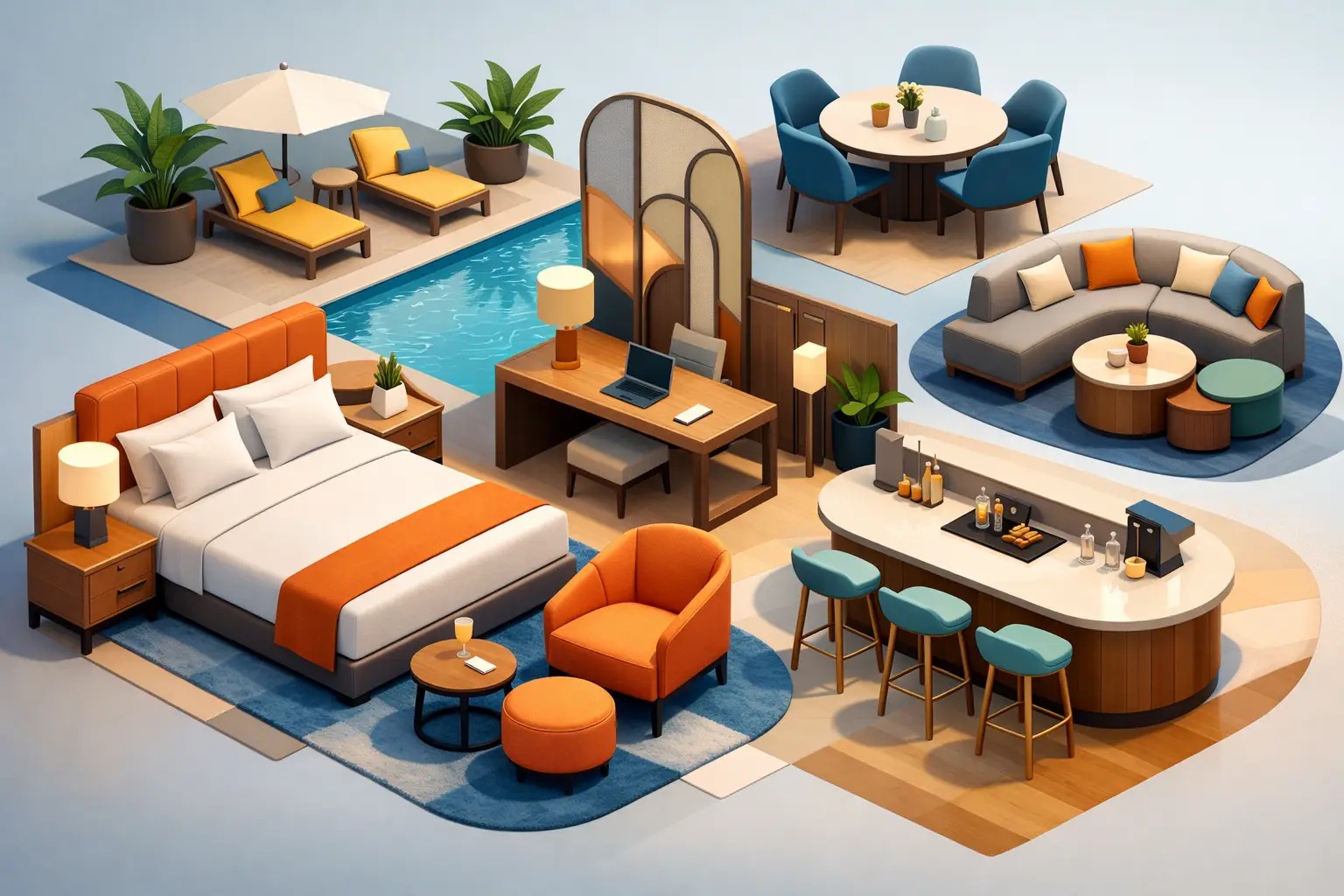
This is particularly effective when a space combines dining and lounge zones. Curved sofas and low armchairs can create a relaxed transition, while more upright chairs maintain the posture and table access needed for dining. Using both within the same material palette gives the interior a coherent, project-led appearance.
Natural texture, refined finishes
Hospitality design is moving away from surfaces that feel overly polished or anonymous. Wood grains, woven textures, tactile fabrics, brushed metal, textured powder coatings, and stone-inspired table surfaces introduce depth without making a venue look busy.
For commercial furniture, the key is selecting finishes that retain their character over time. Light timber can look inviting, but it needs a finish suited to food service and regular cleaning. Bouclé and richly textured fabrics have visual appeal, but their use should be considered carefully in high-turnover dining areas. They may be better suited to host seating, lounge pieces, or lower-traffic hotel spaces than a fast-paced restaurant floor.
Metal remains central to this direction. Slim metal chair frames, pedestal table bases, and bar stools can add structure to softer interiors. Powder-coated finishes in black, warm bronze, sand, olive, or muted terracotta allow operators to introduce color while retaining the durability expected in HoReCa settings.
Color used as a commercial tool
Neutral interiors are still valuable, particularly for multi-location operators and projects designed to age well. However, all-neutral spaces can feel interchangeable. Current palettes use color with more intention: deep green, tobacco, oxblood, clay, dark blue, and warm off-white create contrast and help establish separate experiences within one venue.
Furniture is often the most efficient place to introduce that color. An upholstered bar chair, a dining chair with a colored metal frame, or a banquette in a strong fabric can create identity without requiring extensive architectural changes. For renovation projects, this can be especially useful because furniture can refresh a concept while preserving existing floors, walls, or lighting.
Color should also be specified with maintenance in mind. Pale upholstery may support a premium daytime café concept, but it can become a liability in a busy all-day restaurant. Mid-tone and darker fabrics, patterned weaves, and easily replaceable upholstered components often provide a more practical long-term solution.
Comfort Is Becoming a Measurable Design Standard
Hospitality operators are paying closer attention to how long guests stay, how easily they return, and how their furniture supports the intended service model. Comfort is no longer a decorative claim. It is a measurable part of a project brief.
A quick-service café may prioritize compact chairs that are comfortable for 30 to 45 minutes and easy to reposition. A destination restaurant may need an upholstered dining chair that supports a two-hour meal. Hotel lobby seating must encourage guests to settle in while remaining durable enough for luggage, frequent turnover, and varied user needs.
Seat depth, back angle, foam density, arm height, and table clearance all influence this experience. A chair that appears comfortable but sits too low relative to the table can frustrate guests. A deep lounge chair may be excellent beside a coffee table but unsuitable for food service. Good hospitality specification considers these details before production, not after installation.
For B2B buyers, requesting samples or reviewing a physical prototype is often the right decision for larger projects. It confirms visual quality, but it also allows the project team to test posture, scale, finish, and construction. This step can prevent expensive adjustments once production is underway.
Flexible Layouts Need Flexible Furniture
Restaurants and cafés increasingly operate across multiple dayparts. A morning coffee location may become an informal work setting by afternoon and a social destination in the evening. Furniture needs to help spaces adapt without making them look temporary.
Lightweight metal chairs, compact tables, nesting or movable pieces, and modular sofa systems support this flexibility. Yet flexibility should not mean every item is mobile. Large banquettes, fixed lounge seating, and substantial communal tables provide the visual anchors that make a space feel established. The right mix depends on the service format and available square footage.
Outdoor areas are part of this conversation as well. Terraces and sidewalks can extend capacity significantly, but outdoor furniture must withstand sun, moisture, temperature variation, and frequent cleaning. Materials should be selected for their actual climate exposure, not only for appearance. An attractive outdoor chair that fades quickly or corrodes around joints creates replacement costs and weakens the guest impression.
Customization Is Replacing One-Size-Fits-All Specification
A catalog collection gives a project a starting point. Custom production makes it possible to align the furniture with the concept, floor plan, and operational requirements. This may mean adjusting chair height for a specific table, changing upholstery for a regional market, revising a frame color, developing a custom banquette length, or creating a table base that works with an existing top.
Customization is most valuable when it solves a clear project need. It should not be used simply because it is available. Every custom decision can affect development time, minimum quantities, testing, packing, and lead time. A reliable manufacturer helps clients distinguish between changes that create real value and changes that add complexity without improving the final installation.
For distributors and wholesalers, customization also supports market differentiation. A proven chair model in exclusive finishes, fabrics, or frame colors can become a recognizable offer for a regional customer base while maintaining the production advantages of an established design.
Durability Must Be Visible and Built In
The best commercial furniture communicates quality before anyone reads a specification sheet. Stable frames, clean welds, consistent upholstery lines, well-finished joints, and balanced proportions all contribute to the perception of value. In hospitality, that perception is reinforced every day by how the furniture ages.
High-traffic furniture should be selected according to where and how it will be used. Dining chairs face constant movement and impact. Bar chairs need secure footrests and stable bases. Tables need top materials and edge details that resist wear. Sofas and armchairs need upholstery suited to the expected cleaning routine. There is no single best material for every zone.
This is where factory control matters. When a manufacturer manages production directly, it can better coordinate frame construction, finish quality, upholstery execution, packaging, and project-specific requirements. For export projects, those controls are also important during packing and logistics coordination, where damage prevention and accurate documentation affect the final delivery experience.
A More Cohesive Approach to Hospitality Projects
One of the most practical design trends is the move toward coordinated furniture families rather than isolated product purchases. Operators and designers are specifying dining chairs, bar chairs, armchairs, sofas, tables, and outdoor pieces that share a common design language while serving different functions.
That does not mean every item must match exactly. In fact, overly matched interiors can feel flat. Cohesion can come from repeated frame colors, related upholstery tones, shared timber finishes, or a consistent approach to curves and proportions. A café may combine metal dining chairs with upholstered bar stools and a custom banquette, yet still feel intentionally designed when those decisions connect.
Rezze Design supports this kind of project coordination through in-house furniture production and tailor-made solutions for commercial interiors. For architects and operators, working with a supplier that understands both individual products and the wider layout can reduce specification gaps as a project moves from concept to delivery.
Before selecting a trend, test it against the daily life of the venue. Ask how the chair will be cleaned, how the table will be moved, where bags and coats will go, how long guests will sit, and what the space should look like after a year of active service. The answers will lead to furniture that not only photographs well on opening day, but continues to support the business long after.