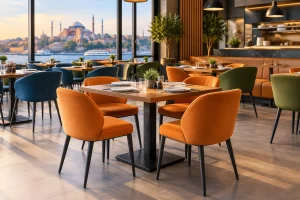
A chair manufacturer is not simply a source for seating. For a restaurant, café, hotel, or commercial venue, the right manufacturing partner helps determine how the space looks, how it performs during peak service, and how confidently the project moves from specification to installation.
A striking chair that becomes unstable after a busy season is an expensive mistake. So is a supplier that cannot maintain finish consistency, accommodate a revised floor plan, or provide clear production communication when an opening date is approaching. Hospitality buyers need more than attractive catalog images. They need production control, commercial judgment, and a partner prepared to support the details that affect the finished space.
What a Hospitality Chair Manufacturer Should Deliver
Commercial seating has a different job from residential furniture. It must support frequent use, repeated movement, cleaning routines, close table layouts, and a visual concept that may need to remain relevant for years. The best choice is rarely based on price alone. It comes from balancing design, comfort, durability, customization, and project reliability.
A capable manufacturer should be able to explain how a chair is built, not only how it looks. Frame material, welding quality, joinery, upholstery construction, foam density, fabric selection, and floor-contact components all influence its service life. These details matter especially in high-turnover environments, where chairs are pulled, stacked, moved, and cleaned hundreds of times each week.
Design also needs a commercial point of view. A sculptural dining chair may suit an intimate fine-dining room but be less practical for a high-volume café. An upholstered armchair can elevate a lounge area, while a slimmer metal or wood chair may create the circulation and seat count needed on the main floor. The right solution depends on the venue concept, operating model, and expected guest dwell time.
Start With the Project, Not the Product Page
Collections are useful starting points, but strong hospitality projects begin with requirements. Before selecting a model, define the operational conditions the seating will face. Indoor dining, covered terraces, hotel lobbies, rooftop bars, and fast-casual concepts each create different demands.
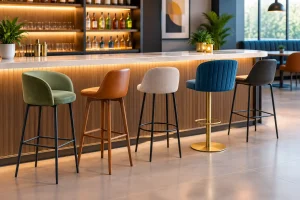
For example, outdoor chairs require materials and finishes selected for moisture, sunlight, temperature changes, and cleaning. Bar chairs need stable proportions, appropriate footrest placement, and a seat height that works with the counter specification. Dining chairs should provide enough comfort for the intended experience without becoming too heavy or difficult for staff to reposition.
Architects and designers should also consider the complete furniture language. Chairs, armchairs, sofas, bar seating, and tables do not need to match exactly, but they should belong to the same visual system. This is where a manufacturer with a broad hospitality range creates an advantage. It is easier to coordinate materials, finishes, and lead times when complementary pieces are developed through one production partner.
Comfort is a Business Decision
Comfort affects more than guest satisfaction. It affects table turnover, perception of quality, and the type of experience a venue delivers. A quick-service location may favor supportive, compact seating that encourages an efficient rhythm. A destination restaurant may choose deeper upholstery and more generous armchairs to support a longer visit.
There is no universal “most comfortable” chair. Seat depth, back angle, upholstery, arm support, and chair height must work together. The best approach is to review samples or prototypes whenever possible, particularly for major projects. A chair can appear correct in a rendering and feel entirely different after thirty minutes of use.
Evaluate Materials for Real Commercial Use
Material selection should match the setting rather than follow a trend without question. Solid wood brings warmth and character, but the species, construction method, and protective finish need to suit commercial traffic. Metal offers visual clarity and structural strength, especially for contemporary interiors, but welds and coating quality deserve close attention. Upholstery adds softness and comfort, while requiring a practical plan for cleaning, wear, and replacement.
For indoor upholstered seating, fabric performance is only part of the decision. Consider color retention, texture, stain resistance, cleanability, and how the material will age under daily use. A pale bouclé may be suitable for a carefully managed hotel lounge, yet a busy neighborhood restaurant may benefit from a more forgiving color and surface.
Outdoor specifications require equally careful choices. Powder-coated metal, weather-appropriate fabrics, and suitable construction details can extend product life, but no outdoor item is maintenance-free. Buyers should discuss storage, covers, seasonal exposure, and local climate before finalizing the order.
A reliable chair manufacturer will address these trade-offs clearly. Promising the same performance from every material in every condition is not expertise. Practical guidance is.
Custom Manufacturing Makes Concepts Buildable
Standard collections offer speed and proven proportions. Custom manufacturing creates room for a project to become distinctive. The strongest suppliers can work between those two options: adapting an existing chair with a different finish, upholstery, leg detail, or dimension, or developing a fully tailored item when the concept requires it.
Customization should serve the project, not complicate it. A modified seat height may solve a table proportion issue. A custom stain can connect seating to millwork. A specific upholstery can carry the brand identity through the room. On the other hand, too many unique components can increase approval time, cost, and production complexity.
Clear technical information is essential at this stage. Buyers should confirm overall dimensions, seat height, material specifications, finish samples, upholstery codes, quantity by item, and packaging expectations before production begins. Small uncertainties at approval can become large issues once goods are packed for export.
Rezze Design approaches this process with in-house production and project-focused customization, helping hospitality clients specify seating that fits both their aesthetic direction and operational needs.
Ask How Production Is Controlled
A chair is only as dependable as the process behind it. Factory capability gives buyers greater visibility into material handling, workmanship, quality checks, finishing, and scheduling. It also allows a manufacturer to respond more effectively when a project requires adjustments or repeat orders.
When evaluating a supplier, ask practical questions. Can they produce samples? How are finishes approved? What quality checks take place before packing? Can they keep specifications consistent across a larger order? What happens if the project expands or requires replacement units later?
These questions are particularly relevant for distributors and wholesalers. A product line needs more than visual appeal to succeed in a market. It needs dependable specifications, repeatable quality, protective packaging, and a manufacturer that communicates quickly when customers need answers.
Packaging and Export Are Part of the Product
For international projects, the furniture is not truly ready until it can travel safely. Packaging must protect finished surfaces, upholstery, edges, and legs while using container space efficiently. Poor packing can turn a well-made product into a costly arrival problem.
Export-ready manufacturers understand that documentation, loading plans, lead-time communication, and packing details affect the buyer’s schedule. Logistics coordination does not replace the work of a freight partner, but it helps keep responsibilities clear. For US buyers, this means fewer surprises between factory completion and final delivery planning.
Build a Supplier Relationship That Supports Growth
The most valuable furniture partnerships continue beyond a single purchase order. A restaurant group may open additional locations. A designer may need matching pieces for a later phase. A distributor may want to introduce a collection to new customers. In each case, consistency and responsiveness become as important as the first shipment.
This is why factory-direct collaboration can be especially effective for hospitality buyers. Direct communication supports faster decisions on materials, quantities, samples, and technical revisions. It also gives the manufacturer a clearer understanding of the commercial context behind each request.
Price still matters, of course. But the lowest initial quote can become costly if it leads to failures, delayed approvals, inconsistent finishes, or difficult replacement orders. Evaluate the complete value: design quality, construction, customization options, packing, production communication, and the supplier’s ability to support future business.
For your next hospitality project, begin by sharing the floor plan, concept direction, target quantities, and performance expectations early. A capable manufacturing partner can turn those inputs into seating that looks considered on opening day and continues working long after the first service.