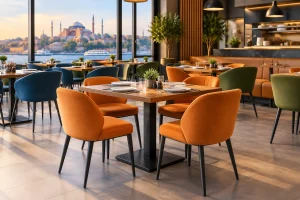

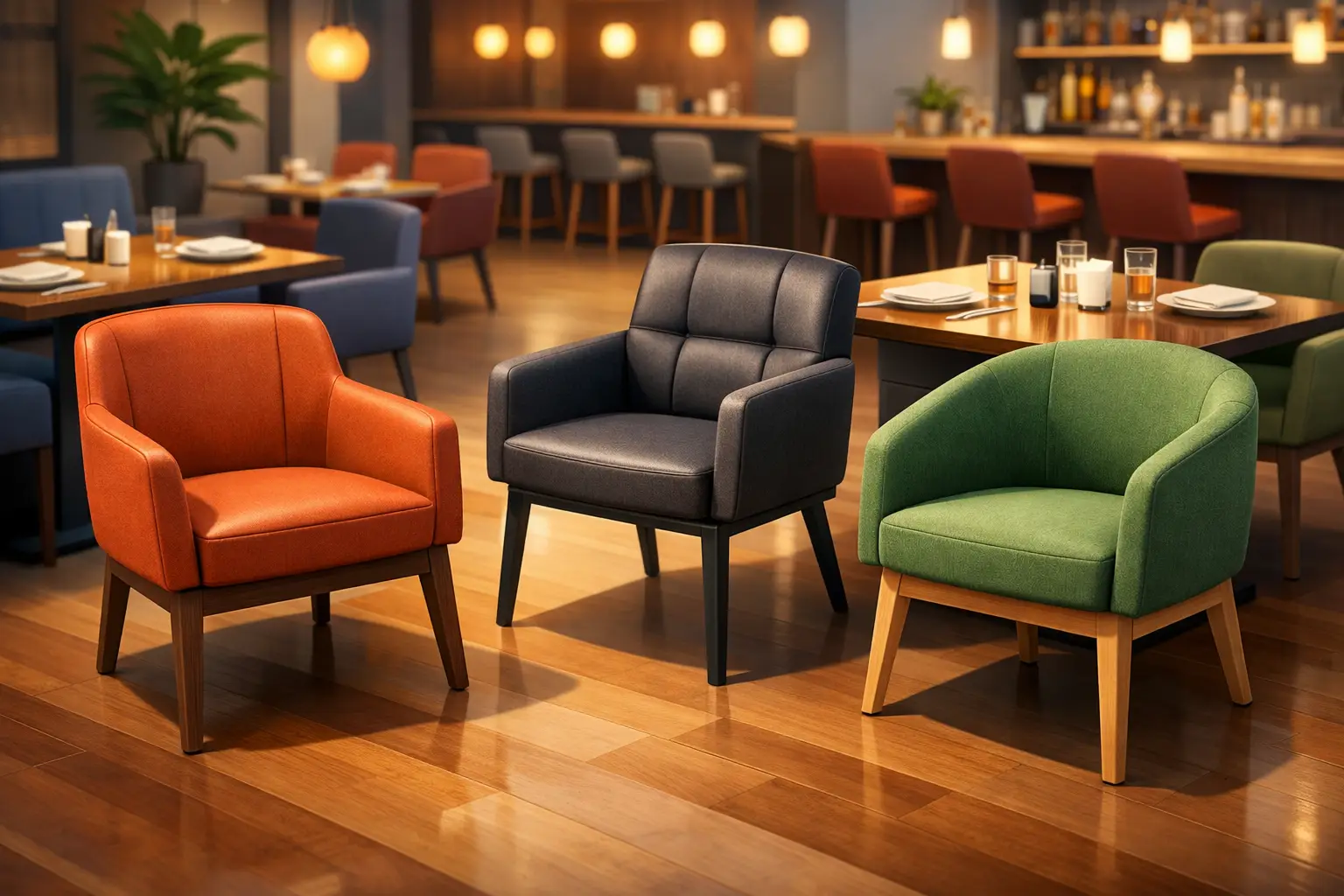
A restaurant armchair may occupy only a small footprint, but it carries a large share of the guest experience. Commercial armchairs for restaurants need to look considered at first glance, feel comfortable through a full meal, and withstand the daily pressure of busy service. A chair that photographs well but loosens, stains, or becomes uncomfortable within months creates an unnecessary operating cost.
For restaurant operators, architects, and hospitality buyers, the right armchair is not simply a decorative purchase. It is a commercial specification decision that affects table planning, service flow, cleaning routines, brand perception, and replacement budgets.
What Commercial Armchairs Must Deliver
Residential-style armchairs are often designed for occasional use. Restaurant seating is different. Guests pull chairs in and out repeatedly, lean on the arms, shift their weight, and use the seating for extended lunches, dinners, meetings, and celebrations. In high-turnover venues, staff must also move chairs quickly during cleaning and table resets.
That is why commercial performance begins below the upholstery. The frame needs dependable joinery, stable proportions, and materials selected for repeated use. A well-built wooden armchair requires properly prepared timber and reinforced construction at stress points. A metal-frame model needs consistent welding, carefully finished edges, and a coating that can tolerate frequent contact and cleaning.
Comfort also has to be managed with discipline. Excessively soft cushioning can feel inviting in a showroom but lose shape too quickly in service. A seat that is too firm, too shallow, or too upright can shorten guest dwell time for the wrong reason. The best specification balances support with comfort, using a seat depth, back angle, and arm height appropriate for the restaurant’s service style.
Fine dining, all-day dining, hotel restaurants, and neighborhood cafés will not all require the same answer. A compact urban restaurant may prioritize armchairs that slide close to small tables. A destination venue may want a more generous silhouette that encourages guests to settle in. The right choice depends on the concept, available floor area, expected turnover, and the visual language of the interior.
Planning Commercial Armchairs for Restaurants
Armchairs require more space than side chairs. This is their advantage and their constraint. The arms create a stronger sense of personal space and often elevate the perceived value of a dining setting, but they can reduce the number of covers if layouts are not planned carefully.
Start with the table arrangement, not the individual chair. Consider how much clearance guests need to sit down comfortably, how servers will pass behind occupied chairs, and whether chairs must be moved for accessible seating or flexible event layouts. A chair that looks compact on a product sheet can become too wide once its arms, angled legs, and occupied space are considered.
Seat height should be coordinated with the tabletop. Most dining environments work best when the seat allows guests to sit naturally beneath the table without feeling either compressed or too low. Arm height also matters. If the arms cannot slide under the table edge, the chair may sit farther back than expected, increasing the space required around each table.
For larger projects, a sample review is worth the time. Place the armchair beside the intended table, sit in it for more than a few minutes, and test it in the actual layout. This simple step often reveals issues that are invisible in drawings, including arm clearance, visual bulk, or a mismatch between the chair’s comfort level and the menu experience.
Match the Chair to the Service Model
A chef-led restaurant with long tasting menus may benefit from upholstered armchairs with a supportive back and refined tactile finish. A fast-casual operation may need a lighter, easier-to-clean armchair with durable upholstery and a more compact footprint. Lounge-adjacent dining can support lower, more relaxed forms, while a formal dining room usually needs consistent seat heights across the floor.
There is no universal best armchair. There is a best armchair for a specific operational model. Projects become more efficient when that distinction is made early, before finishes and quantities are finalized.
Materials and Finishes for High-Traffic Dining
The material selection should support the design concept and the maintenance reality. Upholstery adds warmth, acoustic softness, and a more premium seating experience. It also requires the right fabric or leather alternative for the venue’s daily use. Commercial-grade textiles with strong abrasion resistance and stain-conscious finishes are often a practical choice for dining areas, especially where food and beverages are served throughout the day.
For projects seeking a richer look, leather or high-quality leather alternatives can provide a tailored, hospitality-focused finish. However, darker tones, textured surfaces, and carefully selected colors are generally more forgiving in high-contact environments than very pale, smooth materials. The best choice depends on the cleaning routine and the restaurant’s willingness to maintain the finish consistently.
Wood brings warmth and character, particularly in contemporary, natural, or Mediterranean-inspired interiors. It should be finished for commercial use and specified in a tone that works with the wider palette of tables, flooring, lighting, and wall treatments. Metal can offer a sharper, more architectural expression and is especially effective in modern restaurants or projects where lighter visual weight is needed.
A mixed-material armchair can create a strong balance: a metal base for structure, upholstered seat and back for comfort, and timber accents for warmth. These combinations should be designed carefully. Every transition between materials is a detail that needs to perform under daily use, not merely look appealing at installation.
Details That Protect Long-Term Value
Restaurant furniture is judged over time. The details that protect its value are often the details guests never notice directly: reinforced joints, properly aligned glides, dense and resilient foam, stable leg geometry, and upholstery tailored to avoid early sagging or wrinkling.
Floor protection deserves attention as well. Chair glides should suit the surface beneath them, whether that is timber, tile, stone, or carpet. Poorly selected glides can create noise, damage floors, or make chairs difficult for staff to move. In busy dining rooms, small operational irritations become larger costs over a year of service.
Weight is another trade-off. A heavier armchair can feel substantial and remain stable, but it may slow down cleaning and table resets. A very light chair is easier to move but may feel less secure when guests lean on its arms. The target is controlled weight: stable enough for confident use, manageable enough for staff to handle efficiently.
Commercial buyers should also think beyond the opening date. Can a damaged upholstery panel be repaired? Can replacement glides be supplied? Is the finish repeatable for a later expansion phase? A project-ready manufacturer should be able to discuss these practical questions before production begins.
Custom Armchairs for a Defined Restaurant Identity
Standard collections can provide speed and clarity, but custom manufacturing offers valuable control when a project has a distinct design direction. Adjusting dimensions, leg finishes, upholstery, piping, stitching, or frame colors can help an armchair belong naturally within the restaurant instead of appearing selected from a generic catalog.
Customization should be purposeful. A special fabric may strengthen the identity of a boutique hotel restaurant. A revised seat height may solve a table compatibility issue. A custom wood stain may connect the dining room with the bar, reception, or lounge. Each adjustment should improve the project rather than add complexity without commercial value.
Rezze Design supports hospitality projects through in-house manufacturing, allowing buyers and design teams to align seating specifications with the wider interior concept. This is particularly useful for projects that require coordinated restaurant chairs, armchairs, bar seating, sofas, and tables rather than unrelated pieces sourced from multiple suppliers.
Choosing a Supplier for Restaurant Seating
A strong product is only part of a successful furniture project. Buyers also need accurate specifications, finish samples, realistic production communication, export-ready packing, and reliable coordination from approval through delivery. These factors matter even more for distributors, architects, and operators managing projects across borders.
Ask direct questions before confirming an order. Confirm lead times, minimum quantities, finish approvals, packing methods, and what information will be provided during production. For larger projects, establish a clear sample approval process so the final order reflects the agreed construction, color, and upholstery quality.
The most effective restaurant armchair is one that supports both the guest and the business behind the guest experience. Specify for the actual service environment, test the chair in context, and choose a manufacturing partner prepared to stand behind the details long after the dining room opens.