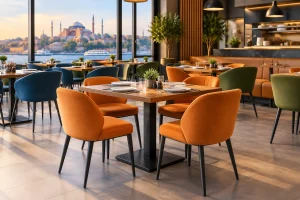

A bar chair is one of the first places guests feel a hospitality concept. At a coffee counter, hotel lounge, restaurant bar, or rooftop venue, its height, footrest position, upholstery, and silhouette all affect how long people stay. Choosing a custom bar chair manufacturer is therefore not simply a purchasing decision. It is a project decision that connects visual identity, guest comfort, commercial durability, and delivery control.
For architects, restaurant operators, distributors, and contract buyers, the right manufacturing partner should do more than offer a catalog item in a different fabric. The partner should understand how a chair will be used, what it must withstand, how it needs to fit the space, and how to produce it consistently for the project schedule.
Why bar chair customization matters in commercial spaces
A residential-style bar stool may look appropriate in a sample image, yet struggle under the demands of a busy venue. Guests shift, lean, pull chairs away from the counter, rest their feet on the frame, and use the seating throughout long service hours. The result is repeated stress on joints, upholstery, footrests, finishes, and floor-contact points.
Customization allows the product to respond to these realities without compromising the concept. A café may need a compact counter chair that preserves circulation in a narrow service area. A fine-dining bar may require a fully upholstered back and a tailored metal footrest. A resort terrace may need a weather-conscious construction and materials selected for its environment. These are different applications, even when the desired visual language is contemporary and refined.
The strongest projects also use bar chairs to create continuity. Their frame color can relate to table bases, lighting details, and shelving. Upholstery can introduce warmth against stone, tile, or stainless steel. The back profile can repeat the geometry found in banquettes or dining chairs. This level of coordination is difficult to achieve when bar seating is treated as an isolated purchase.
What a custom bar chair manufacturer should control
Customization has real value only when it is supported by production knowledge. A supplier may offer many options, but a factory-led manufacturer can evaluate whether those options work together in actual commercial production.
Dimensions and ergonomics
Seat height must match the counter or bar height, but the measurement alone is not enough. The relationship between the seat, footrest, backrest, and counter overhang determines whether guests can sit comfortably. A chair with a correct seat height can still feel awkward if the footrest is too high, too low, or poorly positioned.
Commercial projects should also consider how long guests are expected to sit. Quick-service counters can favor a cleaner, more compact form. Cocktail bars, lounges, and hotel venues often benefit from greater back support and more substantial cushioning. There is no universal specification. The right solution depends on the operation, target guest, and intended dwell time.
Frame construction and material selection
Metal, wood, and mixed-material frames each bring different strengths. Metal chairs can provide a crisp contemporary profile and strong structural performance when engineered and welded correctly. Wood can add texture and warmth, although the species, joinery, finish, and use conditions need careful consideration. Combined structures can create a premium appearance, but every connection between materials must be designed for repeated use.
Footrests deserve particular attention. They are a high-contact area and often show wear before other parts of the chair. A suitable material thickness, secure fixing method, and finish choice will make a visible difference over time. For hospitality use, details that seem minor at the design stage often determine the chair’s long-term appearance.
Upholstery and finish options
Color is only one part of upholstery selection. Contract seating materials should be evaluated for cleaning needs, abrasion exposure, texture, and how they will age in the venue. A pale bouclé may suit a low-traffic lounge area, while a busy restaurant bar may require a more practical textile or commercial-grade leather alternative.
The same principle applies to powder coating, wood stains, and metal finishes. Dark finishes can create a sharp visual contrast but may reveal dust or surface marks in certain settings. Lighter finishes can support an airy concept but must be chosen with maintenance in mind. A reliable manufacturer will discuss these trade-offs early, before a finish becomes an expensive revision.
From design brief to approved sample
The most efficient custom projects begin with a clear brief. This does not need to be overly complicated. A floor plan, inspiration images, target dimensions, finish references, expected quantities, and installation timeline provide a practical starting point. If there are site restrictions, such as elevator size, narrow access, outdoor exposure, or a fixed counter height, those details should be shared at the beginning.
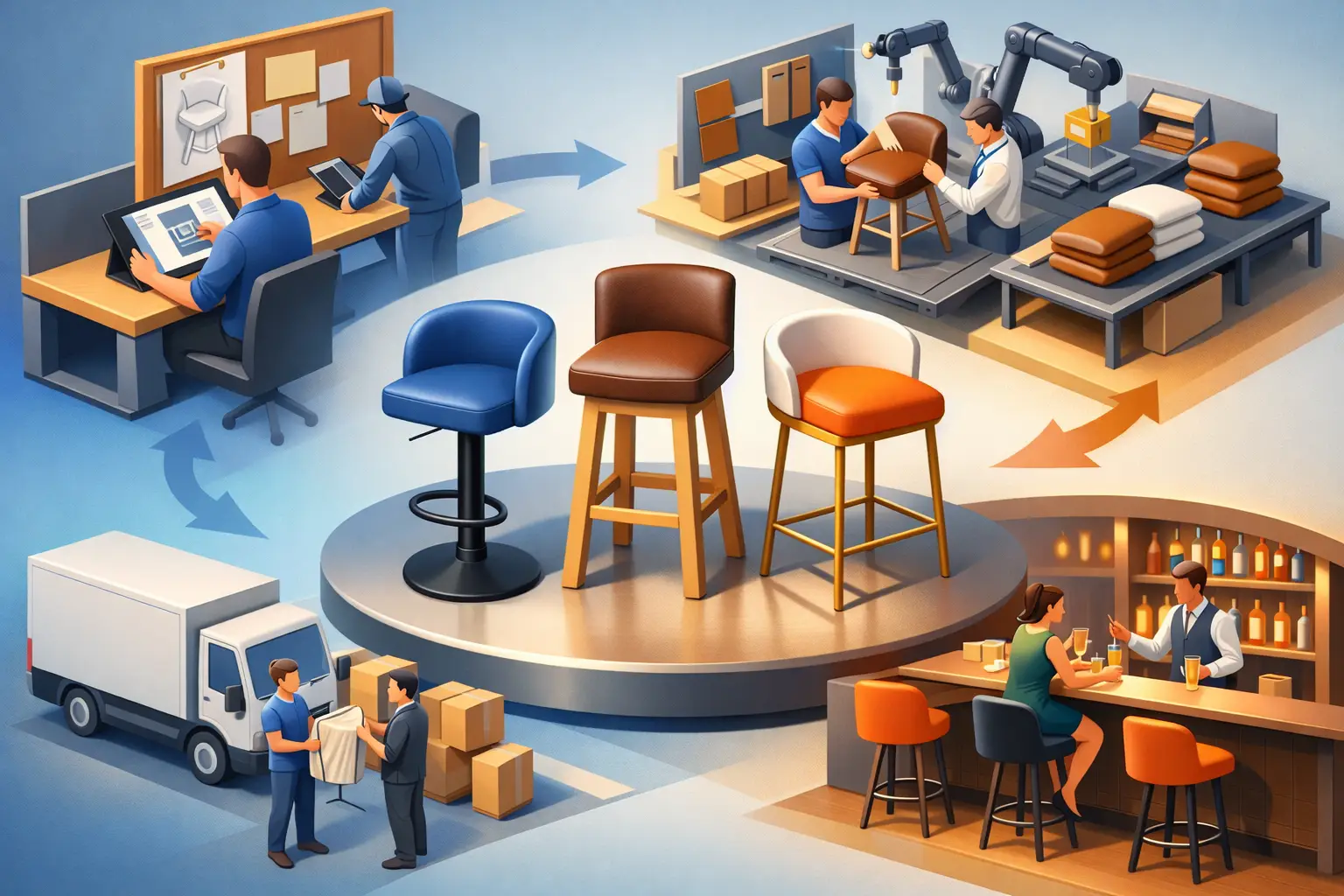
From there, the manufacturer can advise on achievable proportions, construction methods, and material alternatives. This is where factory capability matters. A manufacturer with in-house production can connect design intent to the realities of welding, upholstery, finishing, assembly, packing, and quality control rather than passing the project through several unrelated suppliers.
Sampling is a valuable control point, particularly for multi-unit hospitality orders. It allows the buyer, designer, and manufacturer to confirm comfort, color, stitching, frame finish, and overall proportion before full production begins. A sample should be reviewed as a working commercial product, not only as a presentation piece. Sit in it. Check its stability. Assess the footrest. Place it beside the intended counter or table. Look at it under the venue’s actual lighting when possible.
Once the sample is approved, documented specifications reduce uncertainty. Dimensions, finish codes, upholstery selections, packaging requirements, labels, and quantity breakdowns should be aligned before production. Clear approvals protect both the buyer and the factory.
How factory-direct production improves project control
Working directly with a manufacturer can simplify communication and improve accountability. Instead of asking a trading layer to relay questions, project teams can discuss practical details with the people responsible for production. That creates faster feedback on feasibility, material availability, and lead-time implications.
It can also support better consistency across a broader furniture package. Bar chairs may be produced alongside dining chairs, armchairs, sofas, tables, or outdoor seating so finishes and design language remain coordinated. For distributors, this creates an opportunity to build a more coherent commercial offering rather than sourcing every category separately.
Rezze Design supports this approach through its Istanbul factory, where commercial seating and tailored project items are developed with production control in mind. For export buyers, that control should extend beyond the workshop floor. Packing requirements, loading plans, product protection, documentation, and logistics coordination all affect the final outcome.
Factory-direct does not mean every request should be accepted without review. Customization can affect minimum quantities, material sourcing, development time, and shipment planning. A dependable partner explains these limits clearly and proposes alternatives when a requested detail would create unnecessary cost, delay, or service risk.
Questions buyers should ask before placing an order
Before confirming a custom bar chair program, buyers should establish who owns the technical details. Ask whether the manufacturer produces the chair in-house, how samples are handled, and how approved specifications are recorded. Confirm the intended use environment, especially for outdoor or semi-outdoor applications where moisture, UV exposure, and temperature changes can affect material choices.
It is also wise to discuss repeat orders at the start. Restaurants expand, hotel groups open new locations, and distributors need continuity for their clients. Material availability and finish matching can change over time, so the manufacturer should explain how it manages repeatability and approved alternatives.
Finally, review packaging and delivery expectations with the same care given to the chair itself. A well-made product can arrive damaged if carton protection, palletization, container loading, or handling instructions are not considered. Commercial buyers need a supplier that sees delivery as part of the product responsibility.
Custom seating that supports the whole concept
The best bar chair does not demand attention at the expense of the room. It supports the counter, invites guests to sit comfortably, withstands daily use, and reinforces the character of the venue. That balance comes from design discipline and manufacturing precision working together.
For a new hospitality project or a distributor collection, start the conversation with the way the chair will actually be used. A capable manufacturer can then turn that operational reality into seating that looks considered on opening day and continues to perform long after the first service.