

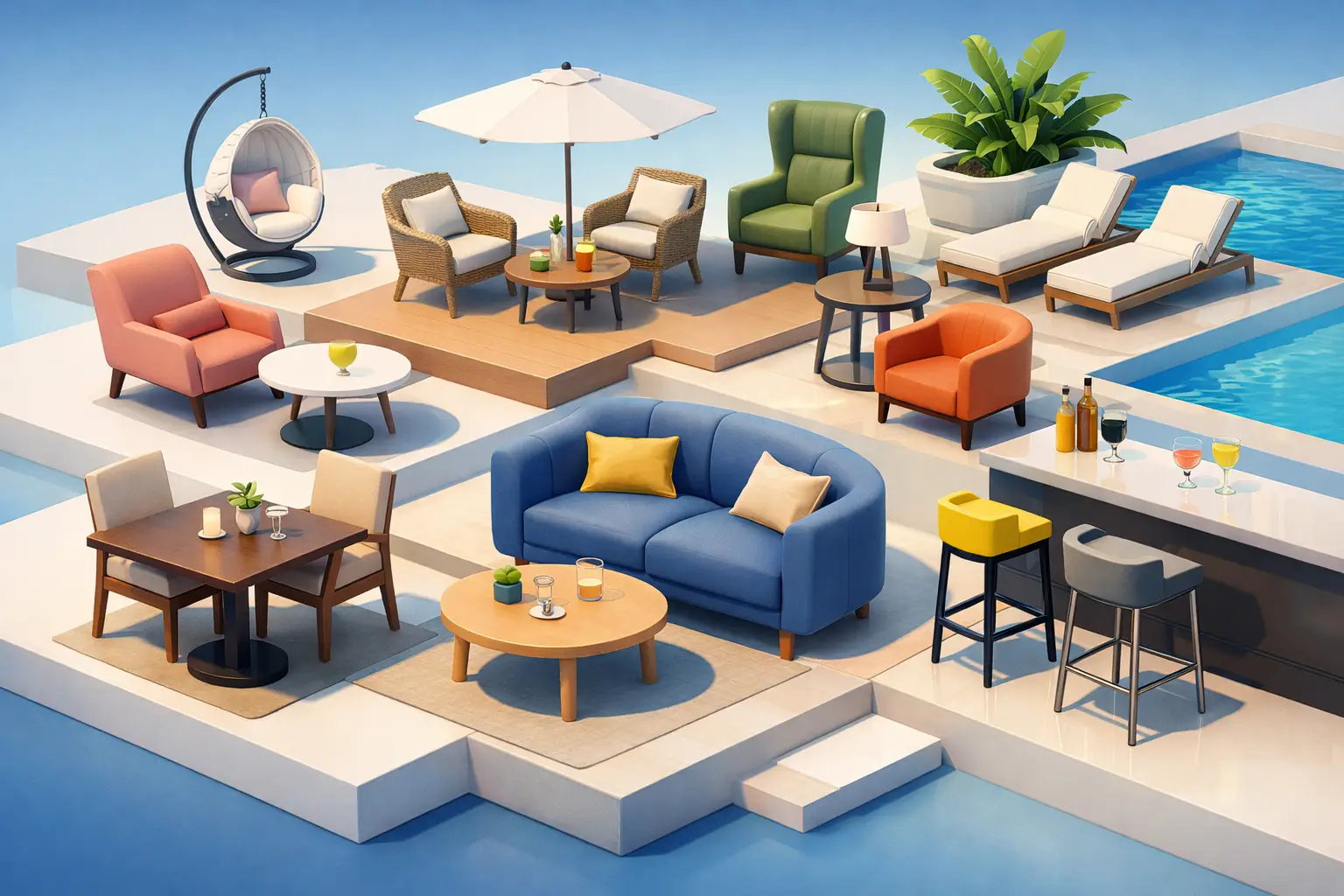
A chair decision can change how long guests stay, how easily staff move, and how a space photographs after opening week. That is why hospitality seating solutions are rarely just about filling a floor plan. For restaurants, cafés, hotels, and multi-use commercial venues, seating affects guest comfort, operating efficiency, maintenance costs, and the overall value of the interior investment.
For B2B buyers, the real question is not simply which chair looks good in a showroom. It is which seating program will keep performing under daily service, support the concept, and arrive with the consistency a commercial project requires. Good selection comes from balancing design intent with production discipline.
What hospitality seating solutions need to accomplish
In hospitality, seating has to work harder than residential furniture. It must carry the visual identity of the space, withstand repeated use, and fit the pace of service. A café may need compact chairs that stack or move easily through a tight layout. A premium restaurant may prioritize a more generous armchair profile that supports longer dwell times and a higher average check. A hotel lounge may need mixed seating types that create layers of use throughout the day.
This is where many projects go off course. Buyers often start with style, then try to solve durability, comfort, and logistics later. In practice, the order should be more disciplined. The concept matters, but so do frame construction, upholstery selection, finish performance, lead time, and replacement consistency. When these factors are considered early, the seating package becomes an asset instead of a future problem.
Design direction matters, but commercial use decides the final specification
A contemporary hospitality interior often asks for clean silhouettes, warm materials, and memorable forms. That is important, especially in competitive food and beverage markets where guests respond to atmosphere as quickly as they respond to menu design. Still, aesthetic strength alone does not make a chair suitable for service.
Commercial seating needs proportion that fits real table heights, aisle widths, and circulation patterns. It needs comfort that works for the intended duration of stay. It also needs materials chosen for the setting. A textured woven fabric might elevate the room visually, but in a high-turnover dining environment it may be less practical than a performance textile or an easy-clean surface. A metal frame may offer excellent structural stability, but the finish must be suitable for repeated contact and cleaning.
There is always a trade-off. The most sculptural piece in the room may not be the right choice for every seat count. Many successful projects combine statement pieces in focal zones with highly efficient side chairs in primary dining areas. That approach protects the concept while keeping the operation practical.
Matching seat types to service zones
One of the most effective ways to plan seating is by separating the venue into use zones. Dining chairs, lounge armchairs, bar stools, banquette combinations, and outdoor seating each answer a different operational need. Trying to force one style across every zone usually weakens both function and visual rhythm.
In a restaurant, standard dining chairs may carry most of the floor, while bar chairs handle shorter visits and higher turnover at the counter. Sofas or upholstered armchairs can soften waiting areas or premium corners where the operator wants a more relaxed feel. Outdoor chairs need a different material strategy altogether, especially in coastal, high-sun, or humid climates.
For architects and designers, this layered approach creates a stronger interior story. For operators and distributors, it reduces the risk of using the wrong specification in the wrong place.
Comfort is measurable, not decorative
Comfort is one of the most misunderstood parts of hospitality seating solutions. Buyers often discuss it as a matter of personal taste, but in commercial projects comfort is linked to measurable details. Seat height, seat depth, back angle, arm position, and cushion density all affect how guests experience the furniture.
A chair that looks refined can still fail if the seat is too shallow for relaxed dining or too low for efficient table use. A bar stool can appear balanced in elevation drawings but feel awkward if footrest placement is ignored. An upholstered lounge chair may look inviting, yet become a maintenance burden if the foam and fabric are not selected for repeated use.
Sampling helps here, especially when the buyer can test comfort in relation to the actual table height or project layout. For wholesalers and distributors, this also matters because products that perform well in real hospitality settings are easier to sell repeatedly. Consistency builds confidence across projects.
Durability starts in the factory, not on the spec sheet
Commercial buyers are right to ask about materials, but durability is not only about what a chair is made from. It is also about how it is produced. Joint construction, welding precision, upholstery workmanship, finishing quality, and packaging standards all influence how seating performs by the time it reaches the site and enters service.
That is one reason factory-controlled production has a clear advantage in hospitality work. When manufacturing and project coordination are connected, it becomes easier to adjust dimensions, review finishes, maintain quality standards, and protect timelines. Custom work also becomes more realistic because the producer has direct control over frames, materials, and finishing rather than relying on fragmented sourcing.
For project buyers, this reduces uncertainty. For export clients, it also improves communication around packing, consolidation, and production status. In hospitality, delays and quality variations are expensive. Reliable production is part of the product.
Hospitality seating solutions and customization
Customization is not always about creating a completely new product. In many projects, the smarter move is adapting a proven model. A standard chair might be modified through fabric, finish, seat pad detail, dimensions, or branding elements to fit the project concept without introducing unnecessary production risk.
That balance is valuable. Fully bespoke seating can deliver strong differentiation, but it also requires careful technical development, approvals, and timing. For some openings, that is the right route. For others, a semi-custom solution gives the buyer enough design distinction while keeping costs and lead times under better control.
This is especially relevant for restaurant groups, hotel operators, and distributors building repeatable programs. A supplier who can offer both standard collections and tailored adjustments is often better positioned to support growth than one who can only do one or the other.
What buyers should review before placing an order
Before confirming a seating package, buyers should look beyond finish swatches and rendered visuals. They should assess frame materials, upholstery suitability, seat comfort, dimensions, maintenance expectations, production capacity, and packing standards. They should also confirm whether replacement or continuation orders can be supported later.
That last point is often overlooked. Hospitality projects evolve. Sites expand, chairs get damaged, concepts roll out to second locations, and successful models need to be reordered. A seating partner should be able to support that commercial reality, not just the first shipment.
Why supplier partnership matters as much as product
Strong hospitality furniture sourcing depends on communication. Architects need technical clarity. Operators need realistic timelines. Distributors need dependable production and export readiness. When the supplier understands commercial interiors, conversations become faster and more productive because decisions are grounded in application, not guesswork.
This is where a project-driven manufacturer stands apart from a generic furniture seller. The value is not only in offering chairs, armchairs, sofas, bar chairs, outdoor seating, and tables. The value is in helping the buyer assemble a coherent package, resolve specification details, and move from concept to delivery with fewer disruptions.
For many buyers in the US and other export markets, that partnership model matters more than an oversized catalog. They want a source that can produce with precision, adapt when needed, and communicate clearly across the life of the order. That expectation is reasonable. Hospitality projects carry too much cost and visibility to be left to uncertain supply chains.
A company like Rezze Design understands this from the manufacturing side. In-house production creates better control over quality, customization, and scheduling, which is exactly what commercial buyers look for when furnishing high-traffic spaces with a contemporary standard.
The best seating choice is the one that keeps working
The most successful hospitality interiors are not built on isolated hero pieces. They are built on seating that still looks right after months of service, still feels comfortable during a full shift, and still supports the brand when the venue is busy. That takes more than taste. It takes planning, specification discipline, and a manufacturing partner that understands how design and operations meet on the floor.
If a seating package can support the concept, survive daily use, and simplify the path from factory to project site, it is doing exactly what commercial furniture should do – helping the business perform while keeping the space visually sharp.