A restaurant can have its lease signed, kitchen equipment ordered, and construction moving forward, yet still miss its opening date because seating arrives too late. Restaurant furniture lead times deserve the same early planning as permits, millwork, flooring, and kitchen installation. For hospitality operators, architects, and procurement teams, furniture is not a finishing detail. It is a critical part of the project schedule.
The right supplier should give you more than a broad delivery promise. You need a clear production path, realistic approval dates, packing requirements, and freight planning that match your site program. This is especially true when the project includes custom chairs, upholstery, tables, outdoor pieces, or a mixed order of standard and tailor-made products.
What Determines Restaurant Furniture Lead Times?
Lead time is the total period from a project-ready order to delivery at the agreed destination. The word project-ready matters. A purchase order alone does not always start production. If drawings, finishes, fabric selections, quantities, shipping marks, or deposit terms are still pending, the manufacturing schedule may not be fully confirmed.
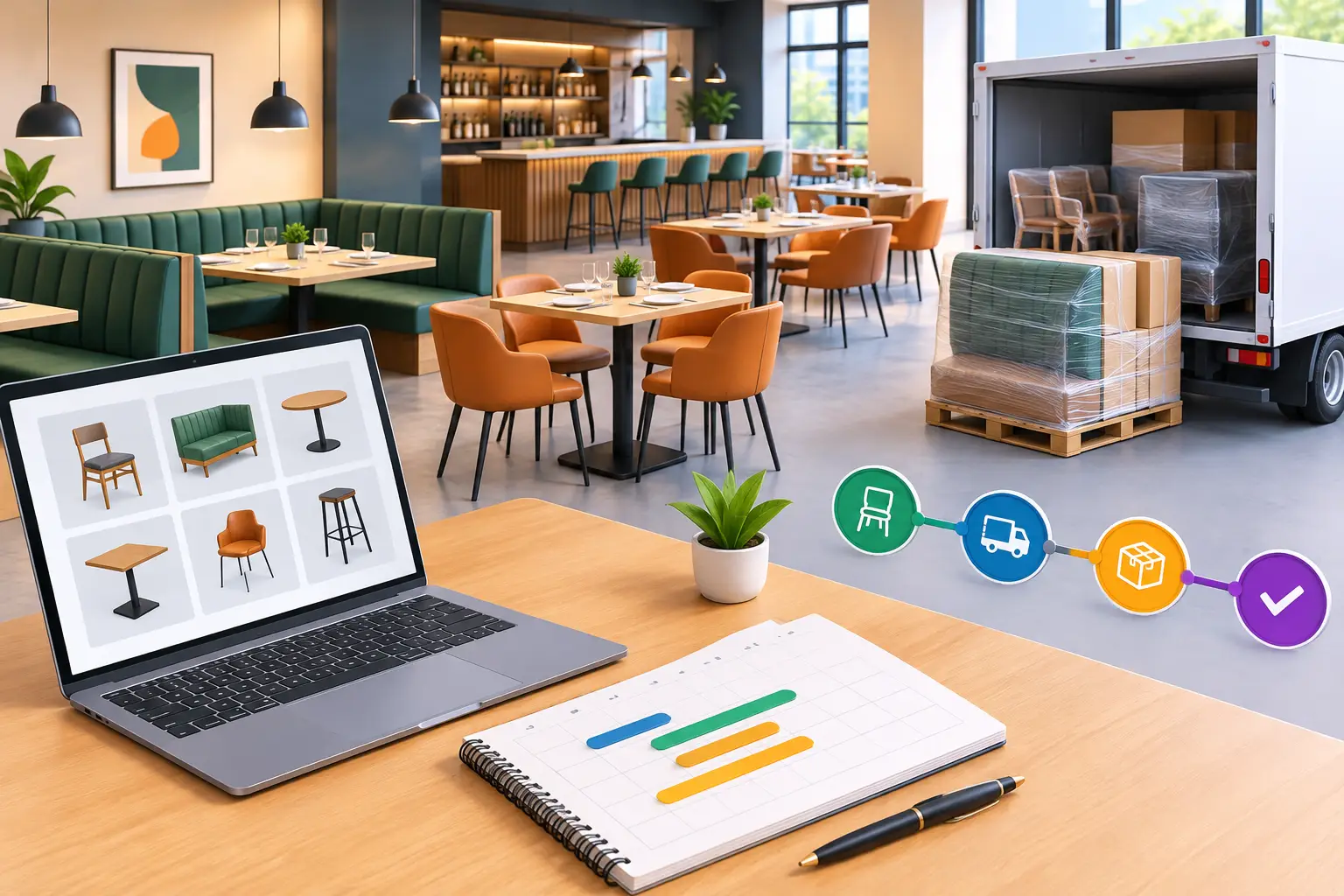
For commercial furniture, the timeline generally includes design confirmation, material procurement, production, quality control, packing, export documentation, freight, customs clearance, and local delivery. Each stage has its own dependencies. A delay in one decision can push the entire sequence, particularly when several product categories must ship together.
Standard collection items often move faster than fully custom furniture, but availability still depends on production capacity and the materials specified. A metal chair in an approved standard color may require less preparation than an upholstered armchair with a custom frame finish and customer-selected performance fabric. Neither option is automatically better. The right choice depends on the visual direction, budget, durability requirements, and opening date.
Typical Planning Ranges
There is no single lead time that applies to every restaurant project, but buyers should plan in ranges rather than assume an immediate turnaround. Ready or partially stocked items may be available sooner, while made-to-order commercial furniture often requires several weeks of factory production after final approval. Bespoke pieces, large quantities, special finishes, and complex upholstery can require more time.
International freight must be planned separately from manufacturing. Ocean freight may be efficient for larger orders, but transit, port handling, customs procedures, and final-mile delivery can add meaningful time. Air freight can shorten transit for limited quantities or samples, yet it changes the landed cost significantly and is rarely practical for a full furniture package.
A dependable proposal distinguishes between production lead time and shipping lead time. Combining them into one vague estimate makes it difficult for a project team to coordinate installation crews, lighting, tableware, signage, and final inspections.
The Approval Stage Often Controls the Schedule
The fastest factory cannot protect a schedule if specifications change repeatedly. Before production begins, the project team should settle the commercial and technical details: final item list, quantities, dimensions, finishes, upholstery, table top materials, packaging needs, and delivery terms.
For custom work, drawings or technical specifications should clearly establish what is being manufactured. A chair may look simple in a rendering, but small details affect fabrication: seat height, back angle, piping, foam density, metal profile, wood stain, glides, and stackability. In a high-traffic restaurant, these choices also affect cleaning, comfort, maintenance, and lifespan.
Samples can be valuable when the finish is central to the concept or when the buyer is specifying a new material. They do add time, so they should be requested early, not after the main production window has already been allocated. The same applies to mock-ups for custom banquettes, sofas, and tables. A sample stage protects the final result, but it should be built into the schedule rather than treated as an interruption.
Why Custom Restaurant Furniture Needs More Time
Custom manufacturing gives a restaurant a stronger identity. It allows seating, tables, colors, and proportions to align with the interior concept instead of forcing the project around generic inventory. For many hospitality spaces, that distinction is worth the added planning.
However, custom production requires controlled coordination. Materials may need to be sourced for a specific order. A new paint color or stain can require matching and approval. Upholstery production involves cutting, sewing, foam preparation, and installation, while metal and wood components need their own fabrication and finishing cycles. Production also needs to be sequenced so that every component reaches final assembly at the right time.
At Rezze Design, in-house manufacturing provides direct visibility across chairs, armchairs, sofas, bar seating, outdoor furniture, and tables. That control supports clearer project communication, but it does not eliminate the need for timely decisions. A realistic schedule is built through collaboration between the manufacturer, designer, buyer, and logistics team.
Build Your Furniture Schedule Backward From Opening Day
Restaurant openings have fixed pressure points: contractor handover, health inspections, staff training, soft opening, photography, and launch events. Start with the date furniture must be installed, then work backward through local delivery, customs, freight, packing, final quality checks, and factory production.
Allow a buffer between delivery and opening. Furniture should not arrive on the morning guests are expected. The team needs time to place tables, install glides, inspect upholstery, adjust layouts, remove packaging, and resolve any site-access issues. A buffer is also useful when construction work is still active and the premises cannot yet receive finished products safely.
For a complete furniture package, identify the critical path early. A project may have chairs ready before table bases or outdoor seating. Shipping everything together can simplify receiving and reduce freight handling, but it may hold back completed items. Splitting shipments can protect the opening schedule, though it increases logistics complexity and cost. The better choice depends on the project’s priorities.
Information That Helps a Supplier Quote Accurately
An early inquiry can be productive when it contains enough detail to assess feasibility. Concept images, plans, product references, required quantities, preferred materials, destination city, target installation date, and purchasing timeline give the supplier a practical starting point.
If the project is still evolving, state what is confirmed and what remains open. A good manufacturing partner can recommend alternatives that preserve the design direction while improving availability, freight efficiency, or budget control. For example, a standard powder-coat option may reduce risk compared with a special finish, or a collection chair may be paired with custom tables to focus investment where the interior needs the strongest signature.
Large orders also benefit from early discussion about packing and container planning. Furniture can be packed to protect upholstery, finishes, and table tops, but packaging volume affects freight cost. Nesting, stacking, knock-down construction, and consolidated shipping can all influence the final logistics plan. These are commercial decisions as much as operational ones.
How to Reduce Delays Without Compromising the Design
The most effective way to shorten restaurant furniture lead times is not to rush the factory at the end. It is to remove uncertainty at the beginning. Confirm finishes early, give one person authority to consolidate feedback, and avoid changing quantities after materials are ordered unless the supplier has confirmed the impact.
Choose specifications with the intended use in mind. Commercial-grade finishes, suitable fabrics, correct glides, and durable table surfaces may cost more than residential alternatives, but they reduce replacement risk in a busy dining room. Ask how pieces will perform under daily movement, cleaning, and guest traffic, not only how they appear in a presentation.
Keep communication active during production and logistics. Milestone updates on approvals, material readiness, production completion, packing, and dispatch allow the project team to coordinate other trades before a problem becomes a site delay. Clear communication is particularly valuable for export projects, where freight documents and consignee details must be correct before cargo moves.
A well-planned furniture order creates room for design quality, careful manufacturing, and a controlled installation. Bring the supplier into the conversation early, share the real opening date, and treat the production schedule as part of the restaurant design itself.