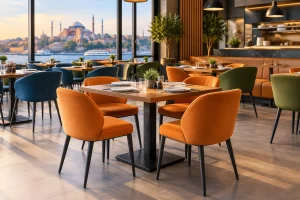
A restaurant chair can look exceptional on opening day and still become a costly problem within six months. Daily cleaning, sliding bags, dropped cutlery, direct sunlight, moisture, and constant guest turnover all test the surface long before the frame reaches its limit. Durable furniture finishes are therefore not a decorative afterthought. They are a central part of specifying furniture that protects a hospitality investment.
For cafés, restaurants, hotels, and commercial projects, the right finish must support the design concept while performing under real operating conditions. The strongest choice is rarely about selecting the hardest surface in every case. It is about matching material, finish system, color, texture, and maintenance expectations to the way each space will actually be used.
Why Finish Selection Affects Commercial Performance
In hospitality interiors, furniture is touched, moved, wiped, stacked, and viewed at close range every day. A finish that works well in a low-traffic residential dining room may show premature wear in a busy restaurant, especially on chairs, bar stools, tabletops, and host stations.
Finish quality affects more than appearance. It influences cleaning time, replacement cycles, guest perception, and the ability to keep a space looking consistent as the operation grows. When operators specify furniture early in a project, they should consider the finish alongside dimensions, comfort, upholstery, and lead time.
A good specification also recognizes that not every piece needs the same level of resistance. Dining tables near service areas may need stronger protection against heat, moisture, and cleaning chemicals than decorative lounge tables. Outdoor seating requires a different approach from indoor dining chairs. The objective is targeted performance, not unnecessary cost.
Durable Furniture Finishes for Wood Components
Wood brings warmth and character to commercial interiors, but it needs a finish system suited to the environment. Natural grain can be a major design asset in cafés, restaurants, and boutique hotels. It can also reveal scratches, water marks, and uneven wear if the protection is poorly matched to use.
Polyurethane and Catalyzed Lacquer
Polyurethane finishes are widely valued for their resistance to abrasion, moisture, and everyday cleaning. They can be specified in matte, satin, or gloss sheens, allowing the project to maintain a contemporary look without sacrificing practical protection. For heavily used tables, chair frames, and wood arm details, a quality polyurethane system provides a dependable balance of durability and visual clarity.
Catalyzed lacquer is another strong commercial option. It cures into a harder surface than many basic lacquers and is often selected where a refined, consistent appearance is required. The quality of application matters as much as the material itself. Proper sanding, sealing, coating thickness, and curing create a finish that performs as one system rather than a series of cosmetic layers.
Neither option makes wood indestructible. Sharp impacts can still dent the substrate, and aggressive solvents can damage the surface. The practical advantage is that these finishes make routine cleaning and daily use far more manageable.
Stains, Open-Pore Looks, and Color Consistency
A stained wood finish can create depth while retaining visible grain. This works especially well in projects that want a natural yet controlled palette. Dark stains can feel premium and dramatic, but they may show dust, fingerprints, and scratches more readily than medium wood tones. Very light finishes can brighten a room but may show food stains or discoloration in high-contact areas.
Open-pore finishes give wood a tactile, less processed character. They suit contemporary and hospitality-led interiors, but their textured surface can retain dirt more easily than a fully sealed finish. They are best used where the desired material expression justifies the added maintenance attention.
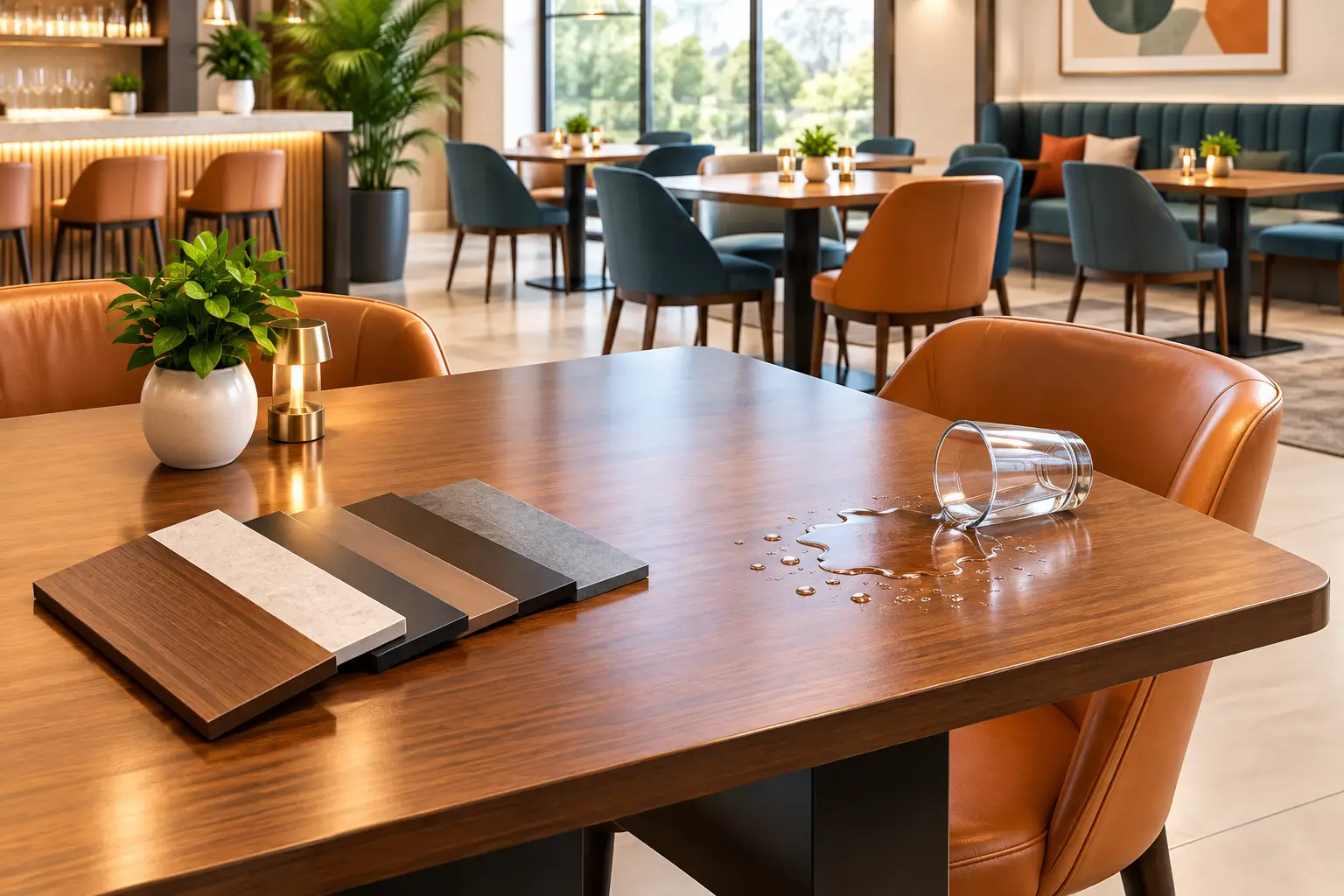
For multi-location brands and larger projects, sample approval is essential. Wood is a natural material, so grain pattern and tonal variation cannot be eliminated entirely. A controlled sample process establishes the acceptable color range before production begins and avoids surprises during installation.
Metal Finishes That Stand Up to Daily Use
Metal furniture is often chosen for its structure, slim profile, and contemporary character. Yet not all metal finishes offer the same resistance to chips, corrosion, fingerprints, or UV exposure. The right specification depends heavily on whether the furniture will be used indoors, on a covered terrace, or fully outdoors.
Powder Coating for Chairs and Bases
Powder coating is one of the most practical durable furniture finishes for metal chair frames, table bases, and bar stools. Applied electrostatically and cured at high temperature, it forms an even protective layer that is more resistant to chipping and abrasion than many conventional liquid paint applications.
For hospitality projects, the benefits are clear: a broad color range, repeatable production results, and an easy-to-maintain surface. Matte black, warm neutrals, textured finishes, and custom colors can all support a defined interior concept. Textured powder coatings are particularly useful because they can make minor handling marks less visible than a smooth gloss surface.
The limitation is edge damage. If a frame is severely struck or scraped to bare metal, the exposed area can become vulnerable to corrosion. Protective packaging, careful installation, and suitable floor glides all help preserve the finish after it leaves the factory.
Plated and Decorative Metal Surfaces
Brushed brass, antique bronze, chrome, and similar decorative treatments can elevate a bar area, lounge, or premium dining setting. These surfaces should be specified with realistic expectations. They are visually distinctive but can require more careful cleaning and may show fingerprints, water spots, or scratches more clearly than powder-coated steel.
They are often most effective on controlled-touch details, such as table bases, footrests, accent frames, or decorative hardware, rather than every high-contact component in a busy operation. A commercial project benefits when designers use premium finishes where guests notice them most and select practical finishes where staff interact with furniture constantly.
Tabletop Surfaces Need Their Own Specification
Tabletops receive some of the most demanding treatment in a hospitality setting. Hot plates, condensation, spills, sanitizer, menus, laptops, and repeated wiping all affect the surface. A chair finish cannot simply be applied to a tabletop and expected to perform the same way.
Solid wood tops create warmth and can be refinished in some cases, but they need appropriate sealing and a clear maintenance routine. Veneered tops offer more visual control and efficient use of premium wood species, though deep damage is harder to repair because the decorative layer is thinner. Laminated and compact surfaces can be highly practical for fast-casual venues, cafés, and outdoor applications, particularly when resistance to moisture and daily cleaning is a priority.
The edge detail deserves equal attention. Edges are exposed to impacts from chairs, trays, and cleaning equipment. A well-designed edge treatment can extend service life and maintain the table’s appearance far longer than an attractive but vulnerable square profile.
Match the Finish to Cleaning Reality
Many finish failures begin with cleaning routines, not manufacturing defects. Strong degreasers, bleach-based products, abrasive pads, and alcohol-heavy sanitizers can dull or damage surfaces over time. Operators should confirm the intended cleaning method before selecting materials, especially for tabletops, upholstery-adjacent frames, and outdoor furniture.
A practical maintenance plan does not need to be complicated. Use soft cloths, neutral cleaning products where possible, remove spills promptly, and avoid dragging furniture across hard flooring. For outdoor pieces, regular cleaning and seasonal inspection help prevent dirt buildup around joints and contact points.
For project teams, the most useful step is to request finish samples and evaluate them under the actual lighting, cleaning expectations, and traffic conditions of the venue. A sample is not only a color approval. It is a performance discussion between the operator, designer, and manufacturer.
Specify Finishes as Part of the Whole Project
Finish selection works best when it is integrated with frame material, upholstery, floor type, location, and expected guest volume. A powder-coated metal chair with proper glides may outperform a visually similar chair with an unsuitable coating. A wood table with a commercial-grade topcoat may offer better long-term value than a less expensive surface that requires early replacement.
At Rezze Design, custom production allows project teams to align finish choices with the furniture’s intended use, from indoor restaurant seating to terrace tables and tailored commercial interiors. This approach gives architects, distributors, and operators more control over color, texture, and practical performance without separating design intent from manufacturing reality.
The right finish should make daily operation easier while keeping the original concept visible in every guest interaction. Specify it with the same care as the chair’s comfort or the table’s dimensions, and the furniture will continue to represent the venue well after opening night.