
A restaurant chair is no longer selected only for its silhouette. It must support long service hours, withstand constant movement, reinforce the brand concept, and arrive on schedule with the right finish and specifications. That is why the future of horeca interiors is being shaped less by short-lived visual trends and more by commercial performance, adaptability, and supplier coordination.
For restaurant operators, architects, and hospitality buyers, the question is not simply what looks current. The more useful question is whether an interior can keep working as guest expectations, operating models, and traffic patterns change. The strongest projects will combine a clear design identity with furniture built for real commercial use.
The Future of HoReCa Interiors Starts With How Guests Use Space
Hospitality spaces are being asked to do more than one job. A café may operate as a morning work spot, a lunch destination, and an evening social venue. A restaurant may need to accommodate private events, delivery activity, high-volume weekend service, and quieter weekday dining without losing its character.
This changes the way seating, tables, lighting, and circulation should be planned. Fixed layouts still have a place in highly defined concepts, but flexibility is increasingly valuable. Lightweight chairs, movable tables, modular sofas, and bar seating can help operators adjust capacity and atmosphere without rebuilding the entire space.
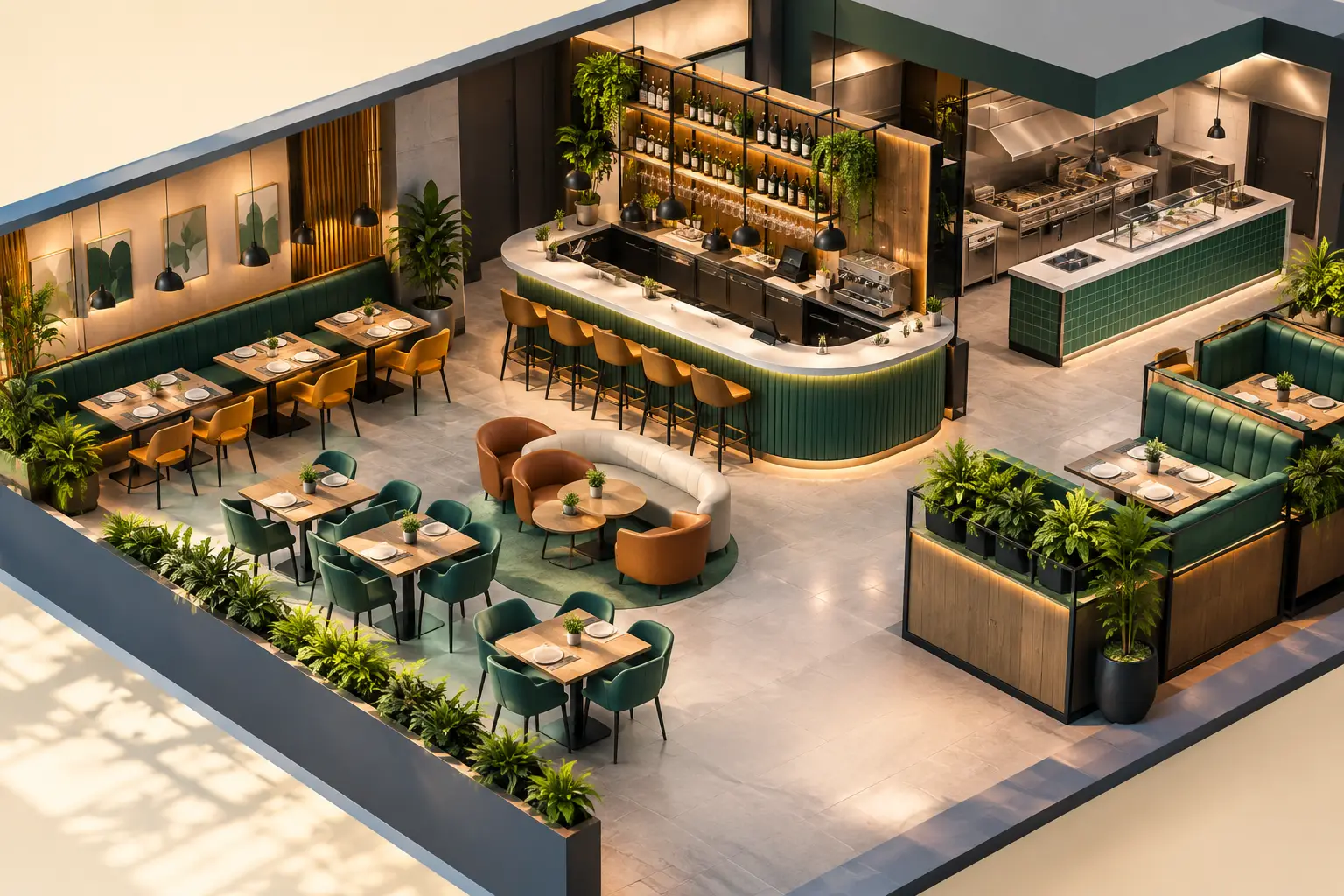
Flexibility should not mean visual inconsistency. A successful layout uses a coordinated furniture language across different zones. Dining chairs, armchairs, stools, lounge seating, and tables should feel related in material, proportion, and color, even when each piece serves a different function. This gives designers more freedom to create zones while preserving a cohesive guest experience.
Comfort Is Becoming a Commercial Requirement
Comfort affects dwell time, repeat visits, reviews, and perceived quality. In fast-casual locations, seating may need to support efficient turnover while remaining pleasant enough for guests to return. In premium restaurants, comfort often needs to encourage a longer, more relaxed experience. There is no single correct chair depth, back angle, or upholstery choice. It depends on the service model and the expected length of stay.
The details matter. Proper seat height relative to tabletop height, stable frames, supportive backs, sensible armrest clearance, and upholstery suited to the intended use all influence how a space performs. Furniture should be tested as part of the operating environment, not approved only from a rendering or product image.
Durable Materials Will Define Hospitality Value
A visually impressive interior loses value quickly if surfaces scratch, joints loosen, finishes fade, or upholstery becomes difficult to maintain. In high-traffic hospitality settings, durability is not a separate technical issue from design. It is part of the design decision.
The future of horeca interiors will favor materials selected for both appearance and lifecycle. Metal chairs and bases can offer stability and long-term strength when properly finished. Wood brings warmth and character but requires the right construction and coating for commercial conditions. Upholstered seating adds comfort and softness, yet fabric, vinyl, foam density, and stitching must match the level of use.
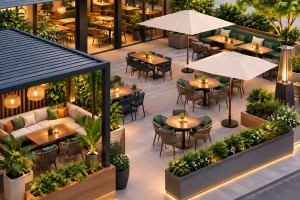
Outdoor areas require an even more disciplined approach. Sun exposure, moisture, temperature changes, and frequent cleaning can shorten the life of unsuitable furniture. Outdoor chairs and tables should be chosen for their material performance first, then refined through form and color. A piece that looks exceptional in a showroom but fails after one season creates unnecessary replacement costs and operational disruption.
For buyers, the practical measure of value is not only purchase price. It is the cost of keeping the space attractive, safe, and functional over time. A well-made chair with a durable finish and serviceable construction can protect both the project budget and the operator’s brand image.
Customization Will Move From Exception to Expectation
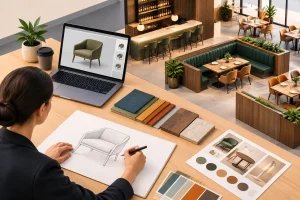
Hospitality brands increasingly want spaces that cannot be copied from a standard catalog. This does not always require designing every item from the beginning. Often, the most efficient approach is to adapt proven models through custom fabrics, frame colors, dimensions, stitching details, tabletop materials, or branded elements.
Custom manufacturing gives architects and operators a way to maintain design intent while responding to practical constraints. A narrow dining room may require a smaller table footprint. A boutique hotel lobby may need a specific seat height or upholstery tone. A restaurant group may need furniture that matches its existing locations while allowing each new venue to have its own identity.
The trade-off is that customization requires earlier decisions and clearer communication. Bespoke work depends on approved drawings, material selections, samples, quantities, and realistic production timelines. When these are managed early, custom furniture can improve project quality without creating avoidable delays.
At Rezze Design, in-house production supports this process by keeping design development and manufacturing closer together. For project buyers, that can mean more control over dimensions, finishes, and production details than a purely trading-based supply model can offer.
The Best Projects Standardize What Matters
Customization does not mean every product must be unique. For multi-location operators and distributors, standardizing key frames, finishes, and hardware can improve consistency, simplify replenishment, and support future expansion. The most effective specification often combines a stable core collection with selected custom details.
This balance matters for export projects as well. A furniture program should be distinctive enough to represent the venue, but practical enough to produce repeatedly, pack securely, and reorder when needed. Design credibility and operational control should work together.
Hospitality Interiors Will Become More Layered
The era of filling a room with matching tables and chairs is fading. Contemporary hospitality spaces use contrast with purpose: warm wood against powder-coated metal, soft upholstery beside clean-lined tables, textured surfaces balanced by simple forms, and lounge elements near more structured dining zones.
This layered approach helps create atmosphere, but it must be managed carefully. Too many materials or colors can make a space feel fragmented. Too much minimalism can make it feel generic or cold. The right balance depends on the concept, target customer, daylight, acoustics, and service style.
Furniture is particularly useful in creating visual rhythm. Bar chairs can signal energy around an open kitchen or counter. Armchairs and sofas can define a slower lounge zone. Dining chairs can establish a disciplined, repeatable layout in the main service area. Tables anchor the entire composition and need the correct scale, edge profile, and base design for both aesthetics and staff movement.
Lighting, tile, tableware, and kitchen-facing elements should be considered alongside furniture rather than sourced as disconnected categories. A coordinated approach makes it easier to protect the original concept from value-engineering decisions that weaken the final result.
Supplier Reliability Will Be Part of the Design Brief
For B2B buyers, the furniture supplier is not simply a product source. The supplier becomes part of the project delivery chain. This is especially true for international hospitality projects, where production scheduling, packaging standards, documentation, shipping coordination, and ongoing communication all affect the outcome.
A strong manufacturing partner should be able to discuss more than style. Buyers need clear information about materials, lead times, minimum quantities, finish options, samples, packing, and export readiness. They also need confidence that approved specifications will be followed consistently across the order.
This does not mean the largest supplier is always the right one. Large-scale production may suit a standardized rollout, while a project with specialized dimensions or finishes may benefit from a more responsive manufacturer with custom capability. The correct choice depends on order volume, timeline, required flexibility, and the level of design support needed.
Designing for Longevity, Not Just Opening Day
Hospitality interiors are photographed intensely before opening, then tested daily by guests, staff, cleaning routines, moving furniture, and changing business conditions. The projects that age well are those that anticipate this reality from the start.
Specify furniture that can be maintained, not merely admired. Consider whether finishes can be touched up, whether upholstery choices suit the cleaning protocol, whether table bases allow easy floor cleaning, and whether replacement pieces can be ordered later. These questions may seem operational, but they preserve the visual quality that the original design was created to achieve.
The future belongs to hospitality spaces that feel specific, comfortable, and memorable while remaining practical under pressure. For operators, architects, and distributors, the best next step is to choose furniture partners who can translate a design concept into a repeatable, durable commercial result.