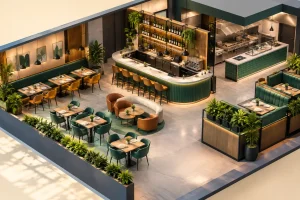


A hospitality project can look resolved on a mood board and still fail at procurement. The chair profile may be right, but its seat height is wrong for the table. The fabric may suit the concept, but not the cleaning routine. A specified finish may look refined in a sample, then show every scratch after a busy service. A disciplined architect furniture sourcing workflow prevents these expensive gaps between concept, quotation, production, and installation.
For restaurants, cafés, hotels, and other high-traffic commercial spaces, sourcing is not simply selecting attractive products. It is the process of turning design intent into furniture that can be manufactured accurately, delivered on schedule, and used every day. The strongest workflow gives architects creative control while giving operators confidence in cost, durability, and maintenance.
Start the Architect Furniture Sourcing Workflow Before Specification
Furniture sourcing should begin while the layout is still under review, not after every finish and fixture has been approved. At this stage, the architect, operator, and furniture supplier need to establish the practical conditions that will shape every decision: guest capacity, circulation routes, service style, local code requirements, project opening date, and budget range.
A restaurant with fast table turnover has different seating needs from a boutique hotel lounge. A café with limited square footage may need compact chairs that stack or move easily. An outdoor terrace must account for UV exposure, moisture, wind, and seasonal storage. These are not secondary details. They determine what kind of frame, upholstery, foam, finish, and construction method will perform over time.
The first sourcing conversation should also clarify where customization adds value. A custom chair can align dimensions, comfort, and visual identity with the project. However, a fully bespoke approach can affect prototype timing, minimum order quantities, and production planning. For projects with a fixed opening date, it may be more efficient to customize an established model through fabric, wood stain, metal color, or seat detail rather than develop an entirely new product.
Build a Project Brief That a Factory Can Use
A strong brief translates visual direction into production information. It should include the furniture schedule, quantities, target delivery date, plans showing intended placement, reference images, preferred materials, and performance expectations. When possible, identify the required dimensions for seat height, arm height, tabletop height, and clearance between tables.
This is also the right time to state commercial priorities clearly. Is durability the main concern? Is the project working toward a specific price point? Does the client need low-maintenance upholstery, contract-grade outdoor materials, or a particular fire-performance standard? A manufacturer can propose appropriate options only when those constraints are visible from the start.
Vague requests often create avoidable revisions. “Something similar” may be useful during early concept work, but it is not enough for approval or production. Clear documentation protects both the architect’s concept and the supplier’s ability to quote accurately.
Evaluate Furniture for Commercial Reality
A hospitality chair is handled, dragged, cleaned, moved, and used far more aggressively than a residential chair. Its quality cannot be judged by appearance alone. The sourcing process should assess both the visible design and the construction behind it.
For seating, confirm the frame material, joint method, foam density, upholstery specification, glides, and weight capacity. For tables, review base stability, top thickness, edge treatment, resistance to moisture and heat, and whether the base works with the selected top size. A beautiful table base that becomes unstable with a larger top is not a minor technical issue. It affects guest comfort and staff service from the first day of operation.
Material selection depends on the setting. Solid wood brings warmth and character but requires a finish suitable for its environment. Metal frames offer structure and contemporary character, yet coating quality matters in humid or outdoor locations. Upholstered seating can elevate comfort and perceived value, but the fabric or leather substitute must match cleaning procedures and expected traffic.
Before approval, architects and operators should review these four areas together:
- dimensional suitability for the layout and intended user experience
- structural suitability for commercial traffic and daily handling
- finish suitability for cleaning, stains, moisture, and sunlight
- replacement and maintenance practicality after the venue opens
The least expensive unit price is not always the lowest project cost. Furniture that needs early replacement, creates service complaints, or requires difficult maintenance can quickly erase the initial saving.
Use Samples and Prototypes to Resolve Risk Early
Digital renderings and finish chips are useful, but they cannot answer every question. A sample chair reveals comfort, scale, movement, and finishing quality in a way a specification sheet cannot. A fabric sample can be tested under the actual lighting conditions of the space. A wood stain may look significantly different next to the flooring, stone, or wall color than it does in a showroom.
For custom pieces, a prototype is one of the most valuable checkpoints in the project. It allows the design team to confirm proportions and workmanship before the full order enters production. It also gives the factory a chance to identify engineering issues before they become repeatable at scale.
Approval should be documented, especially when custom finishes are involved. Confirm the approved material, color reference, dimensions, upholstery direction, hardware, and any project-specific details. If a sample is approved with changes, those changes must be reflected in the final production specification. Verbal approval leaves too much room for interpretation.
At Rezze Design, in-house manufacturing makes this review process more direct because design adjustments, material decisions, and production planning can be coordinated through one project team. That control is particularly valuable when a commercial project requires tailored seating or tables rather than standard catalog dimensions.
Coordinate Lead Times With the Full Build Schedule
Furniture is often treated as a late-stage purchase, even though it has a direct effect on opening day. The realistic timeline includes design development, quotation, sample review, deposit approval, material procurement, production, quality control, packing, freight coordination, customs procedures, and final delivery. For export projects, each stage needs room to move.
The right lead time depends on order volume, customization level, materials, and shipping destination. Standard models in available finishes generally move faster than highly customized items. Special-order fabric, custom metal work, and project-specific tooling can extend the schedule, but they may still be the right choice when the design requires them.
Architects should work backward from the installation date, not the opening date. Furniture needs to arrive early enough for placement, inspection, touch-up if needed, and coordination with final cleaning and styling. If the project includes loose furniture alongside lighting, tile, tableware, or kitchen equipment, designate who is responsible for sequencing deliveries. A well-made product can still become a project problem if it arrives before secure storage is available or after the space is already needed for training.
Keep Procurement Decisions Traceable
As a project develops, changes are normal. Quantities shift. A booth may replace loose chairs. A metal color may be revised after the lighting package changes. The risk is not change itself. The risk is losing track of which version is current.
Maintain one approved furniture schedule with product codes, quantities, dimensions, finishes, unit prices, and status. The same document should identify whether each item is standard, customized, sampled, approved for production, in production, or ready to ship. This creates a practical decision record for the architect, purchasing team, operator, and supplier.
It is equally useful to separate design approvals from commercial approvals. The architect may approve the visual and functional solution, while the client or procurement team approves cost, payment terms, and delivery conditions. When those responsibilities are clear, the supplier receives a cleaner release to begin production.
Treat Logistics and Installation as Part of Sourcing
For international hospitality projects, logistics should be addressed before the order is finalized. Confirm packaging requirements, shipping method, delivery location, access restrictions, unloading equipment, and who will inspect goods on arrival. A large sofa, table base, or crated chair shipment may be straightforward at a warehouse but difficult at a city-center hotel with narrow service access.
Packing is not simply a freight detail. It protects finished surfaces and reduces damage risk during handling. Commercial buyers should also ask how components are labeled, whether assembly is required, and what documentation accompanies the shipment. Clear labeling supports faster installation and makes it easier to identify any issue without disrupting the entire delivery.
When furniture is supplied with complementary project items such as lighting, tableware, or surface materials, coordination becomes even more valuable. A single sourcing partner may reduce communication points, but only if scope, lead times, and responsibilities are defined precisely. In some cases, separate specialist suppliers are the better choice. The decision should reflect the project’s complexity, not a preference for simplicity at any cost.
Build Supplier Relationships That Improve the Next Project
The best furniture sourcing relationships do not end when containers ship. They improve through honest feedback about installation, wear, guest comfort, cleaning performance, and replacement needs. That information helps architects specify more confidently and helps manufacturers refine future recommendations.
For distributors and repeat hospitality buyers, consistency is especially valuable. Knowing that a supplier can reproduce approved finishes, support custom requests, communicate clearly during production, and prepare furniture for export makes future project planning more predictable.
A well-run sourcing process gives the architect room to design with confidence and gives the operator furniture that earns its place every day. Start the conversation early, approve what can be measured, and choose manufacturing partners prepared to stand behind the details long after the opening night.