A restaurant chair can look right in a showroom and still be wrong for the room. If the terrace team moves it twice a day, if guests drag it across stone flooring, or if the venue operates near salt air, the frame material becomes a daily operating decision. Aluminum versus steel furniture is not simply a question of appearance or unit price. It affects layout flexibility, maintenance planning, freight, perceived quality, and the useful life of a hospitality investment.
For cafés, restaurants, hotels, and commercial projects, both materials can deliver refined contemporary furniture. The better choice depends on where the piece will be used, how it will be handled, and what the design requires from its frame.
Aluminum Versus Steel Furniture: The Core Difference
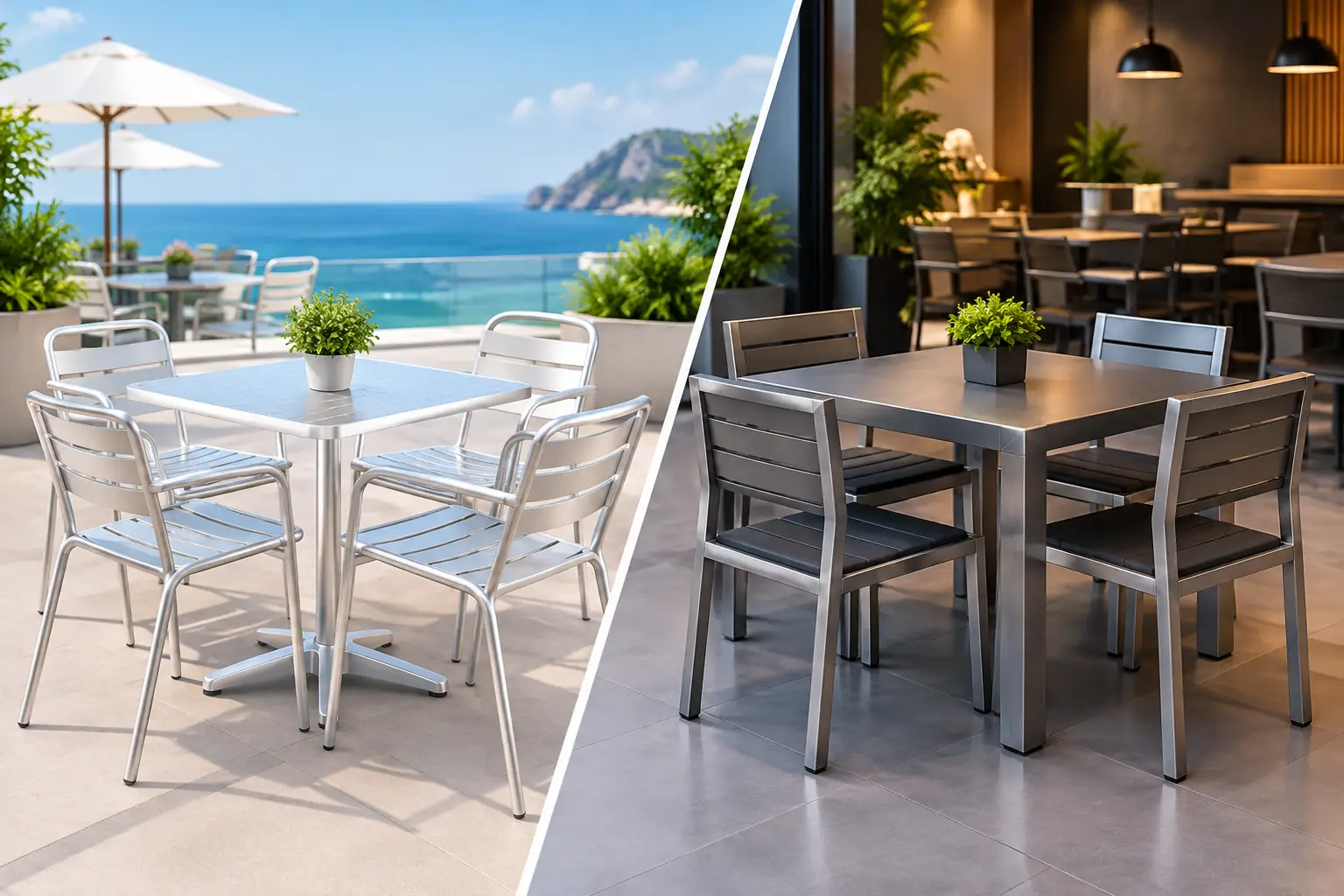
Aluminum is valued for low weight and natural resistance to corrosion. It is a practical choice for outdoor chairs, café tables, bar furniture, and any setting where staff need to reposition seating often. A quality aluminum frame can be easy to move without feeling light-duty, particularly when the tube profile, wall thickness, welding, and base design have been engineered for commercial use.
Steel is denser and generally stronger at a comparable section size. This allows designers to create slender profiles, more defined lines, and frames with a grounded, substantial feel. In indoor dining rooms, lounges, and bar areas, steel furniture often supports a sharper architectural expression while standing up well to continuous guest traffic.
Neither material is automatically superior. Aluminum solves problems related to weight and weather exposure. Steel solves problems related to stiffness, fine proportions, and a sense of permanence. The specification should follow the environment rather than a broad assumption that one metal is more commercial than the other.
Weight Changes How a Space Operates
Weight is one of the first differences operators notice after installation. Aluminum seating is easier for employees to carry, rearrange, stack, and store. This matters in venues that reset dining configurations for events, close terraces overnight, or need to clear seating quickly for cleaning. Lower weight can also reduce transportation costs, particularly on large export orders where many units are shipped together.
The same advantage can require consideration in exposed outdoor locations. Lightweight chairs may shift in high winds, especially when placed on rooftops, waterfront terraces, or open streetside dining areas. A well-designed aluminum chair addresses this through its footprint, leg geometry, and weight distribution, but the site conditions should be discussed early.
Steel furniture is heavier, which can be an advantage where a stable, anchored feel is part of the guest experience. A steel bar chair or dining chair is less likely to move unexpectedly as guests sit down or stand up. It also gives operators confidence in busy interiors where seating is in constant use. The trade-off is that daily rearrangement demands more effort, and freight weight may be higher.
Outdoor Performance Depends on More Than Metal
Aluminum is naturally resistant to rust because it forms a protective oxide layer. For outdoor hospitality furniture, this makes it a strong starting point. It is particularly suitable for poolside dining, garden seating, covered terraces, and projects with frequent rain or humidity.
However, aluminum is not maintenance-free. Surface contamination, standing water, neglected joints, and damage to the finish can still affect its appearance over time. Powder coating adds color consistency and another layer of protection, but the coating quality and surface preparation are critical. A well-specified finish should resist fading, chipping, and ordinary cleaning chemicals used in commercial environments.
Standard carbon steel needs more protection outdoors. Without the right treatment, moisture can lead to corrosion, first at scratches, weld areas, joints, and places where water collects. For exterior steel furniture, a commercial project should consider galvanizing, high-quality powder coating, careful drainage details, and the local climate. A dry, covered patio has very different demands from an unprotected coastal terrace.
Stainless steel is a separate category and can be appropriate where corrosion resistance and a premium metal finish are required. Yet it carries a higher material cost and still needs the correct grade for its environment. Near saltwater, the wrong stainless specification can disappoint just as quickly as poorly protected carbon steel.
Steel Creates a Different Design Language
When a brief calls for thin legs, precise angles, sculptural bases, or a visually lighter silhouette, steel often gives designers more freedom. Its strength makes it possible to use slimmer components while maintaining the rigidity needed for commercial seating. This is why steel is common in refined indoor chairs, upholstered dining armchairs, bar stools, and table bases.
That strength should not be confused with indestructibility. A poorly designed steel chair can still loosen at joints, damage flooring, or fail under repeated side loading. The quality of welding, tube thickness, joint reinforcement, and leveling details matters as much as the material itself.
Aluminum can also support clean, premium design, especially through extrusion and casting. It works well for contemporary outdoor collections, curved forms, and furniture that needs to feel effortless to move. Yet aluminum is softer than steel and can be more prone to dents or deformation when subjected to sharp impacts. In high-traffic interiors where furniture is regularly knocked against counters, walls, or other chairs, the frame design deserves close review.
Specify the Finish, Glides, and Details
A metal frame is only one part of the product. Hospitality buyers should evaluate the complete construction before approving a collection or custom piece. The finish should match the intended cleaning routine and contact level. Matte powder-coated frames can hide fingerprints and minor marks better than glossy surfaces, while metallic finishes may require more careful maintenance to preserve their visual effect.
Floor glides are equally important. Hard plastic, felt, nylon, or adjustable glides each perform differently across tile, wood, concrete, and carpet. The right glide protects both the floor and the furniture, reduces noise, and helps maintain stability on imperfect surfaces. For outdoor furniture, drainage and replaceable glides can extend service life.
For upholstered chairs, consider how the metal frame meets the seat shell or upholstery body. A good connection prevents movement and squeaking over time. For tables, the base must be proportioned for the tabletop size, expected load, and service style. A beautiful base that rocks under a full table setting is not suitable for a commercial project.
Cost Should Be Measured Over the Project Life
Aluminum can cost more than basic steel by raw material value, but its lower weight may reduce logistics costs and simplify handling. Steel may offer an efficient route to strong, elegant frames for interior applications, especially at scale. Neither comparison is complete without looking at fabrication, finish requirements, packing, shipping, and expected maintenance.
For a long-term hospitality project, replacement frequency matters more than the initial difference between two quotes. A lower-priced outdoor steel chair may become expensive if the finish fails early. A very lightweight aluminum chair may create costs of its own if it is not designed for the site’s wind exposure and daily use. The right answer is the product that maintains its appearance, comfort, and function under the actual operating conditions.
How to Choose for Your Hospitality Project
Start with the placement. Outdoor and semi-outdoor areas generally favor aluminum, particularly where furniture will be moved frequently or exposed to moisture. Indoor restaurants, hotel lounges, and bars often benefit from steel’s strength, stability, and ability to support slim contemporary forms.
Then consider service patterns. A quick-service café may prioritize light, stackable seating that staff can reset in minutes. A fine-dining room may prioritize the visual precision and substantial feel of a steel-framed chair. A resort may use both: aluminum for poolside and terraces, steel for dining rooms and interior lounge zones.
Finally, involve the manufacturer before finalizing the specification. At Rezze Design, project requirements can be translated into practical frame choices, finish options, dimensions, upholstery combinations, and packing plans. Custom production is most effective when the operating environment, quantity, target delivery market, and design intent are defined from the start.
The best metal furniture does not call attention to its material after installation. It lets staff work efficiently, gives guests a comfortable place to sit, and continues to support the character of the space after thousands of service hours.