A tabletop is where guests place the meal, set down a laptop, rest a drink, and form an immediate impression of the venue. In the laminate versus stone tabletops decision, the right answer is rarely about which material is more luxurious in isolation. It is about how the surface will perform through daily service, cleaning cycles, layout changes, and the visual life of the project.
For restaurants, cafés, hotels, and other commercial spaces, tabletop selection has consequences beyond appearance. It affects table weight, base compatibility, installation speed, replacement planning, maintenance routines, and overall project budget. A well-specified surface supports the concept while giving operators a practical product they can rely on.
Laminate Versus Stone Tabletops: The Core Difference
Laminate tabletops use a decorative surface layer bonded to a board core, commonly particleboard, MDF, or plywood depending on the product specification. The visible layer can reproduce wood grains, solid colors, concrete effects, marble patterns, and other finishes with strong consistency from table to table. In commercial applications, the quality of the laminate, edge treatment, core, and underside construction matter far more than the term laminate alone.
Stone tabletops may be made from natural materials such as marble, granite, travertine, or limestone, or engineered options such as sintered stone, quartz, and porcelain slabs. Each category has different levels of porosity, heat resistance, weight, pattern variation, and care requirements. A natural marble top and a sintered stone top may both look premium, but they should not be specified or maintained in the same way.
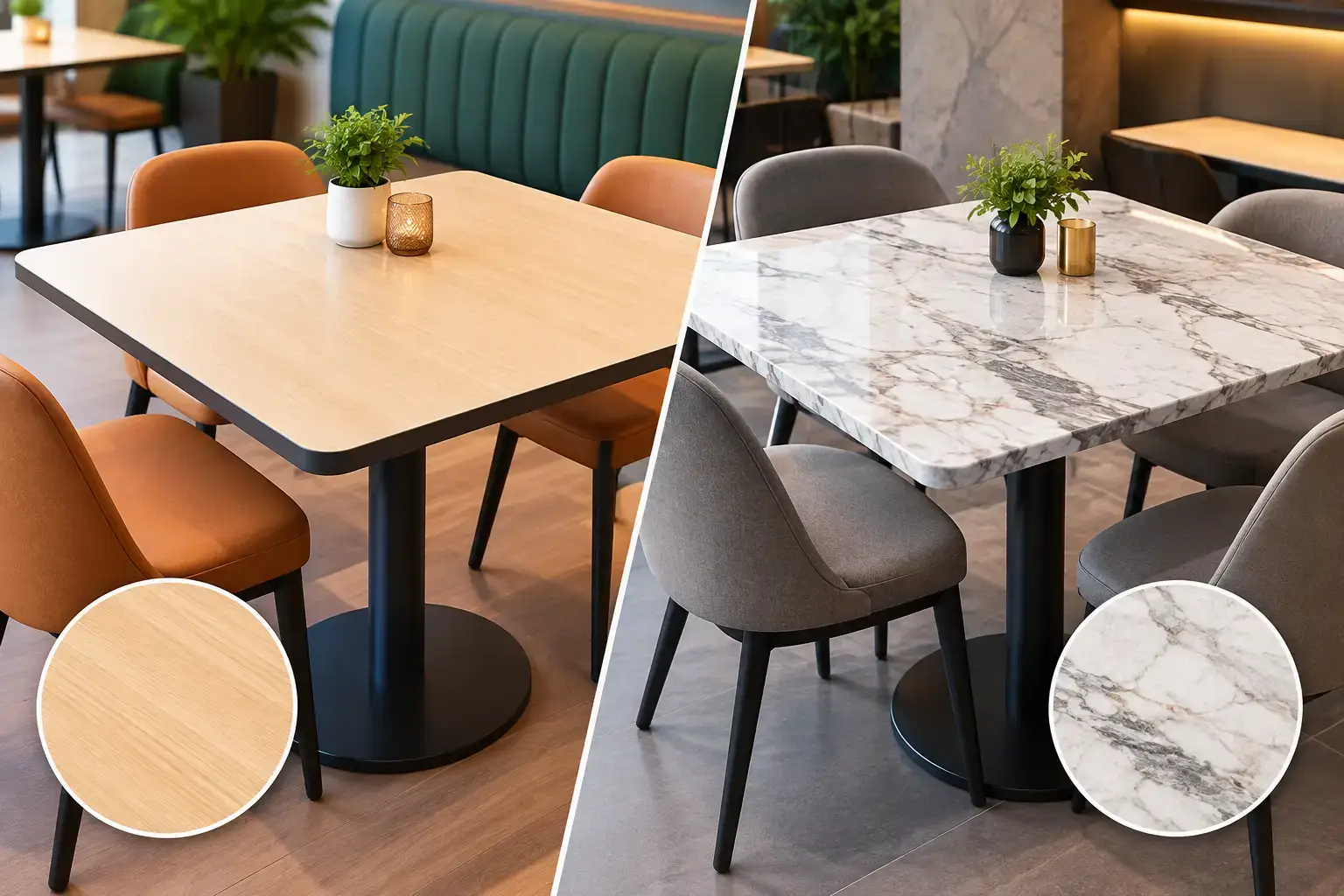
The practical contrast is clear. Laminate is generally lighter, more cost-efficient, and easier to coordinate at scale. Stone brings material depth, visual distinction, and a stronger sense of permanence, but often demands more careful structural planning and a larger investment.
When Laminate Is the Better Commercial Choice
Laminate is often the most commercially efficient option for high-volume dining areas, fast-casual concepts, food courts, hotel breakfast spaces, and projects with a large number of tables. It offers broad finish flexibility without requiring every top to be unique. That consistency is valuable when architects need a specific wood tone or color to align with upholstery, flooring, wall finishes, and brand identity.
A quality laminate tabletop can also simplify operations. Its lower weight makes tables easier to move during cleaning, event resets, and floor plan changes. It places less demand on table bases and can reduce handling risks during installation. For operators who may need replacement tops later, laminate finishes are usually easier to match and reproduce than natural stone slabs with individual veining.
Durability depends on construction. A commercial tabletop should have a surface appropriate for repeated wiping, food and beverage service, and reasonable resistance to stains and scratches. The edge is particularly important. Exposed or poorly sealed edges can allow moisture into the core, causing swelling or deterioration over time. PVC, ABS, solid wood, metal, or carefully finished compact edges can each serve a purpose, but the choice should reflect the intended environment.
Laminate is not automatically a low-grade solution. In a well-developed hospitality collection, it can look refined, contemporary, and highly intentional. Matte black, warm oak, walnut, terrazzo-inspired, and stone-look finishes can create a polished setting while preserving budget for chairs, lighting, bar fronts, or custom architectural elements.
Limitations to Plan For
Laminate does have limits. Deep scratches can be difficult to repair invisibly, and very hot cookware should not be placed directly on many laminate surfaces. Prolonged water exposure at seams or edges remains a concern, especially in outdoor-adjacent spaces, poolside service areas, or venues where tables are washed aggressively.
For outdoor use, standard indoor laminate is not the right specification. Compact laminate or other exterior-rated materials should be considered instead, along with suitable bases and hardware. The tabletop must be selected as part of a complete commercial furniture system, not as an isolated finish sample.
When Stone Makes a Stronger Statement
Stone tabletops work best when the design concept calls for visible material character and a more substantial guest experience. They are particularly effective in premium restaurants, hotel lobbies, cocktail bars, patisseries, upscale cafés, and boutique hospitality projects where the tabletop is expected to contribute to the identity of the room.
Natural stone offers variation that cannot be duplicated by a printed surface. Veining, mineral movement, and tonal shifts give each table its own presence. This individuality can make a dining room feel collected rather than standardized. For a concept built around craftsmanship, Mediterranean references, Italian-inspired dining, or quiet luxury, real stone can provide the visual credibility the project needs.
Engineered stone options can offer a more controlled alternative. Sintered stone and porcelain-based surfaces are often chosen for their strong resistance to heat, staining, and wear, while still delivering a stone-like appearance. They may be better suited than porous natural marble for busy food-service environments, depending on the exact product and finish.
Stone also changes the physical character of a table. It feels cooler, denser, and more permanent. That can elevate the guest experience, but it means the table base, fixing method, and floor conditions must be reviewed carefully. A heavy top on an undersized base can create instability, particularly with small round tables or narrow pedestal designs.
The Operational Trade-Offs of Stone
The visual value of stone comes with responsibilities. Natural marble and some other stones can stain or etch when exposed to acidic ingredients such as lemon, vinegar, wine, or tomato-based sauces. Sealing may reduce absorption, but it does not make every natural stone surface maintenance-free. Operators need cleaning guidance that is realistic for service teams, not only suitable for a showroom sample.
Weight is another major consideration. Stone tops require more careful packing, transport, handling, and installation. They can increase freight costs and may require stronger table frames or additional personnel during setup. In export projects, this should be evaluated early because material weight affects both logistics planning and total landed cost.
Natural stone can also be more difficult to replace later. Even when the same stone type is available, color and veining will vary from slab to slab. That variation is part of its appeal, but it can complicate phased installations or future repairs. For some projects, specifying extra material or a small quantity of spare tops is a sensible precaution.
Compare the Full Table, Not Only the Surface
A tabletop should always be assessed alongside its base, edge profile, dimensions, and intended seating layout. A thin stone-look surface on a clean metal pedestal may suit a modern café, while a thick marble top with a sculptural base may belong in a destination restaurant. The same material can look entirely different depending on these details.
Table size also affects the decision. Larger tops increase the need for structural support, especially with stone. For communal tables, rectangular formats, or tops with overhangs, the frame must be designed to prevent flexing and stress. Laminate can offer more flexibility for larger-format table programs without creating excessive weight.
Consider the acoustic effect as well. Stone surfaces are hard and reflective, which can contribute to a louder dining room when combined with tile floors, glass, and exposed ceilings. Laminate is also a hard surface, but a project using lighter tables may have more freedom to balance the space with upholstered seating, acoustic panels, curtains, or other sound-absorbing elements.
Choosing by Project Priority
If consistency, efficient budgeting, easy handling, and finish flexibility are the priority, laminate is often the stronger specification. It is especially effective for multi-unit rollouts, large seating counts, and commercial interiors that need a coordinated look across many tables.
If material authenticity, visual impact, and premium positioning are the priority, stone can justify its additional cost and planning. It is most successful where the operational team understands the care requirements and the furniture construction is designed for the load.
Many hospitality projects do not need to choose only one. A practical approach is to use laminate for the main dining area and reserve stone for feature tables, VIP zones, bar-height settings, private rooms, or entry-level focal points. This creates material contrast while keeping the overall project efficient.
At Rezze Design, tabletop selection is approached as part of the full furniture specification, from the table base and finish to production details, packing, and project requirements. That coordination helps architects, operators, and distributors make decisions that hold up beyond the opening day.
The best tabletop is the one that supports the service model as confidently as it supports the interior concept. Request samples, test them against real cleaning routines and lighting conditions, and specify the complete table with long-term use in mind.