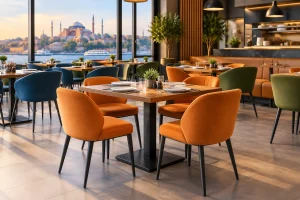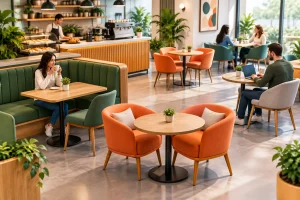


A restaurant chair may look exceptional when the room opens, then reveal its real quality after hundreds of guests have pulled it across the floor, leaned back after dinner, and moved it between tables. That is the standard horeca interior furniture must meet. For cafés, restaurants, hotels, and social spaces, furniture is not a finishing touch. It directly affects comfort, circulation, cleaning routines, operating costs, and the character guests remember.
What HoReCa Interior Furniture Must Deliver
Commercial furniture is selected under different conditions than residential furniture. It needs to support a design concept, but it must also withstand frequent use, repeated cleaning, and the practical demands of service teams. The right specification protects the visual quality of a project long after opening day.
Comfort supports longer stays and stronger revenue
Guests may not describe a chair’s seat depth or back angle, but they feel the result immediately. In a café, a slightly more relaxed chair can encourage guests to stay for another drink or work session. In a fine dining setting, supportive upholstery and an appropriate arm height can make a long meal feel considered rather than tiring.
Comfort should always match the operating model. Quick-service restaurants may prioritize easy entry, compact footprints, and fast table turnover. Lounge areas, boutique hotels, and destination restaurants often benefit from deeper seating, armchairs, and sofas that invite guests to settle in. There is no single ideal seat height or cushion density. The right choice depends on the concept, table dimensions, guest profile, and expected dwell time.
Durability is built into the details
A strong commercial chair is more than a solid-looking frame. Joint construction, weld quality, foam density, fabric abrasion resistance, surface finishes, and floor glides all contribute to its service life. A loose joint or damaged finish can quickly make a complete dining room look neglected, even if the overall interior was designed at a high level.
Material selection should reflect the environment. Metal chairs can offer strength and a clean contemporary profile, particularly for high-turnover dining spaces. Wood creates warmth and works well across many hospitality concepts, but it needs a suitable protective finish. Upholstered seating adds comfort and visual richness, while requiring a fabric or leather alternative chosen for cleanability and daily use. Outdoor furniture requires its own level of consideration, including weather-resistant materials, drainage, UV performance, and storage requirements.
A coherent room is more valuable than isolated pieces
Furniture creates rhythm across a room. Chairs, bar stools, tables, lounge seating, and outdoor pieces should share a design language without becoming repetitive. A well-planned mix can establish distinct zones for dining, waiting, working, socializing, or private meetings while still making the venue feel like one brand.
This is where a coordinated range has a commercial advantage. Matching chair and bar chair families, compatible table bases, and complementary sofa or armchair options reduce visual risk during specification. At the same time, custom finishes, upholstery, dimensions, and materials give architects and operators room to make the project their own.
How to Specify HoReCa Interior Furniture for a Project
The best purchasing decisions start before colors and silhouettes are discussed. A clear project brief allows the manufacturer, design team, and buyer to evaluate options against real operational needs rather than selecting solely from images.
Start with the floor plan and service flow
Every furniture decision should work with the room, not against it. Review aisle widths, table spacing, access routes, server movement, entrance sightlines, and the relationship between indoor and outdoor zones. A chair with broad arms may be comfortable, for example, but it can consume valuable seating capacity in a compact restaurant.
Table bases deserve the same attention as seating. A visually attractive base that interferes with legroom or makes a table unstable can create daily frustration for guests and staff. For banquettes and fixed seating, confirm the table height, seat height, and depth together. These dimensions must work as a complete system.
Define the use case for each zone
One venue can require several furniture solutions. A front terrace may need stackable outdoor chairs and durable tables. The main dining room may need upholstered armchairs for a more refined experience. A bar area may call for stools with footrests and a seat height precisely matched to the counter.
Specify each zone according to traffic, atmosphere, and maintenance needs. This also helps control budget. It may make sense to invest in premium upholstery for a visible lounge area while choosing a simpler, highly durable dining chair for the busiest section of the restaurant. High-end does not mean using the most expensive material everywhere. It means making deliberate choices where quality is visible, felt, and needed.
Request samples before final approval
Digital renders and product photography are useful, but physical samples provide the information that matters during a commercial project. A fabric can look different under warm lighting. A wood stain can shift against flooring or wall finishes. The scale of a chair may feel more substantial, or more compact, than expected.
Samples also allow buyers to evaluate comfort, construction, and finish quality directly. For export projects, early approval of samples and technical details reduces the risk of late-stage changes that affect production timing. It is a practical step that keeps the project moving with greater certainty.
Custom Manufacturing Solves the Gaps Between Concept and Catalog
Standard collections create speed, but custom production is often what makes a hospitality interior feel specific to its location and brand. A changed seat height, a special metal color, a tailored upholstery selection, or a revised table dimension can turn an appropriate product into the right product for the project.
Custom work should be managed with discipline. Buyers should provide drawings, quantities, finish references, target delivery timing, and intended application as early as possible. Manufacturers need to confirm technical feasibility, materials, lead times, packing requirements, and approval stages before production begins. Clear communication at this stage prevents costly assumptions later.
For distributors and wholesalers, custom capability also creates a meaningful sales advantage. It enables them to serve architects and operators who need more than an off-the-shelf furniture package, without sacrificing the consistency of factory-controlled production. Rezze Design supports this model through in-house manufacturing and project-based furniture development for commercial spaces.
Consider the Full Cost of Ownership
The lowest unit price is rarely the lowest cost over the life of a hospitality project. Replacement frequency, maintenance labor, guest comfort, and the impact of worn furniture on brand perception all matter. A chair that holds its structure and finish through years of service is usually a better commercial decision than one that requires early replacement.
Ask practical questions before ordering. Can the surface be cleaned easily? Are replacement glides available? Will the upholstery tolerate the cleaning products used by the operation? Can the item be packed safely for international shipment? Are spare pieces or additional quantities available for future phases? These details may not appear in a mood board, but they define whether a furniture program performs reliably.
Logistics should also be part of the sourcing conversation from the beginning. Export-ready packing, container planning, documentation coordination, and realistic production schedules support a smoother delivery process. For multi-site operators and distributors, consistency across repeat orders is especially valuable. It keeps future rollouts aligned with the original concept.
Build a Supplier Relationship, Not Just a Purchase Order
Hospitality projects change quickly. Quantities shift, finishes are adjusted, and site conditions can introduce new requirements. A capable furniture supplier does more than quote products. They help assess specifications, identify risks, provide samples, coordinate production, and communicate clearly through shipment.
This partnership is particularly important for architects, restaurant groups, and distributors managing multiple stakeholders. A supplier with direct production control can respond more effectively when a project requires tailored dimensions, revised materials, or phased delivery. The objective is not simply to fill a container. It is to deliver furniture that arrives ready to support the space it was designed for.
The strongest hospitality interiors balance visual confidence with everyday practicality. Begin with the guest experience, test each piece against real operating conditions, and choose manufacturing partners that can translate the concept into dependable commercial furniture. That preparation gives every table, chair, and lounge seat a better chance to perform beautifully from opening night onward.