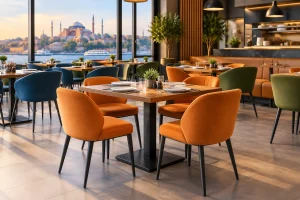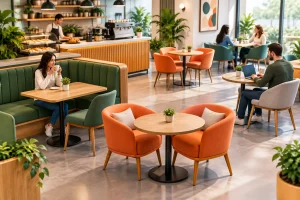


A restaurant can look complete on opening day and still be poorly furnished. The warning signs appear quickly: chairs that loosen under daily use, table bases that wobble on uneven floors, fabrics that show stains after a busy weekend, and seating layouts that make service harder than it needs to be. Effective HoReCa project furniture solutions address these operational details before they become expensive problems.
For restaurant operators, architects, and commercial interior buyers, furniture is not a finishing touch. It is part of the guest experience, the staff workflow, and the long-term operating cost of a venue. The right supplier must understand design intent, commercial performance, production planning, and the practical realities of delivery to an active project site.
What HoReCa Project Furniture Solutions Should Deliver
A hospitality project needs more than a selection of attractive chairs and tables. It needs a coordinated furnishing plan that supports the concept of the space while standing up to frequent movement, cleaning, impacts, and changing customer traffic.
In a café, that may mean compact chairs that can be moved easily without feeling lightweight or unstable. In a high-volume restaurant, it can mean upholstered seating with comfortable density, durable commercial upholstery, and table dimensions that allow staff to clear settings efficiently. A hotel lounge may require deeper sofas and armchairs that communicate quality while maintaining their shape over years of use.
The best approach starts with the venue’s actual conditions. Seating capacity, aisle widths, floor finish, service patterns, indoor-outdoor transitions, target guest profile, and maintenance routines all influence the right furniture specification. A model that works well in a showroom may not be the best choice for a narrow dining room, a coastal terrace, or a busy airport-adjacent hotel lobby.
Start With the Layout, Not the Product List
Furniture selection is often rushed after the interior concept is approved. That creates avoidable compromises. A stronger process begins with the plan: how many guests the venue needs to serve, where circulation must remain clear, how tables will combine for groups, and which areas need a stronger visual focal point.
Dining chair width matters when the difference between two layouts is six additional seats. Armchairs may elevate a premium zone, but they need more space and can reduce flexibility. Bench seating can improve capacity and create a defined atmosphere, although it requires careful attention to seat height, back angle, upholstery durability, and access for cleaning.
Table design deserves the same discipline. A visually slim base may support the desired contemporary look, but it must be properly engineered for the top size and material. For restaurants, base placement is critical: guests need legroom, staff need room to work, and the table must remain stable when weight is applied to one edge.
A project manufacturer can help turn these questions into a practical product mix. Rather than sourcing chairs, tables, sofas, and bar seating as unrelated items, buyers can build a more consistent environment across dining areas, lounges, entrances, terraces, and private rooms.
Specify for Commercial Use, Not Residential Appearance
Many furniture styles can be adapted for hospitality, but not every residential-style product is suitable for commercial use. The difference is found in the construction, materials, joinery, finishes, and service expectations behind the product.
Frames should be designed for repeated use and regular repositioning. Metal chairs need clean welds, dependable finish quality, and glides suited to the floor surface. Wooden elements require appropriate material selection and finishing to maintain their appearance under frequent cleaning. Upholstered pieces need fabrics or leathers chosen for the venue’s traffic level, color palette, and maintenance standards.
Comfort also has a commercial dimension. A chair that feels good for a short showroom test may not encourage guests to remain comfortably seated through a full meal. Conversely, lounge seating that is too soft can lose its shape and make entry or exit difficult. Seat depth, foam density, back support, arm height, and the relationship between chair and table should be reviewed as a system.
For outdoor areas, material choices become even more specific. Sun exposure, rain, humidity, salt air, storage practices, and seasonal use all affect the specification. Outdoor furniture should be selected for its real environment, not simply because it is labeled for exterior use.
Custom Manufacturing Creates Better Project Control
Standard collections are valuable because they make selection faster and simplify repeat orders. Yet hospitality projects often require dimensions, finishes, fabrics, or details that are not available in an off-the-shelf catalog. Custom manufacturing makes it possible to preserve the design concept without forcing the project into generic solutions.
Customization can be as focused as changing a powder-coat color, modifying a table height, selecting a project-specific fabric, or adding a branded detail. It can also involve developing a new banquette, sofa, chair frame, or table base around an architect’s drawings. The right level depends on the project budget, quantity, timeline, and the degree to which the furniture defines the venue’s identity.
Custom work does involve trade-offs. Unique materials may have longer lead times. Complex forms can affect production cost. A highly specific finish may be harder to reproduce for future expansions. These are not reasons to avoid custom furniture, but reasons to discuss technical details early and document approved samples before full production begins.
At Rezze Design, in-house manufacturing provides greater control over this process, from chair and table production to tailor-made pieces for commercial interiors. That control supports clearer communication when a project requires coordinated materials, dimensions, and finishing standards.
A Reliable Supplier Supports the Full Project Cycle
Hospitality buyers need more than a quotation and a production date. They need a supplier that can work through the decisions that affect delivery quality: samples, finish approvals, packaging requirements, production scheduling, quantity checks, and export documentation.
For architects and designers, sample support is especially useful. Reviewing a fabric, finish, or prototype in person helps confirm color, texture, comfort, and construction before a large order is released. It also gives the project team a reference point when coordinating lighting, flooring, wall finishes, and tabletop materials.
For distributors and wholesalers, consistency matters just as much. A manufacturer should be able to support repeatable collections, clear product specifications, reliable packing, and communication that protects the distributor’s relationship with its own customers. Factory-direct capability can improve pricing control, but it must be matched by dependable quality management and export readiness.
Shipping should be considered during product development, not only when the order is ready to leave the factory. Stackability, knock-down construction where appropriate, carton design, protective materials, container utilization, and labeling can all influence freight costs and the condition of furniture upon arrival. The lowest unit price is not always the lowest project cost if packing is inefficient or installation issues delay opening.
Build a Cohesive Guest Experience
A successful hospitality interior does not require every piece to match. It requires every piece to belong. A dining chair, bar stool, lounge sofa, outdoor table, and lighting selection can use different forms and textures while still sharing a common language through color, proportion, metal finish, or upholstery.
This is where coordinated sourcing can reduce pressure on the project team. Furniture remains central, but complementary elements such as lighting, tiles, crockery, cutlery, and stainless steel kitchen items also shape the final atmosphere. A supplier that understands the wider project can help maintain continuity between front-of-house design and operational needs.
The goal is not to fill a room with products. It is to create a setting where guests feel the intended level of comfort and quality, staff can work efficiently, and the operator has furniture that continues to perform after the opening photographs are gone.
Before finalizing a furniture package, review it against the venue’s busiest hour, not its quietest moment. That single test often reveals whether the selected pieces are ready for real hospitality use.