

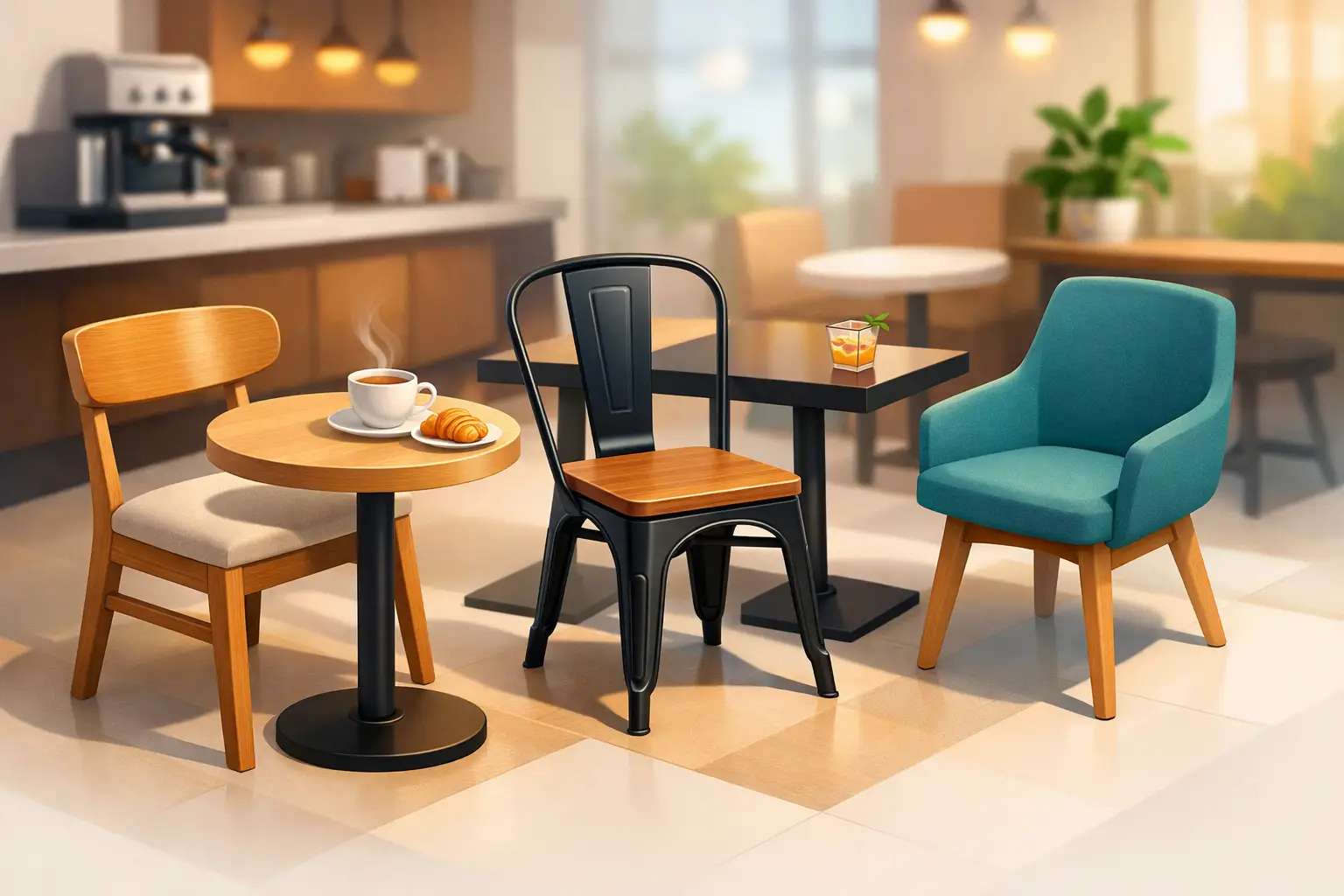
A café chair is used far more intensely than a residential dining chair. It is pulled across the floor hundreds of times, moved between tables, exposed to spills, and judged immediately by guests who may stay for ten minutes or two hours. The best chairs for cafes balance that daily pressure with the visual character that makes people choose one venue over another.
For operators, architects, and hospitality buyers, the right choice is rarely about selecting a single attractive model. It is about building a seating system that supports service flow, protects the investment, and gives the interior a clear, consistent identity.
Start With the Service Concept
The chair should match how the café earns its revenue. A quick-service coffee bar needs compact, easy-to-move seating that allows frequent turnover. A neighborhood café built around long breakfasts, remote work, or evening wine service needs greater ergonomic support and a more relaxed posture.
This distinction affects every specification. A slim metal chair may be ideal for a busy espresso counter with limited floor space, while an upholstered armchair can make sense in a lounge zone where guests are expected to stay longer. Using the same chair everywhere is not always efficient. Many successful projects combine side chairs for dining tables, bar chairs for counters, and a limited number of lounge or armchair pieces for softer seating areas.
Before reviewing finishes or fabrics, establish the average dwell time, table size, aisle width, expected daily covers, and whether the venue will host laptops, meals, or both. These operational details should lead the furniture selection, not follow it.
What Makes the Best Chairs for Cafes Commercially Viable
A strong café chair must perform in four areas at once: comfort, durability, maintenance, and design consistency. Over-prioritizing any one of these can create a problem later.
Comfort matters because uncomfortable seating shortens visits in the wrong kind of venue. Yet an overly deep seat or a wide armchair can reduce capacity and make circulation difficult. Durability matters because chairs take repeated lateral movement, impact, and cleaning. But a chair built only for strength can look too heavy for a refined contemporary interior.
The most effective specification is one that meets the project’s actual use level. For a high-traffic café, commercial-grade joinery, stable frames, and replaceable floor glides are more valuable than decorative details that cannot tolerate daily service. In a premium boutique setting with lower volume, richer upholstery or more sculptural forms may be appropriate, provided the materials are selected for hospitality use.
Seat Height and Table Compatibility
For standard café tables, chair seat height must work comfortably with the tabletop height. Even a visually excellent chair feels wrong if guests sit too low, their knees hit the table apron, or the armrests cannot slide under the table.
Request overall dimensions rather than relying only on photographs. Consider seat width, chair footprint, back height, and arm clearance alongside seat height. A chair that appears compact may occupy more space than expected once guests are seated and staff need to pass behind them.
For bar seating, the relationship between stool height and counter height is equally critical. Guests need enough legroom and a practical footrest position. Bar chairs should also be stable enough for frequent entry and exit, especially in busy morning and evening periods.
Frame Materials and Structural Performance
Material selection should reflect the concept, budget, and location of the furniture. Wood brings warmth and a natural hospitality feel, particularly in specialty coffee shops, bakeries, and residential-inspired cafés. It requires well-managed production and durable surface finishing to maintain its appearance under constant cleaning.
Metal chairs offer a clean, contemporary profile and can perform well in high-turnover spaces. Powder-coated metal is a practical option for many interiors because it provides color flexibility and easier maintenance. The frame design still matters. Thin profiles can look light without being weak, but the engineering, weld quality, and connection points must support commercial use.
Upholstered chairs add comfort and acoustic softness. They are often best used selectively, such as along banquettes, feature tables, or lower-traffic zones. For full-service cafés, choose contract-appropriate fabrics or easy-clean surfaces and confirm how the upholstery will perform against stains, abrasion, and repeated cleaning.
Plan the Layout Before Ordering
Furniture should support revenue, not compete with it. A seating plan that looks generous on paper can become difficult once guests, bags, strollers, service trays, and cleaning routines enter the space.
Allow room for chair movement as well as seated bodies. The aisle is not simply the gap between table edges. It must accommodate chairs pulled back, staff movement, and access to the counter, restroom, and emergency routes. Compact side chairs can help preserve capacity, while armchairs should be placed where their larger footprint adds genuine value.
Stackability is another practical question. If the café regularly hosts private events, cleans floors after closing, or rearranges seating for different dayparts, stackable chairs can save meaningful labor and storage space. Not every design needs to stack, but ignoring this requirement can create a daily operational burden.
A mixed seating plan often gives the strongest result:
- Side chairs for efficient two-top and four-top dining areas
- Armchairs or upholstered pieces for relaxed feature zones
- Bar chairs for counter seating and window ledges
- Outdoor chairs for terraces, sidewalks, and garden areas
The collection should still feel connected. Shared colors, frame finishes, upholstery tones, or silhouette details keep the space from looking like several unrelated projects.
Choose Finishes That Age Well
The first month after opening is not the right benchmark for café furniture. Buyers should ask how a finish will look after a year of service, repeated cleaning, shifting sunlight, and inevitable impact from bags, shoes, and table bases.
Dark matte finishes can hide some marks but may show dust and fingerprints. Very light upholstery creates a soft premium atmosphere but requires disciplined maintenance. Natural wood tones introduce warmth, although they need a finish suitable for commercial cleaning products. There is no universally correct color palette. The right decision depends on staffing, service style, natural light, and the brand experience the operator wants to protect.
For projects with strong visual identity, custom colors, stains, fabrics, and frame finishes can be valuable. Customization should be approached with production realities in mind. Confirm minimum quantities, sample approval timing, lead times, and consistency across the full order. A good custom chair is not merely a different color. It is a controlled production decision that can be repeated reliably.
Outdoor Café Chairs Need a Different Standard
Outdoor seating can increase visibility and revenue, but exterior conditions demand specific materials. Chairs used on terraces or sidewalks face sun exposure, moisture, temperature changes, and more frequent movement. Indoor furniture should not be assumed suitable simply because it can be carried outside.
Outdoor chairs need weather-appropriate frames, finishes, and seat materials. They should be easy for staff to move, stable on the site’s actual surface, and simple to clean between guests. For coastal, humid, or high-sun locations, material performance becomes even more important. Specify the chair around the climate and operating season rather than selecting only by appearance.
Work With a Supplier That Understands the Project
A chair purchase for a café is a project supply decision. Buyers need more than a catalog image and a unit price. They need clear dimensions, material specifications, finish options, production timing, packing details, sample support, and communication that continues until delivery is complete.
This is especially relevant for architects, distributors, and multi-location operators. A supplier with in-house manufacturing can offer greater control over custom requirements, finish matching, quality checks, and production planning. It can also make future repeat orders more manageable when a concept expands or a property needs replacement pieces.
Rezze Design supports hospitality projects with factory-made seating, custom production options, and coordinated commercial furniture solutions. For buyers managing international orders, early alignment on quantities, finish approvals, packing requirements, and logistics expectations prevents expensive changes later in the process.
Test the Chair Beyond the Photograph
A sample is one of the most useful tools in commercial furniture procurement. Sit in it, move it, pull it away from a table, check the floor contact points, and view it under the project’s lighting conditions. If possible, place it next to the proposed table and ask service staff to move around it.
Look closely at the details that influence longevity: frame connections, welding or joinery, upholstery tension, edge finishing, glides, and how the chair handles uneven flooring. A chair that feels solid in a showroom may behave differently on tile, concrete, wood flooring, or an outdoor terrace.
The right café chair should make the room feel intentional while helping the business run without friction. Start with how guests and staff will use the space, then specify the comfort, materials, finish, and production support needed to make that experience last.