
A restaurant can lose a profitable patio in a single season when furniture is selected for appearance rather than exposure, storage, and daily service. The indoor vs outdoor seating decision is not simply about adding more covers. It determines how guests move through the venue, how long they stay, how staff serve them, and how much maintenance the operation absorbs over time.
For restaurant operators, architects, and hospitality buyers, the right approach starts with one question: what job must each seating zone perform? Indoor dining often carries the core brand experience and year-round revenue. Outdoor seating can increase capacity, create street presence, and make a property more attractive during favorable weather. Each requires its own standards for comfort, materials, dimensions, and layout.
Indoor vs Outdoor Seating: Start With the Business Model
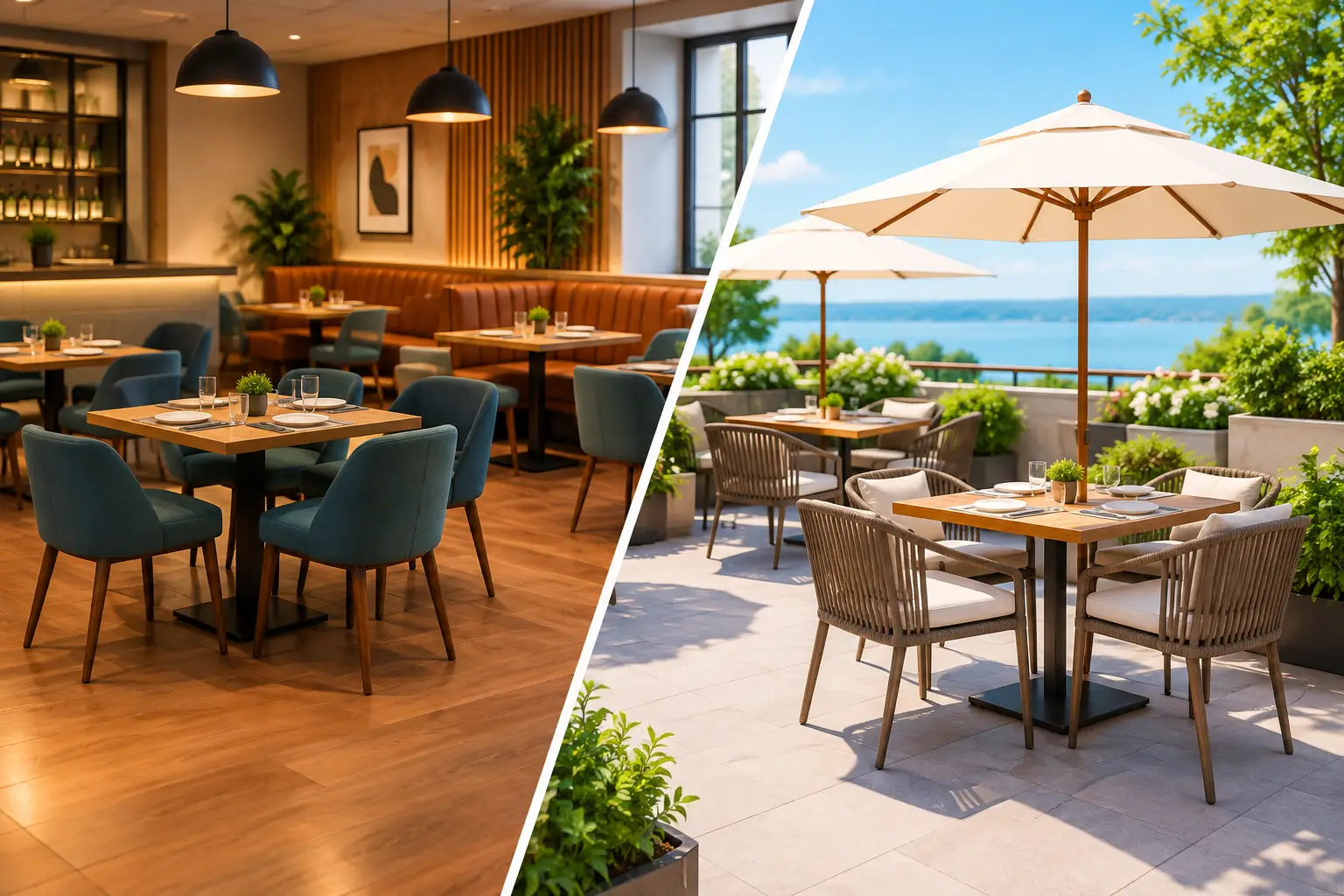
Indoor and outdoor areas should support the same concept without being treated as identical rooms. A fast-casual café may use its sidewalk seating for short daytime visits and its interior for longer laptop sessions. A destination restaurant may use a terrace for aperitifs while reserving the dining room for a more formal meal. Those operating differences should shape the furniture specification.
Indoor seating generally allows more freedom in upholstery, finishes, and form. It can carry a softer, more layered visual language through dining chairs, armchairs, banquettes, sofas, and bar stools. Because guests are protected from direct sun and rain, the design can prioritize tactile materials and detailed finishes that reinforce the interior concept.
Outdoor seating faces a different commercial reality. It must perform through moisture, temperature changes, sunlight, cleaning routines, and frequent rearrangement. A chair that looks refined in a showroom but stains easily, traps water, or becomes uncomfortable in heat is not a good hospitality investment. Outdoor pieces should be chosen for the actual climate and service conditions, not only for the first impression.
The strongest projects create a clear connection between zones. This may come through matching silhouettes, related color families, repeated metal finishes, or tabletops that share a similar visual weight. The goal is continuity, not duplication. A terrace needs a construction suited to exposure, while the indoor room can accommodate more expressive materials.
Plan Capacity Without Sacrificing Comfort
More seats do not automatically mean more revenue. A crowded dining room can reduce perceived quality, slow service, and make guests less likely to return. The same applies outdoors, where narrow aisles and closely packed tables make staff circulation difficult and leave diners feeling exposed to neighboring conversations.
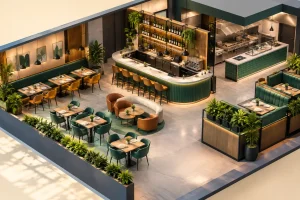
Begin with the service path. Servers need direct routes from the kitchen, bar, point-of-sale station, and bussing area to every table. Guests need room to pull out chairs, enter banquettes, and move toward restrooms without crossing active service lanes. In outdoor areas, allow for planters, heaters, umbrellas, wind screens, and drainage access before finalizing table counts.
Table shape matters as much as table quantity. Square and rectangular tables offer flexibility for combining parties, which can be valuable for cafés and casual restaurants. Round tables often create a more social setting and can soften circulation in compact rooms. Bar-height tables can increase capacity near windows, counters, and terraces, but only where the audience and dwell time support them.
Chair dimensions must be considered with the table base, not separately. Armchairs can add comfort and perceived value, but a wide frame may limit capacity at a small table. Armless dining chairs can be efficient in higher-turnover formats. The right mix often combines both: comfortable feature seating in visible or premium areas, with compact chairs where flexible layouts matter most.
Treat Outdoor Capacity as Seasonal Capacity
A patio may be full only during certain months or hours. That does not make it less valuable, but it changes purchasing decisions. Stackable chairs, folding tables, or pieces that can be moved efficiently into storage may offer more operational value than fixed furniture with a heavier visual presence.
Before ordering, confirm where outdoor furniture will go when the season changes or severe weather arrives. Storage space is frequently overlooked during design development. It affects whether the team can protect the investment, clean the area efficiently, and reset the venue without unnecessary labor.
Material Selection Is an Operating Decision
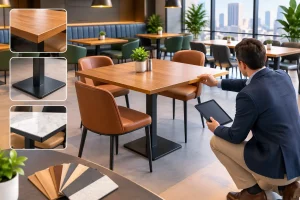
Furniture materials communicate quality, but they also determine cleaning requirements, replacement cycles, and long-term appearance. For commercial interiors, the best specification balances design intent with the demands of daily use.
For indoor seating, solid wood, metal, upholstered elements, and carefully selected laminates can all perform well when built for hospitality use. Upholstery should be evaluated for abrasion resistance, stain management, cleanability, and color retention. In restaurants with high turnover or family traffic, performance fabrics and easy-clean surfaces are often more practical than delicate textiles.
For outdoor seating, powder-coated metal, treated aluminum, outdoor-rated woven materials, quality polypropylene, and properly finished timber are common choices. The right material depends on local conditions. Coastal environments require close attention to corrosion resistance. High-sun locations demand UV-stable finishes and fabrics. Areas with frequent rain need drainage-friendly forms and materials that do not hold moisture.
Do not assume that every metal chair is appropriate for exterior use. The coating process, weld quality, hardware selection, and frame design all affect performance. Similarly, wood can be a strong outdoor choice when it is correctly specified and maintained, but it should not be selected if the operator cannot support the required care schedule.
A commercial supplier should be able to explain these trade-offs directly. At Rezze Design, in-house manufacturing makes it possible to align frame construction, finishes, fabrics, and dimensions with the needs of a specific hospitality project rather than forcing every concept into a standard residential product.
Comfort Creates Longer, Better Visits
Comfort is not limited to cushion thickness. Seat height, back angle, arm support, table clearance, and stability all influence how a guest experiences a meal. A chair may feel acceptable for a quick coffee but become tiring during a two-hour dinner.
Indoor environments give operators more control over comfort through temperature, lighting, acoustics, and upholstery. This is where a well-proportioned dining chair or upholstered armchair can support a higher-value experience. Banquettes can improve comfort and help define the room, particularly when they are designed with the correct seat depth and table relationship.
Outdoor comfort is more variable. Direct sun, wind, street noise, and uneven paving can all affect the guest experience. Furniture should be stable on the surface beneath it, and lightweight pieces should not become a problem in windy conditions. Cushions can elevate comfort, but only if they can be stored, secured, or made from genuinely outdoor-rated materials.
Shade deserves early planning. Umbrellas, pergolas, canopies, and planted elements influence where tables can be placed and how much heat guests feel. They also affect furniture selection because bases, clearance, and visual proportion need to work as one composition.
Use Design to Separate Experiences, Not Operations
A patio can feel like an extension of the restaurant rather than an afterthought when its furniture supports the brand’s atmosphere. For a contemporary coffee concept, slim metal chairs and compact tables may create an active urban rhythm. For a premium restaurant, more generous armchairs, refined table finishes, and controlled spacing may be appropriate.
Still, visual ambition should not interfere with service. Complex chair forms can slow cleaning. Fragile table edges can become costly in busy settings. Deep lounge seating may be ideal for a waiting area but unsuitable for a dining zone where guests need proper table height. The best hospitality interiors make these distinctions intentionally.
Color can connect indoor and outdoor seating without making both areas look uniform. An indoor upholstered chair might reference the same tone used in an outdoor powder-coated frame. A warm wood detail inside can be echoed by a neutral outdoor tabletop. This approach gives architects and operators a coherent palette while respecting the practical needs of each location.
Specify for Maintenance, Logistics, and Replacement
The purchase price is only one part of the furniture decision. Buyers should also consider lead times, packaging, assembly requirements, replacement availability, and the ability to reorder matching pieces as the business grows. For multi-location operators and distributors, consistency across batches is particularly important.
Ask practical questions before approving a collection: Can chairs be stacked safely? Are glides replaceable? Can the finish be matched in future orders? How are upholstered components handled if one unit is damaged? Is the table base stable enough for the selected top size? These details determine whether a project remains polished after months of service.
For export projects, packing and shipment planning should be addressed alongside product design. Efficient carton dimensions, clear labeling, protected finishes, and accurate documentation help reduce risk between the factory and final installation. A supplier that understands both manufacturing and project coordination can prevent small specification problems from becoming site delays.
The most effective indoor and outdoor seating plan gives every square foot a purpose while leaving room for service, maintenance, and changing weather. Choose furniture that reflects the concept, then test it against the real conditions of the operation. That is where a visually strong space becomes a reliable business asset.