A restaurant tabletop takes more punishment than almost any other visible surface in the room. It meets hot plates, spilled wine, cleaning chemicals, bags, laptops, and thousands of elbows over its working life. That is why the best tabletop materials restaurants specify are rarely chosen on appearance alone. The right decision balances visual character, daily maintenance, budget, table base compatibility, and the pace of service.
For architects, operators, and hospitality buyers, the question is not simply which material looks premium in a sample box. It is which surface will continue to look intentional after a busy Friday night, remain practical for staff, and support the atmosphere the project is designed to create.
How to Choose the Best Tabletop Materials for Restaurants
Start with the operational reality of the venue. A fast-casual concept with high guest turnover needs a different tabletop from a fine-dining restaurant where tables are set carefully and guests stay for two hours. Outdoor seating, bar service, shared dining, children, direct sunlight, and cleaning routines all change the specification.
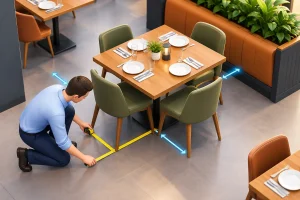
Material performance should be assessed alongside the table’s dimensions and support structure. A heavy stone top may require a substantial metal base and a carefully engineered fixing method. A thin compact laminate top can allow more flexible layouts, but its edge treatment must be appropriate for the design and expected impact. The most successful projects treat the top, base, chair selection, and circulation plan as one coordinated commercial system.
Color and texture matter as well. Dark matte tops can create a sophisticated mood, but they may show fingerprints, dust, or dried water marks more readily than a medium-toned wood grain. Highly textured surfaces add character but can make wiping down tables slower. A hospitality interior should look refined at opening time and remain manageable at closing time.
Solid Wood and Veneer: Warmth With a Maintenance Commitment
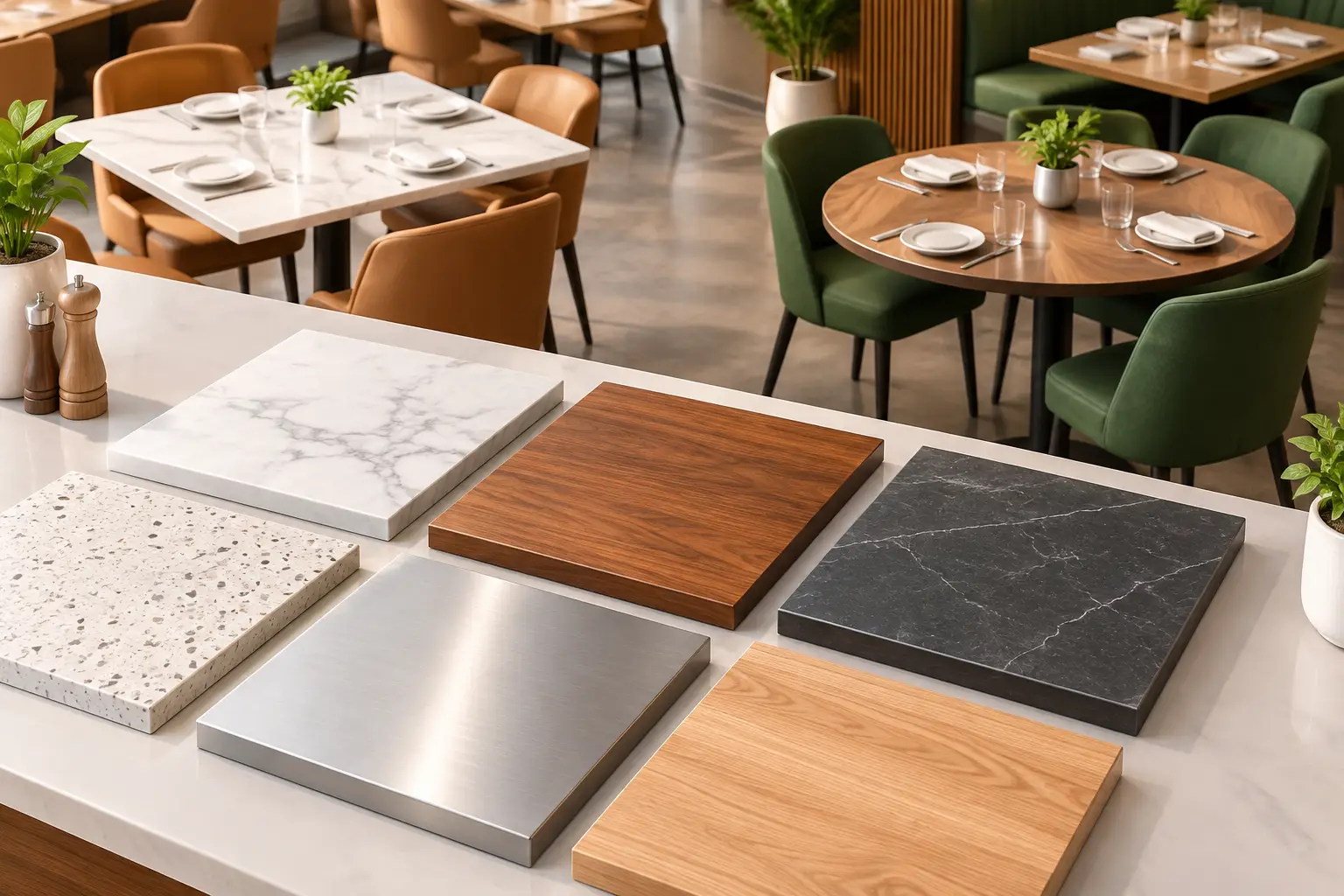
Solid wood remains one of the strongest choices for restaurants seeking warmth, authenticity, and a more residential level of comfort. Oak, walnut, ash, and beech can be stained or finished to align with a project’s palette. Their natural variation also gives each table a distinctive identity, which works particularly well in neighborhood restaurants, contemporary bistros, and premium cafés.
The trade-off is movement and maintenance. Wood responds to humidity and temperature changes, and a poorly protected surface can stain or show heat damage. For commercial use, the quality of the protective finish is as important as the species itself. A durable lacquer, polyurethane system, or high-quality oil finish should be selected according to the desired feel and the operator’s willingness to maintain it.
Wood veneer offers a more controlled, cost-conscious route to the same visual language. A quality veneer over a stable core can provide consistent color, efficient production, and a lighter tabletop than solid timber. It is well suited to large restaurant projects where visual continuity matters. The edge detail is critical: a matching solid-wood edge, carefully applied veneer edge, or contrasting metal profile can determine whether the finished table feels considered or generic.
Laminate and Compact Laminate: Built for Volume
For high-traffic dining rooms, laminate is often one of the most commercially sensible tabletop materials. It is available in a wide range of wood, stone, concrete, and solid-color finishes, allowing designers to achieve a specific look without the upkeep associated with natural materials. Standard laminate tops are generally economical, easy to clean, and practical for cafés, food courts, casual restaurants, and multi-unit rollouts.
Not all laminates perform equally. The substrate, thickness, edge banding, and bonding quality all affect longevity. In busy environments, impact-resistant edges deserve close attention because they are the first area to reveal wear from chairs, trays, and service equipment.
Compact laminate is denser and more moisture-resistant than conventional laminate board. Its solid-colored core and clean, slim profile make it a strong option for outdoor-covered areas, terraces, and contemporary interiors that call for a technical, minimal appearance. It is highly resistant to spills and frequent cleaning, though its visual warmth can be less convincing than real timber. Choose it when durability and consistent operation are more important than material patina.
Natural Stone and Sintered Stone: Premium Presence, Higher Demands
Marble, granite, travertine, and sintered stone create immediate visual impact. Their weight, texture, and natural pattern make them particularly effective in destination restaurants, hotel dining spaces, cocktail bars, and premium café concepts. A stone tabletop can establish the character of a room before the first chair is selected.
Natural stone requires informed specification. Marble and travertine can be porous and may etch when exposed to acidic foods or drinks. Sealing reduces risk but does not remove the need for careful service and cleaning. Veining and color variation should be expected rather than treated as defects. For projects requiring a more predictable appearance, samples should be approved with an understanding that full slabs will vary.
Sintered stone offers a more operationally resilient alternative. It is engineered to resist heat, stains, scratches, and UV exposure, making it suitable for demanding restaurant applications and many outdoor settings. It can also deliver convincing stone-like visuals in thinner profiles. However, edges and corners still require careful handling during transport and installation, and the supporting base must be designed for the top’s weight and dimensions.
Metal, Glass, and Terrazzo: Material Statements With Specific Roles
Metal tabletops, including powder-coated steel, stainless steel, brass-toned finishes, and aluminum, bring an architectural quality to a hospitality space. They work well in industrial interiors, modern coffee bars, outdoor dining zones, and compact tables where a thin, durable surface is desired. Stainless steel is particularly practical near open kitchens or high-cleaning environments, although it can show scratches over time. Powder coating expands color options but should be specified with a finish suitable for commercial abrasion and UV exposure where relevant.
Glass offers visual lightness and can help smaller spaces feel more open. Tempered glass is essential for commercial use, and the underside, edge finish, and fixing details should be resolved early. Its primary limitation is maintenance: fingerprints and smears are highly visible. Glass is usually best used selectively rather than across an entire high-turnover dining room.
Terrazzo provides texture, color, and a crafted identity. It can connect a tabletop to flooring, bar fronts, or wall details, creating a cohesive interior language. Because terrazzo is heavy and can be porous depending on its formulation, it requires the same structural and sealing consideration as other mineral-based surfaces. It is a strong design choice when the project can support its weight and care requirements.
Match the Tabletop to the Service Model
The best material is often determined by what happens on top of it. A breakfast café serving coffee, pastries, and laptops needs easy cleaning and reasonable scratch resistance. A wine bar needs a surface that handles spills without permanent marking. A family restaurant needs forgiving edges and finishes that tolerate frequent sanitation. Fine dining can justify more delicate materials when service standards and maintenance procedures support them.
Outdoor dining requires another level of discipline. Direct sun can fade some finishes, moisture can affect wood and standard board cores, and temperature changes can stress certain materials. Compact laminate, treated metal, sintered stone, and carefully specified outdoor-grade surfaces generally offer more dependable performance. A material described as water-resistant is not automatically appropriate for uncovered exterior use.
Details That Protect the Investment
Even a high-quality surface can fail early if the details are ignored. Tabletop edges should be rounded or protected where guest circulation is tight. Undersides need sufficient sealing, especially on wood-based products, because moisture and uneven finishing can lead to warping. The fixing method must allow for material movement where required and keep the top stable under side pressure.
Size also affects performance. Large communal tables may need additional support to prevent deflection, particularly with thinner tops. Small two-person tables benefit from stable bases with a wide enough footprint to prevent rocking. Before placing a full order, review a physical sample under the actual lighting and, where possible, test cleaning products and typical food or beverage spills on the selected finish.
For tailored hospitality projects, Rezze Design can coordinate tabletop options with commercial table bases, seating, finishes, and production requirements, helping project teams maintain a consistent result from sample approval through packing and export preparation.
A tabletop should earn its place in the restaurant every day, not only in the project presentation. Specify the surface that supports the intended guest experience, gives staff a practical working environment, and ages in a way the brand will be proud to see.