

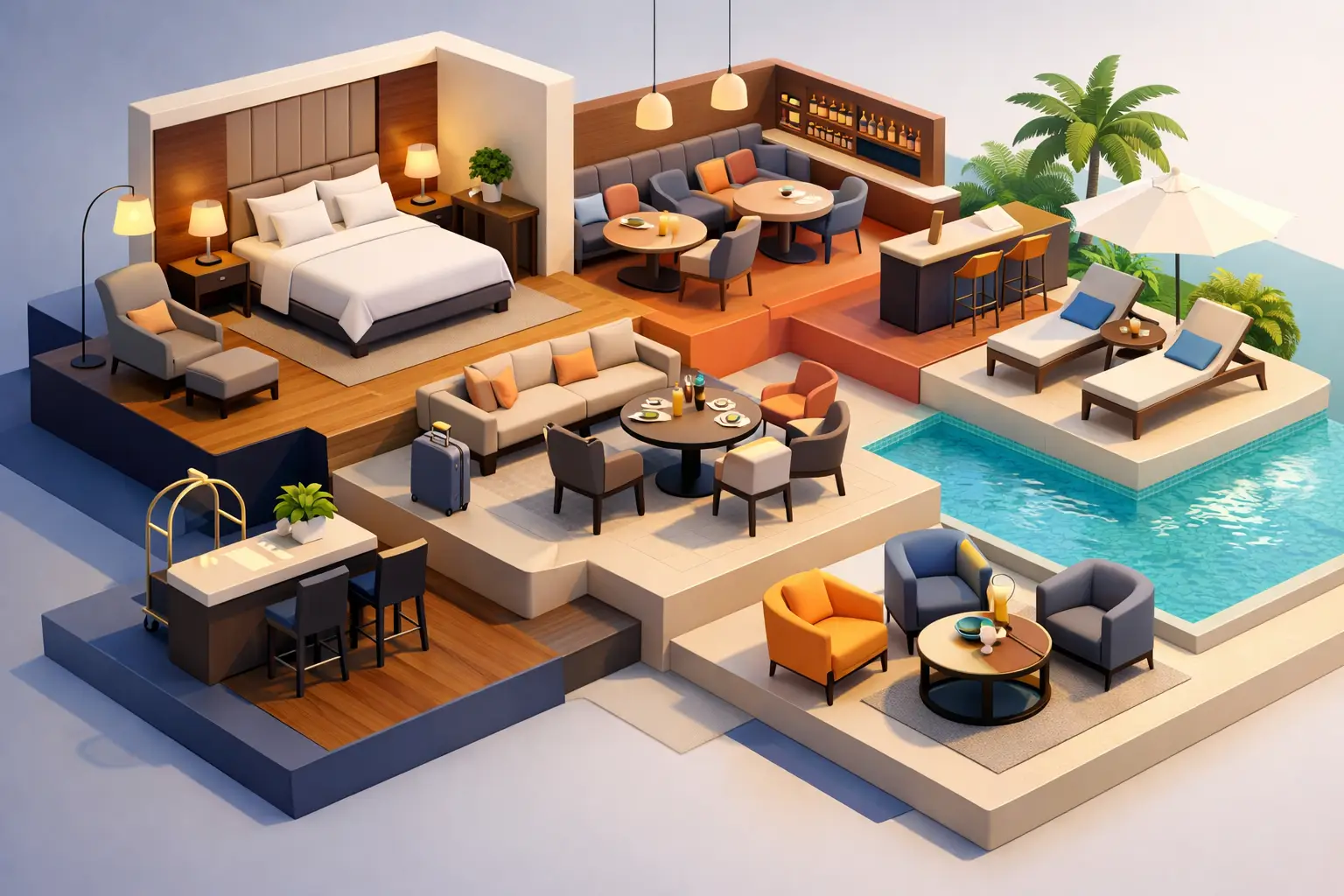
A restaurant chair may look perfect on opening day and still be the wrong chair for the job. If its joints loosen after constant use, its finish shows every impact, or its seat becomes uncomfortable during a busy dinner service, the visual concept quickly becomes a maintenance problem. So, what makes furniture commercial is not one feature or a label. It is the ability to perform reliably under repeated use while supporting the space’s design, operating needs, and long-term investment.
For hospitality operators, architects, and furniture distributors, commercial furniture should be evaluated as part of the project infrastructure. It affects guest comfort, table turnover, cleaning routines, staff movement, brand perception, and replacement costs. A well-specified chair, table, sofa, or bar stool works hard without looking over-engineered.
What Makes Furniture Commercial in a Hospitality Setting?
Commercial furniture is made for spaces where many different people use the same piece every day. Cafes, restaurants, hotel lounges, bars, and shared dining areas place very different demands on furniture than a private home. The furniture must withstand frequent movement, cleaning, shifting, and contact while remaining comfortable and visually consistent.
That does not mean every commercial piece needs the same specification. A fine-dining dining chair, an outdoor cafe chair, and a hotel lobby sofa face different conditions. The key is matching the construction, material, finish, and dimensions to the actual environment rather than selecting furniture only from an image or a residential-style catalog.
A commercial product also needs to work within a project process. Buyers need clear dimensions, dependable lead times, repeatable quality, suitable packing, and a supplier that can answer technical questions before production begins. For multi-location operators and distributors, continuity matters just as much as the first delivery.
Construction That Handles Repeated Use
The structure is where commercial quality begins. A chair can have an attractive silhouette, but its performance depends on how its frame, joints, fastening points, and weight-bearing areas are engineered. In high-traffic hospitality spaces, these components are stressed thousands of times through sitting, dragging, stacking, repositioning, and daily cleaning.
Solid wood frames should use properly designed joinery and reinforcement at critical points. Metal frames need consistent welding, stable geometry, and finishes that protect against chips and corrosion. For upholstered seating, the internal frame, webbing or support system, foam density, and upholstery attachment all affect how the product performs over time.
Tables deserve the same scrutiny. Their bases must remain stable on real floors, not only in a showroom. A table that rocks under a guest’s coffee or plate creates an immediate negative impression. Base weight, foot adjustment, column strength, and the connection between the top and base should be considered together.
There is a practical trade-off here. Heavier furniture can feel more substantial and stable, but it may be harder for staff to move during cleaning or layout changes. Lightweight furniture improves flexibility but needs a carefully engineered frame to avoid feeling weak. The correct balance depends on service style, floor plan, and operating habits.
Materials and Finishes Built for Real Operations
Material selection determines how furniture ages. Commercial spaces expose surfaces to moisture, heat, food service, cleaning chemicals, UV light, and constant contact. A material that is appropriate in a residential dining room may not retain its appearance in a busy brunch venue.
Wood requires a finish that protects the surface while preserving the desired color and grain. Natural materials bring warmth and character, but they need realistic expectations and proper care. A highly used table may develop a patina over time, while a dark painted finish may reveal scratches differently from a natural wood finish. The goal is not to promise that a surface will never change. It is to choose a finish that wears appropriately for the concept and can be maintained efficiently.
Metal chairs and bases need dependable coating quality, especially for outdoor or semi-outdoor use. Powder-coated finishes are often selected for their coverage and durability, but color, texture, exposure, and cleaning practices still matter. In coastal locations or open-air dining environments, corrosion resistance becomes a more demanding requirement.
For upholstery, commercial suitability involves more than selecting an appealing fabric. The material should be appropriate for the anticipated level of use, cleaning method, color scheme, and local fire or compliance requirements. Leather, vinyl, woven textiles, and performance fabrics each offer different advantages. A light woven fabric may create a refined look in a low-volume lounge, while an easy-clean upholstery option may be more practical for an all-day restaurant with high guest turnover.
Comfort Is a Commercial Performance Requirement
Comfort directly affects how guests experience a venue. If a dining chair is too shallow, too low, or poorly shaped for the table height, guests notice it even if they cannot explain why. In hospitality, comfort supports the concept. A quick-service cafe may favor more upright seating and easy circulation, while a cocktail bar or hotel lounge may need deeper, more relaxed seating that encourages guests to stay.
Seat height, back angle, arm height, cushion firmness, and table clearance should be reviewed as a system. Bar chairs need to align with bar height and allow comfortable foot support. Dining armchairs must fit under the table and provide enough space between settings. Banquette and sofa dimensions should account for how people enter, exit, and sit with coats or bags.
Testing samples is valuable because comfort cannot be judged accurately from technical drawings alone. A sample allows the project team to assess proportions, finish, upholstery, and how the product feels in use. It also helps identify small adjustments before they become expensive production changes.
Design Consistency Without Sacrificing Durability
Commercial furniture should carry the identity of the space. For a restaurant group, it may reinforce a recognizable brand across locations. For an independent cafe or boutique hotel, it may be the detail that makes the interior feel considered rather than generic.
The strongest projects do not treat durability and design as competing priorities. Contemporary forms, warm wood tones, textured fabrics, refined metalwork, and custom colors can all be specified for commercial settings when they are supported by the right construction and materials.
Custom manufacturing is particularly useful when a project needs a precise upholstery color, altered dimensions, a branded finish, or a chair and table combination that fits a specific layout. However, customization should be managed carefully. Every change can affect tooling, cost, lead time, minimum quantities, and future reorder consistency. A capable manufacturer will help separate the changes that create real project value from those that add complexity without improving performance.
Project Readiness Is Part of Commercial Quality
Furniture becomes truly commercial when it can move from specification to installation with control. This includes accurate product information, approved samples, production planning, quality checks, export-ready packing, and clear communication throughout fulfillment.
For architects and operators, a supplier should be able to discuss more than style. They should be ready to review quantities, site conditions, fabric or finish approvals, packaging requirements, delivery sequencing, and replacement needs. For distributors and wholesalers, consistent production and a clear product range support confident sales to their own customers.
Factory-direct production provides an advantage when projects require close control over details. At Rezze Design, in-house manufacturing allows the team to coordinate chairs, armchairs, sofas, bar seating, tables, and tailor-made pieces around a shared commercial brief. That control is especially valuable when a project needs a cohesive look across dining, lounge, and outdoor zones.
Questions to Ask Before You Specify
Before approving commercial furniture, project teams should confirm how and where each item will be used. Ask whether the piece is intended for indoor, outdoor, or covered outdoor conditions; how often it will be moved; what cleaning products staff will use; and whether replacement items may be needed later.
It is also wise to review dimensions in the actual layout. A beautiful chair can create circulation issues if its width, arm profile, or pull-out space was not accounted for. Tables need enough clearance for guests and service staff, while lounge pieces should support the intended seating capacity without making the room feel crowded.
Finally, consider the supplier relationship beyond the purchase order. Commercial projects rarely remain static. A restaurant may expand, a hotel may renovate a floor, or a distributor may need to repeat a successful collection. The right furniture partner can support those next decisions with product knowledge, production capability, and practical communication.
The best commercial furniture earns its place long after installation. Specify pieces that fit the daily reality of the venue, then work with a manufacturer that can turn those requirements into furniture guests enjoy and operators can rely on.