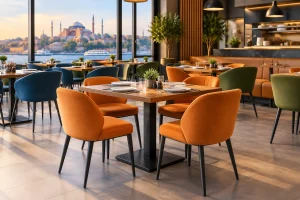


A café chair is used more times in a year than many residential chairs are used in a decade. That is why buying metal cafe chairs wholesale is not simply a matter of comparing unit prices. For café operators, architects, distributors, and hospitality buyers, the right chair must support the visual concept, withstand daily traffic, arrive consistently across the order, and remain practical to maintain long after opening day.
Metal chairs remain a strong choice for contemporary cafés because they offer a clear architectural presence and reliable commercial performance. Their success, however, depends on the details: steel quality, weld precision, seat construction, finish selection, packaging, and the manufacturer’s ability to manage a project from sample approval through export delivery.
What Commercial Buyers Should Expect From Metal Cafe Chairs Wholesale
Wholesale purchasing should create more than a lower cost per chair. It should provide control over specifications, repeatable quality, and a supply relationship that supports expansion, replacements, and future projects.
For a high-traffic café, a metal frame needs to feel stable without becoming visually heavy. Well-proportioned tubing, clean joints, and carefully positioned cross supports make a practical difference. The chair should stack or move easily when needed, yet retain enough weight and structural integrity to feel secure under constant use. A lightweight chair may reduce shipping costs, but excessive weight reduction can compromise the solid, premium feel guests notice immediately.
The seat is equally important. A fully metal seat can suit industrial, outdoor, or fast-service concepts, while upholstered or wood-accented versions bring more warmth to specialty coffee shops, bistros, and all-day dining spaces. There is no universal best option. The right specification depends on dwell time, cleaning requirements, climate, and the character of the interior.
For wholesale buyers, consistency matters across every carton. A chair that looks excellent as a single showroom sample but varies in color, weld alignment, or leg level across a large shipment creates costly problems on site. Commercial furniture production requires controlled processes, defined tolerances, and quality checks before packing.
Choose the Frame and Finish for the Setting
Metal is a broad category, not one material decision. Steel is widely used for indoor café chairs because it offers strength, design flexibility, and a refined profile at a competitive commercial value. Aluminum can be a practical choice for outdoor projects where low weight and corrosion resistance are priorities. The trade-off is that aluminum has a different visual character and may require different construction approaches to achieve the same level of perceived solidity.
Finish selection should be based on use, not just a color board. Powder coating is a preferred solution for many commercial projects because it provides a consistent, durable surface in a wide range of colors and textures. Matte black, warm white, olive green, terracotta, and custom neutral tones can all support a defined café identity. Textured finishes can also be more forgiving of daily wear than glossy surfaces, particularly in busy venues.
For outdoor terraces, coastal locations, or humid environments, buyers should discuss corrosion protection at the specification stage. A standard indoor finish may not be appropriate for exposed seating. The same applies to floor protection. Suitable glides help reduce noise, protect flooring, and keep the chair stable on common hospitality surfaces. These are small components, but they shape the guest experience and maintenance workload.
Comfort Is a Commercial Requirement
A visually sharp metal chair will not serve a café well if guests leave early because the seating is uncomfortable. Comfort does not always mean thick upholstery. It comes from seat width, back angle, edge treatment, frame geometry, and the relationship between chair height and tabletop height.
For quick-service coffee counters, a compact seat may be entirely appropriate. For brunch venues, wine bars, and restaurants where guests remain seated longer, a shaped backrest, upholstered pad, or mixed-material seat may be a better investment. Architects should evaluate chairs with the intended table and flooring, rather than reviewing them in isolation. Proportions that work in a showroom can feel different in a completed dining layout.
Plan a Wholesale Order Around the Full Project
The most efficient furniture orders begin with a clear seating plan. Before selecting models, establish the expected number of covers, circulation paths, table sizes, bar seating requirements, and whether chairs will move between indoor and outdoor zones. This helps buyers avoid an all-purpose chair that is only partially suitable everywhere.
A practical project specification usually confirms the chair model, finish, upholstery or seat material, quantity by area, preferred packing method, and delivery timeline. If the project includes customized colors, branded details, or nonstandard dimensions, those points should be approved early. Custom work creates stronger design differentiation, but it also requires disciplined sample review and production planning.
For distributors, the calculation is slightly different. A collection should include designs that can work across multiple customer types: independent cafés, casual restaurants, boutique hotels, food halls, and commercial fit-out projects. Choosing a manufacturer with both established collections and custom production capability allows a distributor to offer a dependable core range while responding to larger project opportunities.
Rezze Design combines in-house metal furniture production with project-based support, giving commercial buyers a single manufacturing partner for standard collections and tailored hospitality seating requirements.
Factory-Direct Value Is About Control, Not Just Price
Factory-direct purchasing can reduce unnecessary layers between the buyer and the production floor. More importantly, it gives buyers direct access to the people responsible for materials, finishes, dimensions, packing, and production timing. This is especially valuable when an architect requests a custom color, a restaurant group needs phased delivery, or a wholesaler needs reliable replenishment capacity.
The lowest quoted chair is not necessarily the lowest total-cost option. Buyers should consider freight efficiency, packaging protection, assembly needs, finish durability, claims handling, and the expected service life of the product. A poorly packed shipment that arrives with damaged corners or scratched frames can erase the savings of a lower unit price quickly.
Ask how chairs are packed for export, whether they are shipped assembled or partly knocked down, and how cartons are designed to protect finished surfaces. Efficient packaging can improve container utilization, while careful internal protection helps preserve the product’s condition from factory to project site. The right solution depends on the model and the buyer’s receiving capabilities.
Samples Reduce Risk Before Production
For larger hospitality orders, samples are not a formality. They are the point where a specification becomes real. Review the chair under the project lighting, beside the selected tables, and against wall, floor, and upholstery materials. Check the comfort, finish texture, color accuracy, stability, and scale.
A sample review should also address practical questions. Does the chair create excessive noise when moved? Are the feet appropriate for the flooring? Is the finish easy to clean? Does the upholstery suit the venue’s service style? Resolving these details before production is faster and more cost-effective than making changes after a container is in transit.
Build a Collection That Supports the Guest Experience
Metal café chairs are often selected as individual products, but guests experience them as part of a complete setting. Their lines should work with the tables, bar stools, lighting, tile, and service flow. A black steel chair may create useful definition in a pale, minimal interior. A softer powder-coated color can make a compact café feel more inviting. Upholstered accents can introduce comfort without losing the clarity of a metal-based collection.
The strongest projects balance visual impact with operational reality. They choose materials that staff can maintain, dimensions that support circulation, and finishes that continue to look considered after thousands of service hours. For buyers sourcing at wholesale scale, that balance is where design value becomes business value.
When selecting a manufacturing partner, look beyond the product image. Choose a team that can discuss the chair as part of the project: its construction, finish, packing, delivery requirements, and role in the space. A well-specified metal chair does more than fill a floor plan. It gives every table a more confident place to belong.