
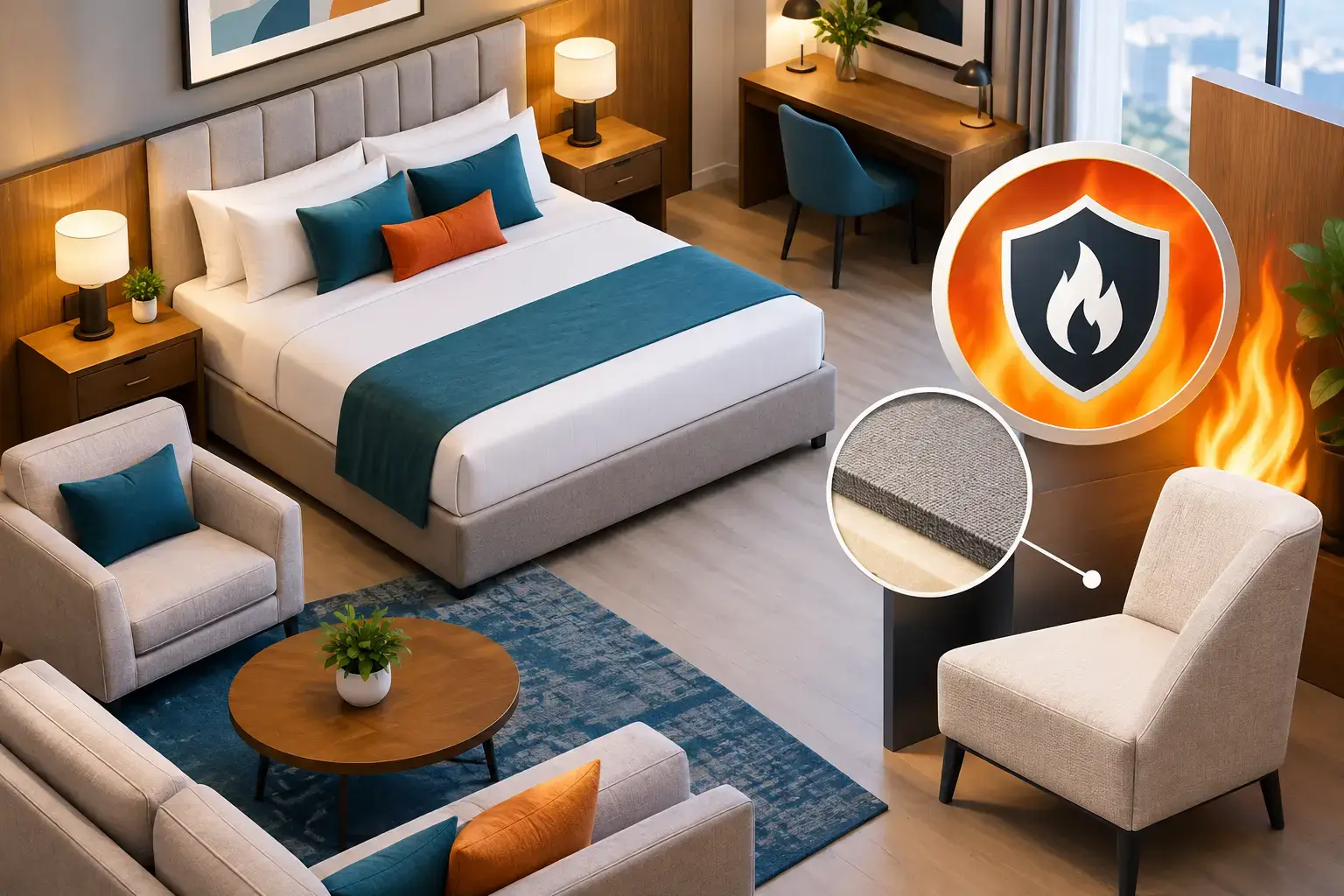
A restaurant chair may look right in a concept presentation and still be the wrong choice for the project. When a specification calls for tested upholstery, a specific ignition standard, or documentation for local approval, the fabric, foam, liner, and construction all matter. Furniture fire ratings are therefore not a final purchasing detail. They should be addressed while the seating concept, material palette, and production plan are still being developed.
For restaurant operators, architects, distributors, and hospitality procurement teams, the goal is simple: specify furniture that supports the intended design while meeting the applicable requirements for the project location and occupancy. The process is less about selecting a generic “fireproof” product and more about defining the correct test standard, approved construction, and supporting documents before manufacturing begins.
What furniture fire ratings actually mean
The term “fire rating” is often used broadly, but commercial furniture is generally evaluated through flammability or ignition-resistance testing rather than a single universal rating. A test may assess how an upholstery assembly reacts to a smoldering cigarette, a small open flame, or a more demanding ignition source. The result applies to the tested construction, not automatically to every version of a chair or sofa in a collection.
That distinction is critical for custom hospitality projects. Changing the upholstery fabric, foam density, interliner, padding, or filling can change performance. A chair that has been tested in one fabric category cannot simply be assumed compliant after a customer selects a different velvet, bouclé, leather alternative, or outdoor textile.
For US projects, specifications may reference standards such as California Technical Bulletin 117-2013, NFPA 260, UFAC, or California Technical Bulletin 133 for seating in certain public-occupancy applications. The appropriate requirement depends on the project, its location, the authority having jurisdiction, and the client’s own safety criteria. International projects may instead require standards such as BS 5852 or EN 1021.
A supplier should never treat these standards as interchangeable. They use different ignition sources, test methods, and pass criteria.
Start with the project requirement, not the fabric swatch
The most efficient time to discuss fire performance is before final sampling. Hospitality furniture is often customized to match a floor plan, brand concept, or regional market. That flexibility is valuable, but it also means compliance needs to be managed at the construction level.
A clear project brief should identify the country and state of installation, venue type, seating use, and any standards named by the architect, owner, hotel brand, insurer, or local code consultant. It should also state whether the furniture will be used in dining areas, hotel lobbies, lounges, guestrooms, outdoor covered spaces, or other public areas. A banquette for a hotel lobby may face a different specification route than dining chairs for an independent café.
For a new restaurant, the interior designer may provide the required standard in the furniture schedule. For a distributor supplying several markets, the requirement may need to be confirmed separately for each destination. If the documents are silent, the buyer should ask the local code consultant or authority having jurisdiction rather than relying on assumptions from a previous project.
This early alignment protects lead time. If a selected textile does not have the required test history with the intended foam and barrier system, the supplier may need to propose an alternative construction, source a suitable interliner, or arrange additional testing. These are manageable decisions at the approval stage. They become expensive when production is already underway.
The upholstery assembly is the real specification
In upholstered hospitality seating, fire performance is rarely determined by the outer fabric alone. It is the combined assembly that matters: cover material, backing, stitching, foam, fiber wrap, barrier fabric, adhesive, and substrate can all affect test behavior.
A contract-grade fabric may have a strong abrasion result and still not satisfy the required flammability standard in the intended chair construction. Likewise, a flame-retardant finish on a fabric does not guarantee that a finished armchair or sofa will pass an assembly test. Buyers should avoid broad claims such as “fireproof fabric” unless they are backed by documentation that clearly matches the required test and product construction.
For metal chairs with upholstered seats or backs, the upholstered component remains relevant. For wood-framed chairs, the frame finish and internal materials may also be part of the consideration. Tables, metal furniture, and fully outdoor products raise different questions, especially where fire codes regulate furnishings, surface finishes, or building materials separately. The furniture supplier, architect, and code specialist should keep those categories distinct.
How to request the right documentation
Good documentation makes procurement easier for everyone involved. It allows architects to complete submittals, helps purchasing teams verify the order, and gives operators a clearer file for inspection or insurance purposes.
When requesting evidence for a hospitality furniture order, ask for these items:
- The exact standard and test method referenced in the report or certificate.
- The tested product description, including fabric, foam, barrier, and construction details.
- The test laboratory name, report date, and report or certificate number.
- Confirmation that the proposed production configuration matches the tested assembly, or a written explanation of any approved variation.
A fabric supplier’s data sheet can be useful, but it is not always enough. The relevant question is whether the documentation supports the specified furniture item in the configuration being purchased. If a project requires a full-scale seating test, a fabric-only result will not provide the same assurance.
Documentation should also be reviewed before purchase order release, not just before shipment. This allows the manufacturer and buyer to resolve material substitutions without interrupting production. For export orders, keep the documents together with finish samples, approved shop drawings, packing requirements, and destination instructions. Commercial projects move faster when approval records are organized from the start.
Balancing safety, design, comfort, and cost
Fire-compliant furniture does not have to look institutional. Contemporary hospitality interiors rely on rich textures, sculptural silhouettes, tailored upholstery, and comfortable seating depths. The key is to make material choices with performance requirements visible from the beginning.
There can be trade-offs. A barrier layer may affect the hand feel or tailoring of a thin upholstery fabric. Some performance textiles have a more limited color range. A tested assembly may carry a higher material cost than a standard residential construction. Testing a one-off custom piece may not be economical for a small order, while using an existing approved assembly can be more practical.
These are commercial decisions, not reasons to compromise on the specification. An experienced manufacturer can help compare options: a revised textile, a compatible barrier, a tested foam package, or a design adjustment that maintains the visual intent. For a multi-site rollout, standardizing approved combinations across the collection can reduce risk and make repeat ordering more efficient.
A better workflow for commercial seating projects
The strongest furniture fire-rating process is collaborative. The buyer shares the requirement early, the manufacturer reviews the proposed construction, and samples are approved against both visual and performance criteria. Where testing is required, it should be planned around the actual production materials rather than a preliminary substitute.
At Rezze Design, custom seating projects are developed with this production reality in mind. Factory control supports more precise coordination between frame construction, upholstery details, selected finishes, packaging, and project documentation. It also gives architects and hospitality buyers a direct path for discussing alternatives when a design choice needs to meet a specific commercial requirement.
Fire performance should sit alongside comfort, durability, cleanability, and visual identity in every furniture brief. A well-made chair earns its place in a hospitality space not only because it complements the room, but because the materials and documentation behind it are ready for the demands of the project.