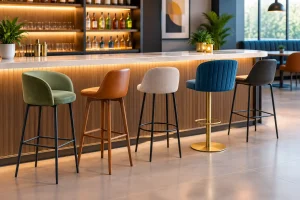
A dining chair may look right in a showroom and still be the wrong choice for a restaurant floor. It may be difficult to clean, unstable on uneven surfaces, too heavy for staff to move, or unable to hold its finish through constant use. Choosing a contract seating supplier means looking beyond a product image and evaluating whether the manufacturer can support the full commercial reality of your project.
For cafés, restaurants, hotels, and high-traffic public spaces, seating is both a design decision and an operating decision. The right supplier helps protect the visual concept while giving architects, operators, and distributors confidence in quality, delivery, and long-term performance.
What a Contract Seating Supplier Should Deliver
A commercial seating partner should bring more than a catalog of chairs. The supplier should understand how seating performs under daily pressure: repeated movement, cleaning routines, close table layouts, guest turnover, staff handling, and the occasional impact that is unavoidable in hospitality environments.
Start with construction. Frame materials, joinery, welding quality, upholstery methods, foam density, glides, and protective finishes all affect how a chair performs after months of service. A chair intended for a private home may not meet the demands of a busy all-day café. Contract seating must be specified for use, not selected only for appearance.
Design range matters as well. A project often requires dining chairs, armchairs, bar stools, lounge seating, sofas, and outdoor options that feel connected without becoming repetitive. A supplier with a coherent collection can help maintain a consistent visual language from the entrance to the dining room, terrace, bar, and waiting area.
The strongest relationships also involve practical project support. This includes clear product specifications, finish options, sample coordination, production updates, packing information, and reliable communication when a schedule changes. These details are not secondary. They are often what separates a smooth opening from a last-minute sourcing problem.
Evaluate Commercial Durability Before Style Alone
Style gets attention first, but durability determines whether that style continues to represent the venue well. Ask how the frame is made, where stress points are reinforced, and what protection is used on metal, wood, and upholstered surfaces. For outdoor seating, ask how materials respond to moisture, sun exposure, temperature changes, and frequent cleaning.
There is no single best material for every project. Solid wood can add warmth and character, but it should be properly finished for the intended environment. Metal chairs can provide strength and a clean contemporary profile, yet the coating quality and weld finish need close review. Upholstered chairs offer comfort and a more premium guest experience, but fabric or leather selection must match the maintenance capacity of the operation.
Comfort deserves equal attention. Guests may spend twenty minutes on a café chair or three hours at a dinner table. Seat height, back angle, arm placement, upholstery, and overall proportions influence how long people can sit comfortably. For operators, comfortable seating can support longer stays and a more positive perception of the venue. For designers, it prevents the common compromise of choosing visual impact at the expense of usability.
A good supplier will discuss these trade-offs directly. A delicate fabric may be ideal for a private dining area but unsuitable for a high-turnover breakfast room. A sculptural lounge chair may create a focal point, but it may require more floor area than a compact hospitality layout can spare. Honest guidance at the specification stage saves time and replacement costs later.
Custom Manufacturing Creates Better Project Fit
Standard collections are valuable because they simplify selection and support repeatable quality. However, many hospitality projects need more precise control over dimensions, upholstery, finish, or detailing. Custom manufacturing gives a project team the freedom to adapt seating to the concept rather than adjusting the concept around an off-the-shelf product.
Customization can be as focused as selecting a custom stain, powder-coat color, fabric, or piping detail. It can also involve adjusting seat height for a specific table program, modifying an arm profile, producing a bar stool to a required counter height, or developing a new piece for a branded environment.
The key is to understand the supplier’s process. Custom work should begin with clear drawings, approved material references, and realistic production timing. Samples or prototypes are especially useful when the project uses a new finish combination or when several decision-makers need to approve comfort and proportion. They create a practical checkpoint before full production begins.
Rezze Design combines its own factory production with tailor-made development for hospitality projects, allowing clients to work from established collections while adapting key details to the space. For architects and distributors, this creates a more flexible route to a distinctive commercial offering without losing production control.
Ask the Questions That Protect the Schedule
A seating order can affect many other parts of a project: table layouts, lighting positions, circulation clearances, delivery access, and opening-day operations. Before placing an order, establish a clear working plan with the supplier.
The following questions are worth resolving early:
- What are the confirmed production lead times for standard and custom items?
- Which finishes, fabrics, and materials are available within the project schedule?
- Can the supplier provide dimensions, weight details, and material specifications for planning?
- How will goods be packed to protect finishes during export and local handling?
- Who will provide status updates, and how will changes or approvals be documented?
These are commercial questions, but they also protect the design outcome. A substitute fabric, delayed bar stool, or poorly packed chair can compromise a carefully planned opening. The supplier should provide direct answers rather than broad estimates.
For US buyers sourcing internationally, export readiness is especially significant. The manufacturer should be able to prepare goods for international transport, coordinate packing requirements, and communicate clearly with the buyer’s logistics team or freight partner. Factory-direct sourcing can create meaningful value, but only when documentation, packaging, and communication are managed with the same care as the furniture itself.
Why Factory Control Matters for Seating Projects
When a supplier has direct control over manufacturing, project teams gain better visibility into how furniture is made and how changes can be handled. This is particularly important for custom orders, repeat programs, and distributor relationships that require consistency across multiple installations.
Factory control can improve quality checks at each stage, from raw material selection to welding, upholstery, finishing, assembly, and packing. It also makes communication more efficient when a client needs a revised finish, a quantity adjustment, or clarification on a technical detail. Instead of passing information through several layers, the project can be managed closer to the source.
That does not mean every project needs fully custom furniture. A proven collection can be the smarter choice when timing is tight or when a distributor needs a reliable product range for multiple customers. The advantage of working with a manufacturer is having both options: dependable collection pieces for speed and tailored production where the project requires a specific answer.
Build a Supplier Relationship, Not a One-Time Purchase
Hospitality operators, architects, and distributors benefit most when a seating supplier understands their standards over time. A restaurant group may need the same chair model for future locations. An architect may want a trusted manufacturing partner for recurring projects. A distributor may need dependable product information, samples, and a clear path to expanding a collection in its market.
This kind of relationship begins with precision. Share the intended use, floor plan, concept direction, quantities, target delivery date, and any performance concerns from the start. In return, expect clear recommendations, accurate specifications, and realistic timing. The best result is not simply a chair that photographs well. It is seating that supports the guest experience, withstands commercial use, arrives prepared for installation, and continues to represent the project with confidence.
Before making a final selection, review one chair as if it has already spent a year in service. Consider who will sit in it, who will clean it, who will move it, and how it will look after hundreds of busy shifts. That perspective leads to better specifications and a supplier partnership built for the life of the space.