A restaurant furniture distributor opportunity is not simply about adding chairs and tables to an existing catalog. It is an opportunity to serve operators, architects, and hospitality groups that need a supplier who understands commercial use, design continuity, production timing, and the realities of opening a venue. The strongest distributor relationships are built around that complete requirement, not around a one-time product transaction.
For distributors in the US and export markets, the hospitality sector continues to reward suppliers that can offer distinctive design without creating unnecessary project risk. Restaurant owners want spaces that photograph well, feel comfortable for guests, and stand up to daily traffic. Designers need flexibility in materials, finishes, dimensions, and lead times. A manufacturer that can support both standard collections and tailored production gives distributors a more credible position in these conversations.
Why the Restaurant Furniture Distributor Opportunity Is Growing
Restaurants, cafés, hotel dining areas, and mixed-use hospitality projects are increasingly designed as brand experiences. Furniture has a direct role in that experience. It affects how long guests stay, how easily staff move through the room, how a concept appears in photography, and whether the interior still looks considered after heavy use.
This creates demand for more than entry-level contract furniture. Many operators are looking for contemporary pieces that carry a clear visual identity while meeting commercial expectations for stability, comfort, cleanability, and repeatability. A distributor with access to a design-led manufacturer can compete for projects where generic imported furniture is not enough, but fully local custom fabrication may exceed the client’s budget or schedule.
The opportunity is especially relevant for distributors already serving commercial interiors, foodservice equipment, lighting, or restaurant supply customers. Furniture naturally extends the value of those relationships. Instead of referring a client elsewhere for seating and tables, a distributor can provide a coordinated category with project support behind it.
What Makes a Manufacturer Worth Representing
A distributor’s reputation is tied to the factory behind every order. Attractive product images can start a conversation, but manufacturing discipline determines whether the relationship produces repeat business.
The right partner should have direct control over key production stages. In-house manufacturing supports better quality consistency, clearer communication on feasibility, and faster decisions when a project requires modified dimensions, upholstery changes, metal colors, or special table bases. It also gives distributors a more reliable answer when a client asks whether a product can be adapted for a specific floor plan or design concept.
At Rezze Design, production takes place in a dedicated 1,400-square-meter factory in Istanbul, with collections developed for hospitality environments and the ability to manufacture project-specific items. This combination matters because distributors need both. Standardized products make showroom presentations and repeat ordering easier, while customization opens doors to higher-value architectural and multi-location projects.
Export readiness is equally important. A capable partner should understand protective packing, commercial documentation, container planning, and the need for clear order communication. International furniture distribution is rarely without variables. Material availability, consolidation schedules, destination handling, and local compliance questions can affect timing. The manufacturer should address those points directly rather than leaving the distributor to manage uncertainty alone.
Build a Profitable Offer Around More Than Individual Pieces
Selling a single chair can be useful, but hospitality projects are usually won through a more complete proposal. A distributor can create stronger commercial value by presenting seating, bar stools, tables, lounge pieces, and outdoor options as a coordinated family. This helps designers maintain a consistent material language across the dining room, bar, waiting area, terrace, and private event space.
A complete offer also improves the quality of the sales conversation. Rather than competing only on a chair price, the distributor can discuss seat height, traffic flow, upholstery performance, table proportions, stackability where needed, and the transition between indoor and outdoor zones. These are project questions, and clients are more likely to value a partner who can answer them precisely.
Complementary sourcing can extend this advantage. Certain hospitality projects also require lighting, tiles, tableware, cutlery, crockery, and stainless steel kitchen items. Not every distributor needs to carry every category, and attempting to do too much can dilute focus. However, the ability to coordinate selected complementary items can simplify purchasing for a restaurant operator and make the distributor more valuable to architects working against an opening date.
Choose the Right Customers and Project Types
The best restaurant furniture distributor opportunity depends on local market access. A distributor with a strong network of independent restaurant owners may focus on fast-moving café and casual dining projects. A company with established architect relationships may be better positioned for boutique hotels, premium restaurants, workplace hospitality areas, and multi-unit developments.
There are trade-offs. Independent operators may make decisions quickly but often have tighter budgets and less predictable project scope. Larger hospitality groups can produce repeat business and higher order values, yet their approval process may be longer and their specifications more demanding. Neither route is automatically better. The most productive strategy is to align the represented collection, pricing position, and sales process with the customer base a distributor already knows well.
For a mid-high to high-end offer, presentation matters. Samples, finish options, upholstery swatches, and detailed specifications help customers make decisions with confidence. A showroom can be valuable, but it is not the only route. A well-organized sample program and strong support for client presentations can allow distributors to sell effectively into multiple cities without carrying a large inventory of every product.
Make Custom Production a Sales Advantage
Customization can be one of the clearest ways to separate a distributor from a catalog-only competitor. Restaurant projects often need a particular fabric, a modified seat height, a table size that fits a tight layout, or a finish that connects furniture to the wider interior scheme. When these requests are handled with a structured process, they become a reason to win the project rather than a source of delay.
The key is setting expectations early. Distributors should distinguish between simple variations and fully bespoke development. A change in upholstery or powder-coat color may be straightforward. A new silhouette, special mold, or nonstandard engineering requirement may need sampling, additional approvals, and a different production timeline. Clear drawings, finish references, quantity confirmation, and sign-off procedures protect both the client and the supply chain.
Custom work should not be offered as an unlimited promise. It should be presented as a controlled capability backed by factory expertise. That approach protects margins and gives clients confidence that the finished furniture will match the approved direction.
Operational Discipline Protects the Relationship
Distribution margins can disappear quickly when specification details are unclear. Before confirming an order, address dimensions, materials, upholstery requirements, packaging needs, quantity breakdowns, delivery terms, and destination conditions. For outdoor furniture, ask about climate, storage practices, and exposure level. For high-turnover dining rooms, discuss cleaning routines and the expected intensity of use.
It is also wise to establish a realistic sample and approval path. A physical sample may add time and cost, but it can prevent a much larger problem when a project involves a new finish, fabric, or custom component. For repeat products from an established collection, documented finish standards and production photographs may be sufficient. The right choice depends on the order value, complexity, and client sensitivity to detail.
Communication is part of the product. Distributors need prompt answers on quotations, technical questions, production status, and packing plans so they can manage client expectations. In commercial interiors, a delayed answer can be nearly as damaging as a delayed shipment because designers and operators must coordinate multiple trades around a fixed opening schedule.
Start With a Partnership Plan, Not a Price Sheet
A productive distributor relationship begins with market fit. Define the customer segments you serve, the price range you can credibly sell, the project types you want to pursue, and the level of sample or showroom support required. Then build a focused starting assortment rather than trying to launch every possible product at once.
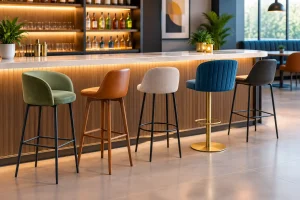
Select pieces that show the range of the collection: a distinctive dining chair, a comfortable armchair, a bar stool, a flexible table program, and an outdoor option if your market supports it. Use those products to begin conversations with restaurant groups, design studios, and hospitality operators. As projects develop, expand the offer around actual demand.
The most valuable distributor partnerships are not built on aggressive promises. They are built on design credibility, disciplined production, honest lead-time communication, and a shared commitment to helping hospitality spaces perform as well as they look. For distributors prepared to sell that level of service, the next restaurant project can become the start of a long-term commercial relationship.