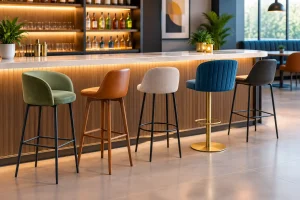
A chair that looks right in a showroom can fail quickly on a busy restaurant floor. A tabletop that photographs beautifully may show every glass ring after its first weekend of service. This contract furniture specification guide is built for the decisions that happen before an order is placed: selecting furniture that supports the concept, survives commercial use, fits the budget, and arrives ready for installation.
For hospitality operators, architects, and purchasing teams, specification is not a catalog exercise. It is the process of translating a design idea into working furniture with clear dimensions, materials, finishes, quantities, and performance expectations. The earlier those details are resolved, the fewer costly changes appear during production, delivery, or opening week.
Start With the Operating Reality, Not the Product Image
Every hospitality project has a visual direction, but service conditions should lead the specification. A fine-dining room, a neighborhood café, a hotel breakfast area, and an outdoor terrace may all use contemporary seating, yet their requirements are very different.
Begin by defining who will use each area, how long they will sit, how often furniture will move, and what staff must do around it. High-turnover restaurants may prioritize compact footprints, quick cleaning, and easy chair movement. A lounge may require deeper seating and more generous comfort. In a hotel lobby, occasional seating needs to retain its form and finish while accommodating guests, luggage, and constant circulation.
This is also where capacity planning matters. A dining chair that is 2 inches wider than planned can materially reduce covers across a room. Conversely, forcing too many narrow seats into a premium concept can make the space feel crowded and affect guest comfort. Confirm the layout with actual furniture dimensions, including arm widths, back overhangs, table bases, and required circulation routes.
Specify Performance Before Finish
A strong commercial specification separates the elements that affect performance from the elements that define appearance. Both matter, but a finish should never hide an unsuitable construction choice.
Frame and construction
For chairs and armchairs, identify the frame material, joinery method, and expected use. Solid wood offers warmth and character, but the species, moisture control, finish system, and joint construction all influence long-term stability. Metal frames can provide a slimmer visual profile and strong daily performance, provided welds, leveling glides, and protective coatings are appropriate for the environment.
Ask whether chairs are designed to be moved frequently, whether they can be stacked if required, and whether replacement components are available. In high-traffic locations, small details such as reinforced joints and replaceable glides reduce maintenance work over time.
For sofas and upholstered banquettes, clarify the internal support system rather than specifying only the external fabric. Seat suspension, foam density, seat depth, back angle, and cushion construction determine whether the piece will remain comfortable after sustained use. A softer residential feel may suit a low-volume lounge, but it may not be the right choice for a restaurant where guests sit, stand, and slide across the seat throughout the day.
Upholstery and surface materials
Upholstery should be selected for the service environment, not just its color or texture. Consider cleaning methods, stain exposure, abrasion resistance, color consistency, and the availability of additional material for future repairs. Leather, performance textiles, velvet-look fabrics, and vinyl each create a different visual and operational result.
Fabric can add depth and warmth to a dining room, while vinyl may be more practical for high-spill areas. Neither is automatically better. The correct choice depends on the concept, cleaning routine, and expected level of wear. Request material samples and assess them under the project’s actual lighting, alongside flooring, wall finishes, and table surfaces.
For tabletops, define resistance to moisture, heat, scratches, and cleaning chemicals. Natural wood brings a distinctive hospitality character but needs an appropriate protective finish and maintenance plan. Compact laminate, veneer, stone, metal, and sintered surfaces each have different edge treatments, weights, costs, and visual qualities. A heavy tabletop also requires a base engineered to support it safely and steadily.
Build Dimensions Around Comfort and Service
Furniture dimensions should be reviewed as a working system. Seat height must relate to table height. Bar chair height must match the finished height of the counter. Armchairs must slide beneath a table if the layout assumes they will. These points sound basic, yet they are frequent sources of last-minute changes.
For dining, allow enough space for guests to sit comfortably and for service teams to move without repeatedly shifting chairs. Table base placement is equally significant. A visually elegant base that interferes with legroom will be noticed by every guest, while an undersized base can create instability when a tabletop is loaded on one side.
Banquettes require additional attention. Confirm the finished seat height, seat depth, back height, wall conditions, electrical access, and any required segmentation for delivery. A continuous banquette may look clean on plan but be impossible to bring through a narrow entry or elevator. Where access is limited, modular construction can protect both the schedule and the final installation.
Use a Clear Specification Schedule
A project moves faster when every item is documented in one controlled schedule. Instead of relying on marked-up images and scattered messages, create a line-by-line record for each furniture type. This document should include the product code or reference image, quantity, dimensions, frame material, finish, upholstery or tabletop material, color reference, base details, and location within the project.
For custom pieces, include approved technical drawings before production begins. A render is useful for confirming the concept, but it does not replace dimensions, construction notes, or a signed-off finish sample. The same applies to color: digital screens vary, so physical samples should guide final approval whenever the project requires close coordination.
A complete schedule also supports procurement. It allows the buyer to compare quotations accurately, organize phased deliveries, and see where a custom detail may affect lead time. If a project includes indoor chairs, terrace seating, bar stools, tables, lounge pieces, and complementary items, grouping them under one specification structure prevents omissions.
Plan for Samples, Mockups, and Approvals
The cost of reviewing a sample is usually far lower than the cost of correcting a production run. For repeatable collection items, a finish or upholstery sample may be enough. For bespoke banquettes, special metalwork, custom table sizes, or a new combination of materials, a prototype or mockup is often the more reliable route.
Review samples for more than visual approval. Sit in the chair at the intended table. Check how the fabric handles light. Examine welds, seams, piping, edge details, and the feel of the surface. Test the stability of a table on a realistic floor condition. If the project is for an export market, confirm that packing, labeling, and required documentation are considered before the order is released.
Approval should be documented and controlled. Once the approved sample and technical information are confirmed, later changes to fabric, dimensions, or finish should be treated as formal revisions. This protects the design intent and gives the manufacturer a precise production reference.
Coordinate Production and Logistics Early
Commercial furniture procurement is shaped by lead time as much as design. Custom upholstery, special stains, nonstandard metal colors, and tailored dimensions can all affect the production sequence. Freight planning, container optimization, delivery access, and installation timing add another layer.
Share the opening date, site readiness date, delivery restrictions, and destination details at the quotation stage. A supplier can then advise whether phased production, consolidated packing, or modular construction makes more sense. For export projects, factory-direct coordination is particularly valuable because product, packing, quantity control, and commercial documentation can be aligned from the same production source.
Do not treat packaging as an afterthought. Chairs, tables, and upholstered pieces need protection suitable for the transport method and the handling points between factory and site. The lowest freight volume is not always the best solution if it increases the risk of damage or complicates receiving at the project location.
Choose a Manufacturer That Can Hold the Details
The best furniture partner is not simply the one with an attractive collection. It is the one that can interpret drawings, advise on materials, control manufacturing details, communicate clearly, and support the project through delivery. For distributors and design firms, this reliability is what makes a collection commercially repeatable across multiple locations.
Rezze Design works from in-house production in Istanbul to support hospitality projects with contemporary seating, tables, custom manufacturing, samples, and export-ready coordination. That direct control matters when a project needs a standard model adapted in size, finish, upholstery, or quantity without losing consistency across the order.
A well-written specification gives every project partner the same target: the operator sees comfort and durability, the designer sees the intended atmosphere, and the manufacturer sees a clear production brief. Start the conversation while there is still time to test materials, refine dimensions, and make the furniture work as hard as the space it serves.