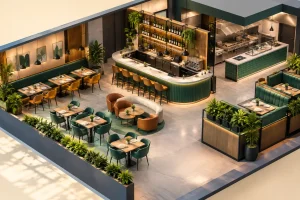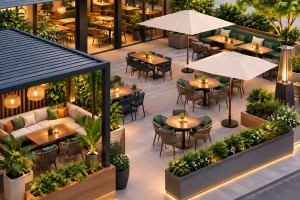


A restaurant chair that looks excellent in a rendering can become a costly mistake if its seat height clashes with the table, its fabric cannot withstand daily cleaning, or its frame is not built for constant movement. Knowing how to order bespoke furniture begins with treating every piece as part of an operating commercial space, not as an isolated design object.
For cafés, restaurants, hotels, and other HoReCa projects, custom furniture should support the guest experience and the realities behind it: traffic, cleaning routines, staff workflow, storage, delivery access, and long-term maintenance. A well-managed order turns a design concept into furniture that is comfortable, repeatable, and ready for commercial use.
Start With the Commercial Brief
Before requesting a quotation, define what the furniture needs to achieve. A mood board is useful, but it is not enough for a manufacturer to price or produce accurately. The brief should connect the visual direction to the conditions of the site.
Clarify the venue type, target guest, expected daily traffic, and the atmosphere you want to create. A compact specialty coffee shop may need lightweight chairs that can be moved easily and tables sized for quick turnover. A fine-dining restaurant may prioritize generous upholstery, quieter materials, and a more formal silhouette. For a hotel breakfast area, stackability and easy maintenance can matter as much as appearance.
Include floor plans, layouts, elevations, and a furniture schedule where available. Indicate quantities by model, intended locations, table heights, bar heights, and clearance requirements. If an item must fit through a narrow entrance or into an elevator, state that early. These details influence dimensions, construction, packing, and delivery planning.
A strong brief also identifies which elements are fixed and which remain open. You may require a specific table footprint but be flexible about the base design. Or you may have a signature chair profile while allowing the factory to recommend a more durable upholstery method. This helps the manufacturer propose practical solutions without moving away from the concept.
How to Order Bespoke Furniture With Clear Specifications
The next step is translating the brief into specifications that can be approved and produced. Bespoke does not mean vague. The more clearly the project is defined, the more reliably the final pieces will match expectations.
For seating, specify overall width, depth, height, seat height, arm height where applicable, and desired comfort level. A lounge chair designed for a hotel lobby should not be evaluated by the same criteria as a compact restaurant dining chair. Ask how foam density, webbing, spring systems, and upholstery construction will affect both comfort and longevity.
For tables, confirm top material, thickness, edge profile, finish, base material, base footprint, and stability requirements. In hospitality settings, a beautiful table top is only successful if it resists the expected use. Heat, spills, cleaning chemicals, outdoor exposure, and repeated impact all affect the right material and finish choice.
Materials should be selected for their performance as well as their color. Natural wood offers character, but it requires an appropriate protective finish and realistic maintenance expectations. Metal frames can provide a clean contemporary look and high durability, but coating quality matters, especially for coastal or outdoor projects. For upholstered products, consider abrasion resistance, stain protection, fire requirements, color consistency, and replacement availability.
Do not rely solely on a color name. Request finish references, fabric codes, and approved samples. Wood stains, powder coatings, leather, and woven textiles can look different under showroom lighting, daylight, and the warm lighting often used in hospitality interiors.
Ask the Right Questions Before Approving a Quote
A useful quotation should do more than provide a unit price. It should show what is included and reveal the production assumptions behind the number. Compare proposals on specifications, not only on cost.
Confirm the minimum order quantity for custom models or finishes, the quoted quantity, and whether the price changes across volume tiers. Ask whether design development, drawings, prototypes, samples, packing, and export documentation are included or priced separately. If the project involves several furniture categories, clarify whether all pieces will be produced and shipped together.
Lead time should be discussed in stages. Design confirmation, sample approval, material procurement, production, quality control, packing, and freight each take time. A factory cannot responsibly promise a final delivery date before the specifications and finishes are approved. For opening-sensitive projects, build contingency into the schedule rather than relying on the shortest possible estimate.
It is also wise to ask about replacement parts and repeat orders. Hospitality furniture is exposed to daily wear. A supplier that can reproduce an approved chair, table, or finish later helps operators maintain a consistent look as the business grows or individual pieces need replacement.
Approve Drawings and Samples Before Full Production
Drawings and samples are the most valuable control points in a bespoke furniture order. They give architects, designers, operators, and manufacturers one shared reference before production begins.
Technical drawings should confirm every approved dimension, material, finish, and construction detail. Review them against the layout, not just against the design image. Check seat and table relationships, bar stool heights, arm clearance, base positions, and the movement paths around the furniture. A few inches can determine whether guests sit comfortably or staff can pass efficiently.
A physical sample is particularly important for new designs, custom upholstery combinations, or high-volume orders. It allows the project team to test comfort, inspect workmanship, review proportions, and assess finish quality in real conditions. If possible, place the sample in the project space or evaluate it under lighting similar to the finished venue.
Sample approval should be documented. Any adjustment to stitching, wood tone, metal finish, foam firmness, or dimensions should be incorporated into the final approved specification. Verbal feedback can be misunderstood as projects move between design, purchasing, and production teams.
Balance Design Ambition With Operational Reality
The best custom furniture often comes from a productive conversation between the design team and the factory. A concept may need refinement to become more stable, easier to clean, more economical to ship, or better suited to repeated commercial use. That is not a compromise in quality. It is how good design becomes durable product.
For example, a thin metal chair frame may look light and elegant, but its wall thickness and joining method must support frequent use. A deeply upholstered banquette may create a luxurious setting, but its seat depth and back angle should still allow comfortable dining. A large stone-look table top may suit the interior concept, yet its weight, support structure, and installation route need careful planning.
Be open about the project budget from the beginning. A capable manufacturer can often protect the essential design language while suggesting alternatives in materials, construction, or detailing. Cost control works best before samples and production, not after finished pieces are ready to ship.
Plan Quality Control, Packing, and Delivery
For export projects, production is only one part of the order. Quality checks, packing standards, freight coordination, and receiving requirements deserve the same attention as the furniture design.
Agree on quality-control expectations before production starts. This may include inspection of finish consistency, upholstery workmanship, structural stability, dimensions, and quantities. Define acceptable variation for natural materials such as wood, marble, or leather. These materials have inherent character, and a realistic approval standard prevents avoidable disputes.
Packing should reflect the product and route. Chairs may need corner protection, foam wrapping, or cartons designed for stacking. Table tops and fragile finishes require appropriate separation and reinforcement. For international delivery, confirm carton markings, packing lists, commercial invoices, and any documentation required by the destination market.
The receiving side should be prepared as well. Check delivery access, unloading equipment, warehouse capacity, installation labor, and waste removal. A container arriving on time does not help if the site cannot receive it safely or store it in dry, protected conditions.
Build a Supplier Relationship, Not a One-Time Transaction
Bespoke furniture projects move more smoothly when the manufacturer is treated as a production partner early in the process. Share the design intent, opening schedule, technical constraints, and procurement priorities. In return, expect clear communication, documented approvals, realistic lead times, and direct answers when a detail presents a risk.
Rezze Design supports this process with in-house manufacturing for commercial seating and tables, tailored project production, and export-oriented coordination. Factory control makes it easier to align materials, construction, finishes, packing, and production timing around a hospitality project rather than forcing the project into a standard retail product.
The right order process creates more than a finished furniture package. It gives your guests a space that feels intentional, gives your team furniture that performs under pressure, and gives your business a reliable foundation for the next location, refresh, or rollout.