A restaurant chair can look excellent on opening day and still become a liability within six months. Loose joints, worn finishes, unstable frames, and uncomfortable seating affect guest experience, staff workflow, and replacement budgets. That is why horeca furniture should be specified as a commercial investment, not selected as a residential product placed in a public space.
For restaurant operators, architects, designers, and distributors, the right furniture has to meet several demands at once. It must support the concept visually, hold up under frequent use, suit the available floor plan, and arrive with the consistency required for a professional project. The most successful hospitality interiors make these practical decisions feel effortless to the guest.
What Commercial Furniture Must Deliver
Hospitality spaces place constant pressure on furniture. Chairs are moved repeatedly, tables are cleaned throughout the day, bar stools absorb concentrated wear, and outdoor pieces face sun, moisture, and temperature changes. A café may need lightweight seating for fast layout changes, while a fine-dining restaurant may prioritize a more substantial armchair with a tailored upholstery program. Both need furniture made for its environment.
Commercial performance begins with construction. Frame material, joinery, weld quality, foam density, fabric selection, and surface finish all influence service life. A solid wood chair needs properly engineered joints and a finish suitable for regular cleaning. A metal chair needs dependable welding, stable geometry, and coating that can resist scratches and corrosion. Upholstered seating must balance a comfortable sit with materials appropriate for high turnover.
There is no single specification that fits every project. The right choice depends on operating hours, guest profile, service style, maintenance capacity, and design direction. What matters is making those decisions before the purchase order, rather than after the first season of use.
HoReCa Furniture Starts With the Floor Plan
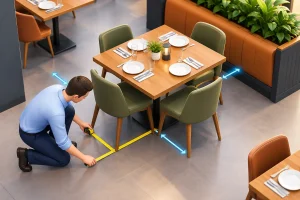
Furniture selection is closely tied to revenue per square foot. A beautiful dining chair that requires too much clearance can reduce capacity. A compact chair that makes guests feel cramped can shorten dwell time for the wrong reason. The goal is to create comfortable circulation while protecting the number and quality of covers the space can support.
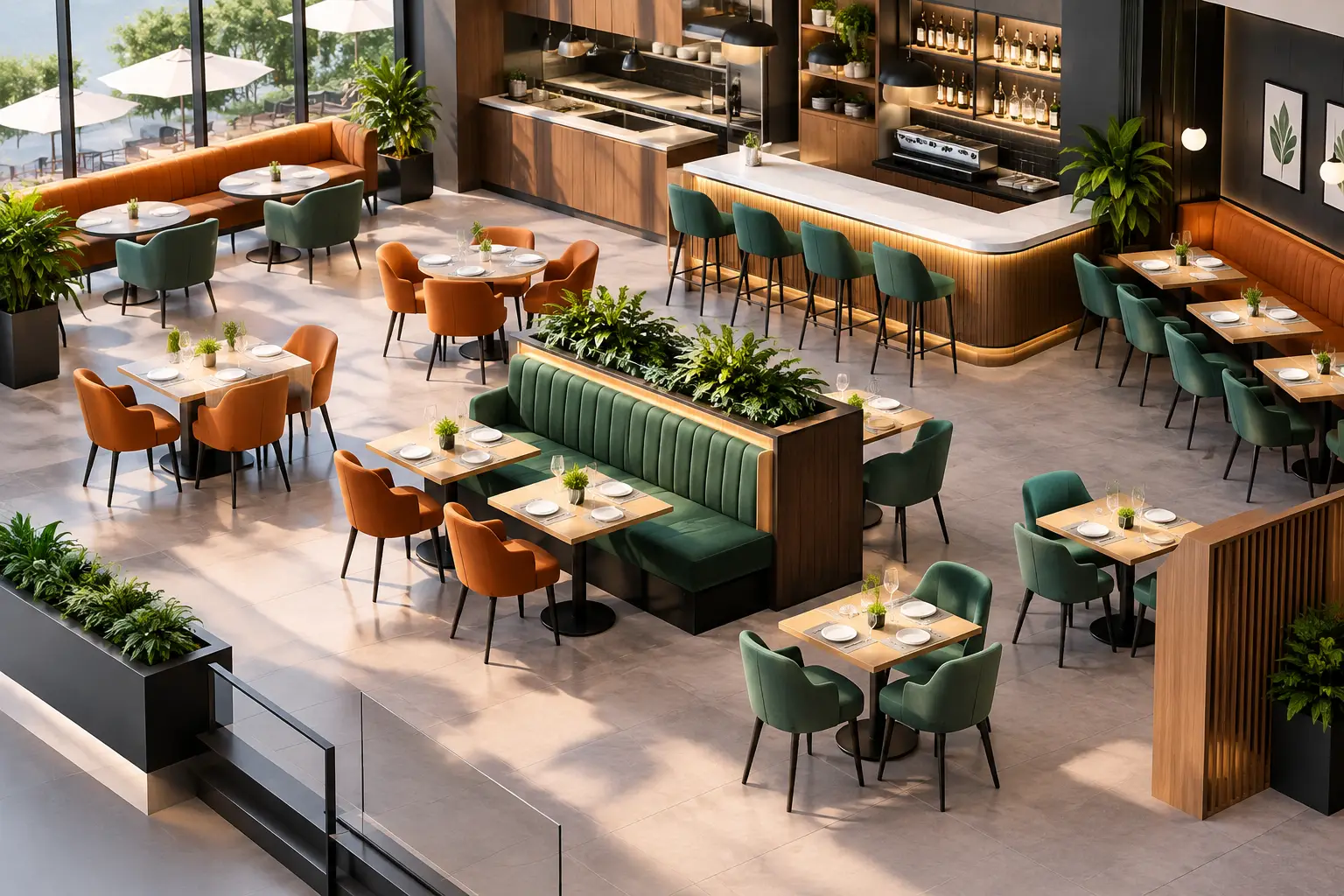
Start with the seating mix. Dining chairs work best where tables are reconfigured often and the design calls for a clean, flexible rhythm. Armchairs can add comfort and distinction in lounge zones, hotel lobbies, private dining areas, or slower-paced restaurant sections. Bar chairs should be selected around counter height, footrest position, and ease of entry and exit. Sofas and banquettes can define a destination zone, but they need careful planning for cleaning access and upholstery maintenance.
Table bases deserve equal attention. They determine legroom, stability, and how easily staff can reset the room. A compact base may suit smaller tops, while larger formats often require a heavier or wider support. In high-traffic settings, a stable table is not a minor detail. It affects every guest interaction at the table.
Comfort Should Match the Service Model
Comfort is not always about a deep seat or soft cushioning. In a quick-service café, a supportive chair with a practical seat depth may be exactly right. In a cocktail bar or hotel lounge, a more relaxed armchair can encourage guests to stay longer and order again. For a destination restaurant, the seating should make a multi-course meal feel natural rather than tiring.
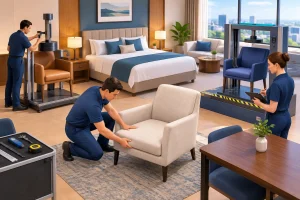
Design teams should test furniture in the way guests will actually use it. Sit at dining height. Check arm clearance under the table. Consider whether a chair can be pulled back without interrupting the aisle. Review the relationship between a bar stool, counter overhang, and footrest. These details are where an attractive concept becomes a functional operation.
Materials, Finishes, and Maintenance Decisions
Material selection should reflect both visual intent and real operating conditions. Wood brings warmth and character, particularly in contemporary cafés, bistros, and boutique hospitality settings. Metal can provide a more architectural profile and is often well suited to frequent use. Upholstery adds softness and a stronger sense of hospitality, but it should be chosen with cleaning requirements in mind.
For indoor projects, finishes should be coordinated across tables, chairs, and accent pieces without making the space feel overly matched. A wood chair can sit well beside a metal table base. An upholstered armchair can soften a room built around timber and stone. Contrast gives a project depth, provided the palette remains controlled.
Outdoor furniture requires a separate approach. Exposure changes the specification. Materials, coatings, drainage, stackability, and storage conditions all need consideration. Outdoor chairs may need to be moved quickly during service or stored at the end of a season. Lightweight construction helps, but stability cannot be compromised. The best choice depends on whether the furniture will remain exposed year-round, sit under cover, or move between indoor and outdoor zones.
Maintenance should be discussed early, especially when selecting light-colored upholstery, natural finishes, or highly textured surfaces. A finish that photographs well but cannot handle the cleaning routine creates unnecessary cost. Commercial interiors benefit from materials that age with dignity and can be maintained by the client’s team without specialized intervention.
Custom Production Creates Better Project Control
Standard collections offer speed and consistency, but custom production can solve the issues that off-the-shelf furniture cannot. A project may require a specific stain to coordinate with millwork, a custom upholstery color, a modified seat height, or a table size developed for a particular layout. These adjustments can make the difference between furniture that merely fills a room and furniture that belongs in it.
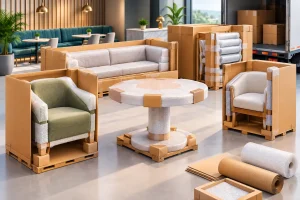
Custom work should still be disciplined. Clear technical drawings, finish approvals, upholstery selections, and sample review help prevent costly misunderstandings. For larger orders, a pre-production sample can confirm proportion, comfort, color, and workmanship before full manufacturing begins. This is especially valuable for export projects where changes become more difficult once packing and logistics are underway.
At Rezze Design, in-house manufacturing supports this level of coordination across chairs, armchairs, metal seating, sofas, bar chairs, outdoor seating, and tables. Factory control allows the project team to align production details with the commercial needs of architects, operators, wholesalers, and distributors.
Choosing a Supplier for Hospitality Projects
A supplier should be evaluated beyond the catalog. A strong product range matters, but project reliability matters just as much. Buyers need clear communication on specifications, production timing, packaging, quantities, and shipping readiness. They also need a partner who understands that a missing component or inconsistent finish can delay an entire opening.
For distributors and wholesalers, consistency is particularly important. Repeatable quality, dependable product information, and the ability to support market-specific requests make it easier to build long-term sales programs. For architects and interior designers, responsive sampling and practical guidance can protect the design intent while keeping the project buildable. For operators, the focus is usually on durability, comfort, and delivery coordination.
Before confirming an order, ask practical questions about production capability, lead times, minimum quantities for custom work, packaging standards, and available finish options. Review dimensions closely. Confirm whether the selected model is suitable for the intended use, especially for outdoor or high-turnover applications. A good supplier will address these questions directly rather than treating them as afterthoughts.
Build a Cohesive Guest Experience
Hospitality furniture should not compete with the concept. It should give the concept structure. Seating establishes the visual rhythm of a dining room, tables create the stage for service, and lounge pieces signal where guests can pause and settle in. When these elements are selected with purpose, the space feels considered from the entrance to the last table.
The strongest projects pair a clear aesthetic with furniture that can work every day. Choose pieces that guests want to sit in, staff can work around, and owners can rely on through busy service. That is the standard worth setting before the first chair reaches the floor.