A restaurant chair manufacturer is not simply a source for seating. For a restaurant, café, hotel lounge, or multi-site hospitality concept, the manufacturer affects the look of the space, guest comfort, replacement costs, project timing, and the consistency of every future order. The right partner understands that a chair must perform under commercial pressure while supporting the identity of the venue.
For architects, operators, wholesalers, and distributors, the decision should go beyond a catalog image or an initial unit price. A well-made chair can protect a project budget over years of daily service. A poorly specified one can create avoidable maintenance issues before the opening rush has passed.
What a Restaurant Chair Manufacturer Should Deliver
Commercial seating is built for a different reality than residential furniture. Guests move chairs repeatedly, staff clean them often, tables are reset quickly, and a busy dining room can put hundreds of people through the same seat each day. The frame, joinery, finish, upholstery, and floor protection all need to account for that use.
A capable manufacturer begins with the fundamentals: stable construction, controlled dimensions, comfortable proportions, and materials selected for the venue. A lightweight café chair may be right for flexible layouts and fast turnover. A fully upholstered dining chair may better suit a destination restaurant where guests stay longer. Neither is automatically better. The correct choice depends on the service model, interior concept, expected traffic, and maintenance plan.
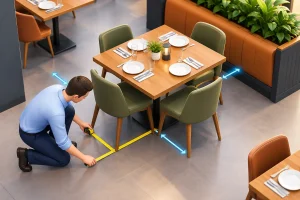
Design control matters just as much. A chair should relate to the table height, aisle spacing, lighting, flooring, and overall visual language of the project. When seating is selected in isolation, even an attractive product can feel out of place once the restaurant is complete.
Evaluate Commercial Durability Before Style Variations
Style earns attention, but construction determines whether the product remains suitable after repeated use. Ask how the chair is made, not only what it looks like. For metal chairs, review the profile, welding quality, surface treatment, and finish process. For wood chairs, examine the timber selection, joints, reinforcement, and coating. For upholstered models, consider the frame, foam density, fabric performance, stitching, and the practicality of future reupholstery.
The expected operating environment should guide the specification. Indoor dining rooms may allow a wider choice of textiles and finishes. Outdoor terraces require materials that can tolerate sunlight, moisture, temperature changes, and frequent cleaning. A coastal location, a poolside area, and a covered patio do not place the same demands on furniture.
It is also worth considering how a chair will age. Matte finishes can suit contemporary interiors but may show abrasion differently than textured coatings. Light upholstery creates a refined atmosphere but may require a more disciplined cleaning routine. Natural wood adds warmth, yet its finish must be appropriate for the conditions. These are not reasons to avoid a particular material. They are reasons to specify it with clear expectations.
Comfort Is a Commercial Decision
Restaurant seating influences more than guest satisfaction. It can affect dwell time, table turnover, perceived value, and online reviews. A chair that looks sculptural but has a shallow seat, awkward back angle, or restrictive arms may not support the guest experience a venue intends to create.
Comfort should be assessed in the context of the menu and service format. A quick-service café may prioritize easy movement and compact footprints. A fine-dining concept often needs more supportive seating for longer meals. Bar chairs need correct footrest placement and a stable base, while lounge seating calls for deeper proportions without making it difficult for guests to stand.
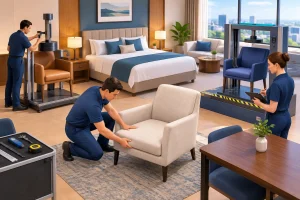
Samples are essential at this stage. Review the chair beside the intended table, not in an empty showroom setting. Sit in it at the real dining height. Check how arms interact with the table edge, whether chairs can be moved easily, and how much space is required when guests are seated. Small dimensional differences become significant across a full floor plan.
Custom Manufacturing Creates Project Consistency
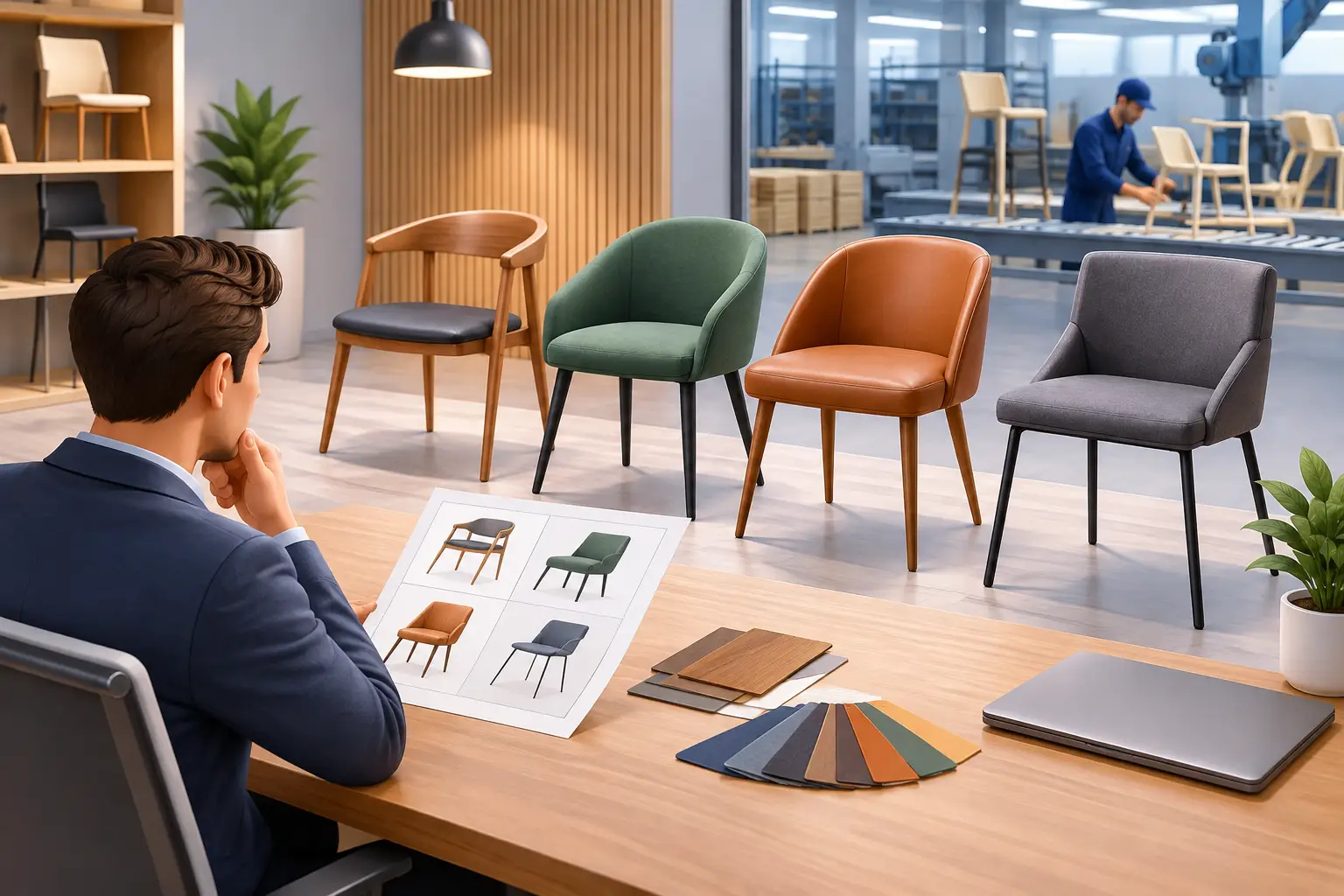
Off-the-shelf products work well for some projects, particularly when quantities are modest and timing is fixed. However, custom manufacturing becomes valuable when the concept needs a specific color, upholstery, frame finish, seat height, or dimensional adjustment. It is also useful when an operator needs a signature seating collection that can be repeated across locations.
Customization should be managed with discipline. Every change can affect cost, production time, packing, and minimum order quantities. The strongest manufacturing partner will explain these variables early, helping the buyer decide where customization adds genuine value and where a standard option is more efficient.
For example, changing a powder-coat color may be straightforward on a suitable production run, while altering a chair frame can require new tooling, testing, or engineering review. Selecting a contract-grade fabric may improve durability and project identity, but it can also affect lead time depending on material availability. A practical partner does not oversell customization. They help define a solution that meets the design brief and can be produced reliably.
Rezze Design supports this approach through in-house manufacturing and tailor-made production for hospitality projects, combining contemporary collections with project-specific options where they make commercial sense.
Production Capacity and Communication Matter
A strong product is only one part of a successful order. Buyers should understand who controls production, who approves materials and finishes, how quality is checked, and how changes are documented. Clear communication is particularly important when a project involves multiple chair types, custom finishes, staged deliveries, or international shipping.
Ask for a defined process from quotation to final packing. That process should cover approved specifications, samples where needed, production timing, quality checks, packing requirements, and shipment coordination. For distributors, it should also address repeat orders and the ability to maintain collection continuity over time.
Factory-direct production can provide meaningful advantages here. It gives the manufacturer closer control over workmanship, scheduling, and adjustments during the production cycle. It can also reduce the confusion that occurs when design, sourcing, and assembly are spread across unrelated suppliers. Still, factory capacity should match the project scope. A manufacturer that is ideal for a boutique restaurant may not be the right fit for a large rollout, and the reverse can also be true.
Plan for Freight, Packing, and Installation
Restaurant furniture is often selected early but delivered late in the construction schedule, when site access is limited and opening dates are fixed. That makes packing and logistics part of the purchasing decision, not an afterthought.
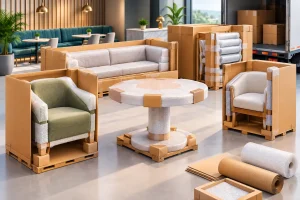
Confirm whether chairs are shipped assembled, partially assembled, or knocked down. Fully assembled seating can simplify installation but takes more space in transit. Knock-down products may improve container efficiency, though they require assembly planning at the destination. The best route depends on product design, order volume, labor availability, and delivery constraints.
For export projects, packing must protect corners, upholstery, finishes, and hardware during handling. Buyers should also align delivery timing with storage capacity at the site. Furniture delivered too early may need protected warehousing; delivered too late, it can delay final styling, inspections, and opening preparations.
Build a Supplier Relationship, Not a One-Time Purchase
Hospitality businesses change. A successful location may expand, refresh its dining room, add a terrace, or open in another market. Architects may need matching products for a later phase. Distributors need reliable availability and product knowledge they can confidently bring to their customers.
This is why a restaurant chair manufacturer should be evaluated as a long-term project partner. Look for a team that can provide clear product information, respond directly to technical questions, and maintain consistent standards across orders. Price remains important, but the lowest initial number can become expensive if the product is difficult to replace, inconsistent in finish, or unsupported after delivery.
The most useful next step is simple: choose a few chair models that fit the concept, request the relevant specifications and samples, then test them against the real demands of the project. A chair that performs well in the room, on the floor plan, and through the supply process gives the entire hospitality space a stronger foundation.